
Importo totale (1 articolo articoli):
Destinazione ordine:

smith kendric (169 risultati)
Vai alla pagina principale dei risultati di ricerca
Filtri di ricerca
Tipo di articolo
- Tutti i tipi di prodotto
- Libri (169)
- Riviste e Giornali (Nessun altro risultato corrispondente a questo perfezionamento)
- Fumetti (Nessun altro risultato corrispondente a questo perfezionamento)
- Spartiti (Nessun altro risultato corrispondente a questo perfezionamento)
- Arte, Stampe e Poster (Nessun altro risultato corrispondente a questo perfezionamento)
- Fotografie (Nessun altro risultato corrispondente a questo perfezionamento)
- Mappe (Nessun altro risultato corrispondente a questo perfezionamento)
- Manoscritti e Collezionismo cartaceo (Nessun altro risultato corrispondente a questo perfezionamento)
Condizioni Maggiori informazioni
Legatura
Ulteriori caratteristiche
- Prima ed. (7)
- Copia autograf. (Nessun altro risultato corrispondente a questo perfezionamento)
- Sovracoperta (11)
- Con foto (71)
- Non Print on Demand (119)
Lingua (2)
Spedizione gratuita
Paese del venditore
Valutazione venditore
-

Photochemical and Photobiological Reviews - Volume 2
Da: UHR Books, Hollis Center, ME, U.S.A.
Membro dell'associazione: MABA
Valutazione del venditore 5 su 5 stelle

Prima edizione
Hardcover. Condizione: Very Good. First Edition. Discusses biological, photochemical, and spectroscopic applications of lasers; photochemistry of nucleic acids; ultraviolet radiation effects on the human eye; lethal and mutagenic effects of near-ultraviolet radiation; and DNA repair enzymes in mammalian cells. Ex-Library.
-

Photochemical and Photobiological Reviews - Volume 4
Da: UHR Books, Hollis Center, ME, U.S.A.
Membro dell'associazione: MABA
Valutazione del venditore 5 su 5 stelle
Prima edizione
Hardcover. Condizione: Very Good. First Edition. Discusses energy transfer processes in bioluminescence, the function and properties of phytochrome, photosynthesis and fast changes in light emission by green plants, photoreceptors for circadian rhythms, and nondimer damage in deoxyribonucleic acid causes by ultraviolet radiation. Ex-Library.
-

Molecular Photobiology: Inactivation and Recovery.; (Molecular Biology.)
Da: J. HOOD, BOOKSELLERS, ABAA/ILAB, Baldwin City, KS, U.S.A.
Membro dell'associazione: ABAA ILAB
Valutazione del venditore 5 su 5 stelle
Hardcover. 230pp. Very good condition with text clean and binding tight without dust jacket.
-

Photochemical and Photobiological Reviews, Volume 3
Da: Zubal-Books, Since 1961, Cleveland, OH, U.S.A.
Valutazione del venditore 5 su 5 stelle
Condizione: Good. *Price HAS BEEN REDUCED by 10% until Monday, Feb. 2 (weekend SALE item)* 316 pp., Hardcover, ex library, else text clean and binding tight. - If you are reading this, this item is actually (physically) in our stock and ready for shipment once ordered. We are not bookjackers. Buyer is responsible for any additional duties, taxes, or fees required by recipient's country.
-
Molecular Photobiology: Inactivation and Recovery
Da: Alien Bindings, BALTIMORE, MD, U.S.A.
Valutazione del venditore 4 su 5 stelle

Prima edizione
Hardcover. Condizione: Very Good. Condizione sovraccoperta: Good. First Edition. The covers look great. The binding is tight. The previous owner's name is printed on the front flyleaf. The interior pages are clean and unmarked. The dust jacket has some shelf wear and scuffing. Electronic delivery tracking will be issued free of charge.
-

MOLECULAR PHOTOBIOLOGY INACTIVATION AND RECOVERY
Editore: ACADEMIC PRESS
Da: Terrace Horticultural Books, St. Paul, MN, U.S.A.
Membro dell'associazione: ABAA ILAB
Valutazione del venditore 4 su 5 stelle
Prima edizione
Hardcover. Condizione: Good. TEXT FIGURES (illustratore). 1st Edition. Copyright Date: 1969 Octavo, 1969, PP.230, Text Figures, Ex. Library.
-

Photochemical and Photobiological Reviews, Vol. 5
Da: Aquatic Technologies, POLSON, MT, U.S.A.
Valutazione del venditore 5 su 5 stelle
Prima edizione
Hardcover. Condizione: Fine. Condizione sovraccoperta: Near Fine. 1st Edition. 316 pages, this is volume 2, provides a critique of current research. covers use of photochemistry in medicine, as well as techniques to protect from the detrimental effect of light exposure.
-
Photochemical and Photobiological Reviews, Volume 5
Da: Tiber Books, Cockeysville, MD, U.S.A.
Valutazione del venditore 4 su 5 stelle
Hardcover. Condizione: Very Good. 8vo, hardcover. Vg condition in vg dj. NOT ex-library. Contents bright & clean, binding tight; dj spine very slightly sunned (spine lettering fully legible). 316 pp.
-

Photochemical and Photobiological Reviews, Volume 6
Da: Tiber Books, Cockeysville, MD, U.S.A.
Valutazione del venditore 4 su 5 stelle
Hardcover. Condizione: Very Good. 8vo, hardcover. Vg condition in vg dj. NOT ex-library. Prev. owner's name-stamp on endpaper; contents bright & clean, binding tight; dj very faintly rubbed at rear. 203 pp.
-
Hardcover. Condizione: Acceptable. Satisfaction 100% guaranteed.
-
Photochemical and Photobiological Reviews, Volume 6
Da: BookDepart, Shepherdstown, WV, U.S.A.
Valutazione del venditore 5 su 5 stelle
Hardcover. Condizione: UsedGood. Hardcover; Volume 6 only; fading and shelf wear to exterior; former owner's name written on front endpaper, and stamping on rear endpaper; otherwise in good condition with clean text, firm binding.
-

Hardcover. Condizione: Good. Satisfaction 100% guaranteed.
-
Photochemical and Photobiological Reviews, Volume 7
Da: BookDepart, Shepherdstown, WV, U.S.A.
Valutazione del venditore 5 su 5 stelle
Hardcover. Condizione: UsedVeryGood. Hardcover; light fading, light shelf wear to exterior; in very good condition with clean text and tight binding. Dust jacket shows light scuffing and light shelf wear.
-

Aging, Carcinogenesis, and Radiation Biology. The Role of Nucleic Acid Addition Reactions
Da: Blue Heron Books, Claremont, CA, U.S.A.
Valutazione del venditore 3 su 5 stelle

Hard Bound. Condizione: Very Good +. No Jacket. 1st ed. Very clean and unworn (nearly-as-new) copy.
-

#ISeafoodDifferently: 11 Of My Most Popular Recipes. (Volume)
Da: Revaluation Books, Exeter, Regno Unito
Valutazione del venditore 5 su 5 stelle
EUR 19,20
Spedizione EUR 11,55
Spedito da Regno Unito a U.S.A.Quantità: 1 disponibili
Aggiungi al carrelloPaperback. Condizione: Brand New. 25 pages. 11.00x8.50x0.06 inches. In Stock.
-

Photochemical and Photobiological Reviews: Volume 1
Da: PsychoBabel & Skoob Books, Didcot, Regno Unito
Valutazione del venditore 5 su 5 stelle
EUR 27,12
Spedizione EUR 14,43
Spedito da Regno Unito a U.S.A.Quantità: 1 disponibili
Aggiungi al carrelloHardcover. Condizione: Good. Condizione sovraccoperta: Acceptable. Hardcover in good condition. Jacket is in acceptable condition. Dust jacket is marked and scored. Jacket leading corners, edges and spine ends are worn, creased and nicked. Two centimetre tears on jacket spine foot and lower edges. Hardcover spine ends are a little bumped. Foxing on page block. Minor tear on rear pastedown. Binding is intact, contents are clear. AM. Used.
-

EUR 27,12
Spedizione EUR 15,47
Spedito da Regno Unito a U.S.A.Quantità: 1 disponibili
Aggiungi al carrelloCondizione: Good. Volume 1. This is an ex-library book and may have the usual library/used-book markings inside.This book has hardback covers. In good all round condition. No dust jacket. Please note the Image in this listing is a stock photo and may not match the covers of the actual item,800grams, ISBN:0306338017.
-
Photochemical and Photobiological Reviews Volume 4
Da: Sleepy Hollow Books, Huntington, VT, U.S.A.
Valutazione del venditore 4 su 5 stelle
Hardcover. New York: Plenum Press, 1979. nf/nf.; ndotew2229.
-
THE SCIENCE OF PHOTOBIOLOGY.
Editore: New York, Plenum Press, 1977., 1977
Da: Grant's Bookshop, Cheltenham, VIC, Australia
Membro dell'associazione: ANZAAB ILAB
Valutazione del venditore 4 su 5 stelle
EUR 19,96
Spedizione EUR 12,61
Spedito da Australia a U.S.A.Quantità: 1 disponibili
Aggiungi al carrellox+430pp. Lg. 8vo. Original boards, marked, in dustwrapper, b&w illustrations, ownership sticker on front pastedown, otherwise a very good copy.
-

Topics in Photomedicine
Da: Aquatic Technologies, POLSON, MT, U.S.A.
Valutazione del venditore 5 su 5 stelle
Prima edizione
Hardcover. Condizione: As New. Condizione sovraccoperta: Fine. 1st Edition.
-

Photochemical and Photobiological Reviews (Paperback)
Lingua: Inglese
Editore: Springer-Verlag New York Inc., New York, 2013
ISBN 10: 1468435531 ISBN 13: 9781468435535
Da: Grand Eagle Retail, Bensenville, IL, U.S.A.
Valutazione del venditore 5 su 5 stelle
Paperback. Condizione: new. Paperback. The goals of the science of photobiology can be divided into four categories: to develop (I) ways to optimize the beneficial effects of light on man and his environment, (2) methods to protect organisms, including man, from the detrimental effects of light, (3) photochemical tools for use in studies of life processes, and (4) photochemical therapies in medicine. To achieve these goals will require the knowledgeable collaboration of biologists, chemists, engineers, mathematicians, physicians, and physicists; because photobiology is a truly multidisciplinary science. While a multidis ciplinary science is more intellectually demanding, it also has a greater potential for unexpected breakthroughs that can occur when data from several areas of science are integrated into new concepts for theoretical or practical use. Photochemical and Photobiological Reviews continues to provide in depth coverage of the many specialty areas of photobiology. It is hoped that these reviews will provide an important service to the younger scientists in the field and to senior scientists in related fields, because they provide a ready access to the recent literature in the field, and more importantly, they frequently offer a critical evaluation of the direction that the field is taking, or suggest a redirection when appropriate. Since it is important that this review series remain responsive to the needs of photochemists and photobiologists, the Editor would value com ments and suggestions from its readers. The goals of the science of photobiology can be divided into four categories: to develop (I) ways to optimize the beneficial effects of light on man and his environment, (2) methods to protect organisms, including man, from the detrimental effects of light, (3) photochemical tools for use in studies of life processes, and (4) photochemical therapies in medicine. To achieve these goals will require the knowledgeable collaboration of biologists, chemists, engineers, mathematicians, physicians, and physicists; because photobiology is a truly multidisciplinary science. While a multidisA ciplinary science is more intellectually demanding, it also has a greater potential for unexpected breakthroughs that can occur when data from several areas of science are integrated into new concepts for theoretical or practical use. Photochemical and Photobiological Reviews continues to provide inA depth coverage of the many specialty areas of photobiology. It is hoped that these reviews will provide an important service to the younger scientists in the field and to senior scientists in related fields, because they provide a ready access to the recent literature in the field, and more importantly, they frequently offer a critical evaluation of the direction that the field is taking, or suggest a redirection when appropriate. Since it is important that this review series remain responsive to the needs of photochemists and photobiologists, the Editor would value comA ments and suggestions from its reade Shipping may be from multiple locations in the US or from the UK, depending on stock availability.
-

Photochemical and Photobiological Reviews
Da: GreatBookPrices, Columbia, MD, U.S.A.
Valutazione del venditore 5 su 5 stelle
Condizione: New.
-

Photochemical and Photobiological Reviews (Paperback)
Lingua: Inglese
Editore: Springer-Verlag New York Inc., New York, NY, 2012
ISBN 10: 146842579X ISBN 13: 9781468425796
Da: Grand Eagle Retail, Bensenville, IL, U.S.A.
Valutazione del venditore 5 su 5 stelle
Paperback. Condizione: new. Paperback. The science of photobiology is a dynamic multidisciplinary field whose relevance to the needs of man is growing more apparent each day. Publicity about supersonic transports (the SSTs) and spray cans, their possible dele- terious effects on the stratospheric ozone layer, and the possible resultant consequences of enhanced solar ultraviolet radiation on man and his envi- ronment have helped to focus attention on both the beneficial and the detri- mental effects of light. In addition, considerable activity is currently being directed toward harnessing solar energy as one solution to the world energy crisis. Some mechanisms for accomplishing this involve photobiological systems or photochemical models based on these systems. It would thus seem that modern man has rediscovered the sun and is now actively considering new uses of light rather than thinking of light only as an aid to vision. Photobiology has become a major new scientific field. The American Society for Photobiology has divided the science of photobiology into 14 subspecialty groups: Phototechnology Chronobiology Photochemistry Photoreception Spectroscopy Vision Photosensitization Photomorphogenesis Ultraviolet and Visible Radiation Effects Photomovement Environmental Photobiology Photosynthesis Medicine Bioluminescence The goals of the science of photobiology have been divided into four categories*: "(1) The development of ways to protect organisms, including man, from the detrimental effects of light; (2) the development of ways to control the beneficial effects of light upon our environment; (3) the con- tinued development of photochemical tools for use in studies of life processes; and (4) the development of photochemical therapies in The science of photobiology is a dynamic multidisciplinary field whose relevance to the needs of man is growing more apparent each day. Publicity about supersonic transports (the SSTs) and spray cans, their possible deleA terious effects on the stratospheric ozone layer, and the possible resultant consequences of enhanced solar ultraviolet radiation on man and his enviA ronment have helped to focus attention on both the beneficial and the detriA mental effects of light. In addition, considerable activity is currently being directed toward harnessing solar energy as one solution to the world energy crisis. Some mechanisms for accomplishing this involve photobiological systems or photochemical models based on these systems. It would thus seem that modern man has rediscovered the sun and is now actively considering new uses of light rather than thinking of light only as an aid to vision. Photobiology has become a major new scientific field. The American Society for Photobiology has divided the science of photobiology into 14 subspecialty groups: Phototechnology Chronobiology Photochemistry Photoreception Spectroscopy Vision Photosensitization Photomorphogenesis Ultraviolet and Visible Radiation Effects Photomovement Environmental Photobiology Photosynthesis Medicine Bioluminescence The goals of the science of photobiology have been divided into four categories*: "(1) The development of ways to protect organisms, including man, from the detrimental effects of light; (2) the development of ways to control the beneficial effects of light upon our environment; (3) the conA tinued development of photochemical tools for use in studies of life processes; and (4) the development of photochemical therapie Shipping may be from multiple locations in the US or from the UK, depending on stock availability.
-

Photochemical and Photobiological Reviews (Paperback)
Lingua: Inglese
Editore: Springer-Verlag New York Inc., New York, NY, 2013
ISBN 10: 1468436430 ISBN 13: 9781468436433
Da: Grand Eagle Retail, Bensenville, IL, U.S.A.
Valutazione del venditore 5 su 5 stelle
Paperback. Condizione: new. Paperback. The goals of the science of photobiology can be divided into four categories: to develop (I) ways to optimize the beneficial effects of light on man and his environment, (2) methods to protect organisms, including man, from the detrimental effects of light, (3) photochemical tools for use in studies of life processes, and (4) photochemical therapies in medicine. To achieve these goals will require the knowledgeable collaboration of biologists, chemists, engineers, mathematicians, physicians, and physicists; because photobiology is a truly multidisciplinary science. While a multidis ciplinary science is more intellectually demanding, it also has a greater potential for unexpected breakthroughs that can occur when data from several areas of science are integrated into new concepts for theoretical or practical use. Photochemical and Photobiological Reviews continues to provide in depth coverage of the many specialty areas of photobiology. It is hoped that these reviews will provide an important service to the younger scientists in the field and to senior scientists in related fields, because they provide a ready access to the recent literature in the field, and more importantly, they frequently offer a critical evaluation of the direction that the field is taking, or suggest a redirection when appropriate. Since it is important that this review series remain responsive to the needs of photochemists and photobiologists, the Editor would value com ments and suggestions from its readers. The goals of the science of photobiology can be divided into four categories: to develop (I) ways to optimize the beneficial effects of light on man and his environment, (2) methods to protect organisms, including man, from the detrimental effects of light, (3) photochemical tools for use in studies of life processes, and (4) photochemical therapies in medicine. To achieve these goals will require the knowledgeable collaboration of biologists, chemists, engineers, mathematicians, physicians, and physicists; because photobiology is a truly multidisciplinary science. While a multidisA ciplinary science is more intellectually demanding, it also has a greater potential for unexpected breakthroughs that can occur when data from several areas of science are integrated into new concepts for theoretical or practical use. Photochemical and Photobiological Reviews continues to provide inA depth coverage of the many specialty areas of photobiology. It is hoped that these reviews will provide an important service to the younger scientists in the field and to senior scientists in related fields, because they provide a ready access to the recent literature in the field, and more importantly, they frequently offer a critical evaluation of the direction that the field is taking, or suggest a redirection when appropriate. Since it is important that this review series remain responsive to the needs of photochemists and photobiologists, the Editor would value comA ments and suggestions from its reade Shipping may be from multiple locations in the US or from the UK, depending on stock availability.
-
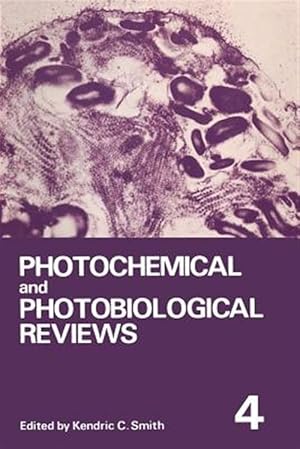
Photochemical and Photobiological Reviews : Volume 4
Da: GreatBookPrices, Columbia, MD, U.S.A.
Valutazione del venditore 5 su 5 stelle
Condizione: New.
-

Photochemical and Photobiological Reviews
Da: GreatBookPrices, Columbia, MD, U.S.A.
Valutazione del venditore 5 su 5 stelle
Condizione: New.
-

Photochemical and Photobiological Reviews (Paperback)
Lingua: Inglese
Editore: Springer-Verlag New York Inc., New York, 2012
ISBN 10: 1468425765 ISBN 13: 9781468425765
Da: Grand Eagle Retail, Bensenville, IL, U.S.A.
Valutazione del venditore 5 su 5 stelle
Paperback. Condizione: new. Paperback. A stone carving from the 14th century B.C. records that the Egyptian pharaoh Akhenaten (born Amenhoteph IV) and his wife, Nefertiti, recognized the importance of sunlight to life. In fact, Akhenaten initiated a monotheistic religion, with Aton, the sun, as God. One of his daughters be came the wife of King Tut Ankamon, the spelling of whose name indicates a return to the old religion and an eclipse of interest in photobiology among the pharaohs. A renewal of interest in photobiology in modern times was climaxed in 1928 by the establishment of an international organization for photobiology under the title Comite International de la Lumiere (C.I.L.). Its present title, Comite International de Photobiologie (C.I.P.), was adopted at a meeting in Paris in 1951. The first of a series of international congresses on photobiology was held in 1954 and probably represents the beginning of modern day photobiology. Medical men were prominent in the activities of the old C.I.L., for the importance of natural sunlight in human health and disease was obvious though not well understood. The bringing together of physicians with physicists, chemists, and biologists from the pure and applied branches of their subjects was the aim of the older C.I.L. and continues to the present day through the C.I.P. A renewal of interest in photobiology in modern times was climaxed in 1928 by the establishment of an international organization for photobiology under the title Comite International de la Lumiere (C.I.L.). Shipping may be from multiple locations in the US or from the UK, depending on stock availability.
-

Photochemical and Photobiological Reviews : Volume 5
Da: GreatBookPrices, Columbia, MD, U.S.A.
Valutazione del venditore 5 su 5 stelle
Condizione: New.
-
Photochemical and Photobiological Reviews: Volume 5
Da: Lucky's Textbooks, Dallas, TX, U.S.A.
Valutazione del venditore 5 su 5 stelle
EUR 51,73
Spedizione EUR 3,37
Spedito in U.S.A.Quantità: Più di 20 disponibili
Aggiungi al carrelloCondizione: New.
-
Photochemical and Photobiological Reviews: Volume 1
Da: Lucky's Textbooks, Dallas, TX, U.S.A.
Valutazione del venditore 5 su 5 stelle
EUR 51,73
Spedizione EUR 3,37
Spedito in U.S.A.Quantità: Più di 20 disponibili
Aggiungi al carrelloCondizione: New.


