

Importo totale (1 articolo articoli):
Destinazione ordine:

specimen hikifuda (9 risultati)
Vai alla pagina principale dei risultati di ricerca
Filtri di ricerca
Tipo di articolo
- Tutti i tipi di prodotto
- Libri (9)
- Riviste e Giornali (Nessun altro risultato corrispondente a questo perfezionamento)
- Fumetti (Nessun altro risultato corrispondente a questo perfezionamento)
- Spartiti (Nessun altro risultato corrispondente a questo perfezionamento)
- Arte, Stampe e Poster (Nessun altro risultato corrispondente a questo perfezionamento)
- Fotografie (Nessun altro risultato corrispondente a questo perfezionamento)
- Mappe (Nessun altro risultato corrispondente a questo perfezionamento)
- Manoscritti e Collezionismo cartaceo (Nessun altro risultato corrispondente a questo perfezionamento)
Condizioni Maggiori informazioni
- Nuovo (Nessun altro risultato corrispondente a questo perfezionamento)
- Come nuovo, Ottimo o Quasi ottimo (Nessun altro risultato corrispondente a questo perfezionamento)
- Molto buono o Buono (9)
- Discreto o Mediocre (Nessun altro risultato corrispondente a questo perfezionamento)
- Come descritto (Nessun altro risultato corrispondente a questo perfezionamento)
Legatura
- Tutte
- Rilegato (Nessun altro risultato corrispondente a questo perfezionamento)
- Brossura (Nessun altro risultato corrispondente a questo perfezionamento)
Ulteriori caratteristiche
- Prima ed. (Nessun altro risultato corrispondente a questo perfezionamento)
- Copia autograf. (Nessun altro risultato corrispondente a questo perfezionamento)
- Sovracoperta (Nessun altro risultato corrispondente a questo perfezionamento)
- Con foto (9)
- Non Print on Demand (9)
Lingua (1)
Prezzo
- Qualsiasi prezzo
- Inferiore a EUR 20 (Nessun altro risultato corrispondente a questo perfezionamento)
- EUR 20 a EUR 45 (Nessun altro risultato corrispondente a questo perfezionamento)
- Superiore a EUR 45
Spedizione gratuita
- Spedizione gratuita in U.S.A. (Nessun altro risultato corrispondente a questo perfezionamento)
Paese del venditore
Valutazione venditore
-
Hikifuda of women and children shopping.
Da: Richard Neylon, St Marys, TAS, Australia
Valutazione del venditore 5 su 5 stelle

EUR 79,13
Spedizione EUR 26,70
Spedito da Australia a U.S.A.Quantità: 1 disponibili
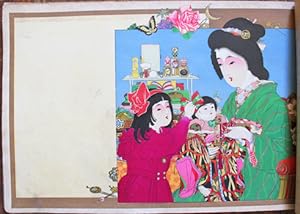
Aggiungi al carrelloCondizione: very good. n.p. [1931]. colour broadside 53x38cm. Folded, with stab holes indicating it was once in an album. A vivid and heart warming portrait of the urban well-to-do and the rewards of being well-to-do: modernity and shopping. It can be seen as mother daughter life lessons. Many such images in Japan are moral lessons, showing girls and young women their compensation for being good.These hikifuda - small posters or handbills - were usually produced with a blank text panel. The customer, usually a retailer, had their own details over printed. The handy calendar is for 1932.
-
Large hikifuda of a boy flying his mother in a monoplane.
Da: Richard Neylon, St Marys, TAS, Australia
Valutazione del venditore 5 su 5 stelle
EUR 126,61
Spedizione EUR 26,70
Spedito da Australia a U.S.A.Quantità: 1 disponibili
Aggiungi al carrelloCondizione: very good. n.p.n.d. (1914). Colour lithograph 53x38cm. Stab holes in the top margin, catalogue number on the back, showing it was once in a specimen book. Folded rather than creased. That woman and child are modelled on the crown princess and her first son - Hirohito - as they were a few years before. She is adventurous enough to go skylarking but still the boy must drive. Around and below are most of the things that make Japan Japan - cherry blossoms, industry and Fuji.Hikifuda - small posters or handbills - were usually produced with the text panel blank. The customer, usually a retailer, had their own details over printed, so the same image might sell fine silk or soy sauce. This one is double the standard size; the timetable or calendar is for 1915.
-
Hikifuda of lucky gods driving a motor car.
Da: Richard Neylon, St Marys, TAS, Australia
Valutazione del venditore 5 su 5 stelle
EUR 126,61
Spedizione EUR 26,70
Spedito da Australia a U.S.A.Quantità: 1 disponibili
Aggiungi al carrelloCondizione: very good. n.p. [1911]. Colour lithograph and woodcut 52x38cm. Stab holes in the margin show it was once in an album. Horizontal fold; quite good. The picture is lithographed, the calendar woodcut. An extra psychedelic extravaganza in experimental colour showing lucky god Ebisu being chauffered by Daikokuten. These two did embrace modernity and had very good tailors as can be seen when the occasion demanded a smart suit or an even more smart uniform. Here they haven't dressed; it's just two friends on an outing. Maybe a joyride. I wonder whether it was good luck to have these two snaffle your car. These hikifuda - small posters or handbills - were usually produced with the text panel blank. The customer, usually a retailer, had their own details over printed. The handy calendar is for 1912.
-
[Yorozu to Kanbutsu Sato Sekiyu .]
Da: Richard Neylon, St Marys, TAS, Australia
Valutazione del venditore 5 su 5 stelle
EUR 126,61
Spedizione EUR 26,70
Spedito da Australia a U.S.A.Quantità: 1 disponibili
Aggiungi al carrelloCondizione: very good. n.p. [c1900?]. Colour woodcut 26x38cm. Rumpled with a couple of small repairs to the edges; quite decent. Stab holes in the right margin showing it was once in an album. A bustling handsome print produced for merchants of imported goods. These hikifuda - small posters or handbills - were usually produced with the text panel blank. The customer had their own details over printed. In some cases, like this, samples were were produced with generic text to show the finished product.
-
Hikifuda of a modern couple in an elaborate cockerell balloon basket above an exposition or fair; the brash young woman waving a Japanese flag.
Da: Richard Neylon, St Marys, TAS, Australia
Valutazione del venditore 5 su 5 stelle
EUR 189,91
Spedizione EUR 26,70
Spedito da Australia a U.S.A.Quantità: 1 disponibili
Aggiungi al carrelloCondizione: very good. n.p. [190-?]. 36x25cm colour lithograph. Browning but pretty good. Such overtly enthusiastic and active women are not so common in Japanese pictures. The navy ships in the bay make me think this marks one of Japan's victories - the 1904 war with Russia or the 1894 win against China. The fashions push the date back but Hikifuda artists didn't always worry about such details unless the target was fashion.Hikifuda - small posters or handbills - were usually produced with the text panel blank. The customer, usually a retailer, had their own details over printed, so the same image might sell fine silk or soy sauce.
-

A large hikifuda - handbill - or modest poster for Kyoto haberdashery bargain sales.
Da: Richard Neylon, St Marys, TAS, Australia
Valutazione del venditore 5 su 5 stelle
EUR 284,86
Spedizione EUR 26,70
Spedito da Australia a U.S.A.Quantità: 1 disponibili
Aggiungi al carrelloCondizione: very good. n.p. [Osaka c1902]. Colour lithograph 37x26cm. An outstanding copy. This splendidly flamboyant and assertive modern young Japanese woman is unlike any other I've seen from this period. Being able to decipher phrases like "bargain sale" but unable to decipher the trademark or any particular merchant's name here I suspect this is a sample produced by or for Kyoto silk merchants and haberdashers. Being on much heavier paper than usual for hikifuda clinches the matter for me.
-
Hikifuda of a woman driving a motor car.
Da: Richard Neylon, St Marys, TAS, Australia
Valutazione del venditore 5 su 5 stelle
EUR 316,51
Spedizione EUR 26,70
Spedito da Australia a U.S.A.Quantità: 1 disponibili
Aggiungi al carrelloCondizione: very good. n.p. [1914]. Colour woodcut 52x38cm. Stab holes in the margin showing it was once in an album; a little browned and minor signs of use. Rather good. An shockingly early picture of a Japanese woman driving a car. Cars and planes were the password for modernity through the Taisho, especially in advertising like this, but sleek women were driven by sleek husbands or chauffeurs. This is radical stuff. It's not until well into the twenties that women behind the wheel became common. Common but not really acceptable. Cars were driven by Mogas - modern girls - louche young women with bobbed hair and short skirts, flappers. The history of early Japanese women motorists, in English, is blank. Can some expert out there help? These hikifuda - small posters or handbills - were usually produced with the text panel blank. The customer, usually a retailer, had their own details over printed. The handy calendar is for 1915.
-
A publisher's sample book of specimen hikifuda.
Da: Richard Neylon, St Marys, TAS, Australia
Valutazione del venditore 5 su 5 stelle
EUR 1.740,83
Spedizione EUR 26,70
Spedito da Australia a U.S.A.Quantità: 1 disponibili
Aggiungi al carrelloCondizione: very good. n.p. (Osaka?) 190-? 26x39cm; later makeshift card binding that appears to be from a printer; 76 colour lithographs. Definite signs of use, occasional tears but nothing too serious. These are rare. Specimen hikifuda do float around but this is because busy fingers have dismembered every sample book they can find. Here series and numbers are stamped on the back but are not consistent; still I found only three places where offsetting shows that a sample is missing, including the first plate.Hikifuda - small posters or handbills - were usually produced with the text panel blank. The customer, usually a retailer, had their own details over printed, so the same image might sell fine silk or soy sauce.From what I can see, if you wanted fine, delicate printing you went to Kyoto; if you wanted commercial publishing on a huge scale you went to Tokyo; and if you wanted brash, vivid to the point of lurid, advertising you went to Osaka. This particular set is marked by the bold and busy colours, strongly marked borders, ornate design and occasional extra embossing. More expensive series than standard? I would have guessed most to be earlier but I found two dates: 1911 and 1915, and the aeroplanes are a give away. *This item might cost more to post than quoted by abe.
-
[Hikifuda Mihon Jo].
Da: Richard Neylon, St Marys, TAS, Australia
Valutazione del venditore 5 su 5 stelle
EUR 3.228,45
Spedizione EUR 26,70
Spedito da Australia a U.S.A.Quantità: 1 disponibili
Aggiungi al carrelloCondizione: very good. Osaka c1902. 25x37cm original string tied wrappers, title label; 60 colour lithographs. Some minor signs of use, stains and blotches; a remarkably good copy. Now this is rare. Specimen hikifuda do float around but this is because busy fingers have dismembered every sample book they can find. I knew they once existed because I've had a few individuals, each time noting the stab holes in the margin with some indignant grief. This is complete as issued.Hikifuda - small posters or handbills - were usually produced with the text panel blank. The customer, usually a retailer, had their own details over printed, so the same image might sell fine silk or soy sauce. The colophons that have survived the trimmer in this book date between 1899 and 1902. Each hikifuda is numbered on the back but not in any sequence. I haven't deciphered a printer's name in the colophons but I'm sure someone literate can.From what I can see, if you wanted fine, delicate printing you went to Kyoto; if you wanted commercial publishing on a huge scale you went to Tokyo; and if you wanted brash, vivid to the point of lurid, advertising you went to Osaka. I hope other printer's albums of Osaka advertising art have and will survive the breakers but I won't be holding my breath for the next one.The splendidly flamboyant and assertive modern young woman in stripes toward the end of the album is unlike any other I've seen from this period. A special copy (on heavier paper) of that was my first hikifuda purchase and is still my favourite. And since this album has just doubled the number I've handled, that's saying something. Another shows a hardworking young couple with the main caption 'Shiobara Tasuke' - who was a rags to riches merchant of the 18th and early 19th century. This makes sense but doesn't explain why the cheerful young woman is about to blithely put a cleaver through her kimono and/or arm while the falcon and the naval artist does explain why Japan has such a tradition of impossible bird's-eye views. There's stuff to learn here. *This item might cost more to post than quoted by abe.


![Immagine del venditore per [Yorozu to Kanbutsu Sato Sekiyu .] venduto da Richard Neylon](https://pictures.abebooks.com/inventory/md/md22652122344.jpg)


![Immagine del venditore per [Hikifuda Mihon Jo]. venduto da Richard Neylon](https://pictures.abebooks.com/inventory/md/md30973285641.jpg)