Importo totale (1 articolo articoli):
Destinazione ordine:

sysling fenneke (17 risultati)
Vai alla pagina principale dei risultati di ricerca
Filtri di ricerca
Tipo di articolo
- Tutti i tipi di prodotto
- Libri (17)
- Riviste e Giornali (Nessun altro risultato corrispondente a questo perfezionamento)
- Fumetti (Nessun altro risultato corrispondente a questo perfezionamento)
- Spartiti (Nessun altro risultato corrispondente a questo perfezionamento)
- Arte, Stampe e Poster (Nessun altro risultato corrispondente a questo perfezionamento)
- Fotografie (Nessun altro risultato corrispondente a questo perfezionamento)
- Mappe (Nessun altro risultato corrispondente a questo perfezionamento)
- Manoscritti e Collezionismo cartaceo (Nessun altro risultato corrispondente a questo perfezionamento)
Condizioni Maggiori informazioni
- Nuovo (11)
- Come nuovo, Ottimo o Quasi ottimo (2)
- Molto buono o Buono (1)
- Discreto o Mediocre (Nessun altro risultato corrispondente a questo perfezionamento)
- Come descritto (3)
Legatura
- Tutte
- Rilegato (Nessun altro risultato corrispondente a questo perfezionamento)
- Brossura (17)
Ulteriori caratteristiche
- Prima ed. (Nessun altro risultato corrispondente a questo perfezionamento)
- Copia autograf. (Nessun altro risultato corrispondente a questo perfezionamento)
- Sovracoperta (Nessun altro risultato corrispondente a questo perfezionamento)
- Con foto (8)
- Non Print on Demand (17)
Lingua (3)
Spedizione gratuita
Paese del venditore
Valutazione venditore
-

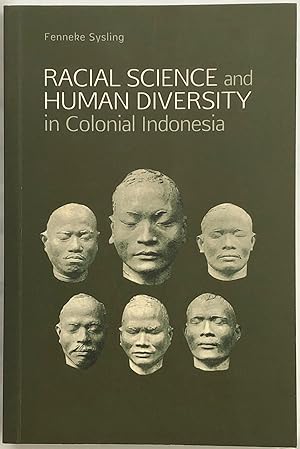
Racial science and human diversity in colonial Indonesia Format: Paperback
Lingua: Inglese
Editore: University of Chicago press, 2016
ISBN 10: 9814722073 ISBN 13: 9789814722070
EUR 43,57
Spedizione gratuita
Spedito in U.S.A.Quantità: Più di 20 disponibili
Aggiungi al carrelloCondizione: New. Brand New.
-
Racial Science and Human Diversity in Colonial Indonesia.
Lingua: Inglese
Editore: National University of Singapore Press, Singapore, 2016
ISBN 10: 9814722073 ISBN 13: 9789814722070
Da: Lost and Found Books, Healesville, VIC, Australia
Valutazione del venditore 5 su 5 stelle

EUR 37,53
Spedizione EUR 8,76
Spedito da Australia a U.S.A.Quantità: 1 disponibili
Aggiungi al carrellosoft cover. Condizione: Fine, near new condition. No Jacket. Illustrated with black and white photographs and maps. 23 cm. VII, 305 pages.
-

De onmeetbare mens: schedels, ras en wetenschap in Nederlands-Indië
Da: Mooney's bookstore, Den Helder, Paesi Bassi
Valutazione del venditore 4 su 5 stelle

EUR 19,95
Spedizione EUR 14,95
Spedito da Paesi Bassi a U.S.A.Quantità: 1 disponibili
Aggiungi al carrelloCondizione: New.
-

Racial Science and Human Diversity in Colonial Indonesia
Lingua: Inglese
Editore: National University of Singapore Press, 2016
ISBN 10: 9814722073 ISBN 13: 9789814722070
Da: GreatBookPrices, Columbia, MD, U.S.A.
Valutazione del venditore 5 su 5 stelle
Condizione: As New. Unread book in perfect condition.
-

Racial Science and Human Diversity in Colonial Indonesia
Lingua: Inglese
Editore: National University of Singapore Press, 2016
ISBN 10: 9814722073 ISBN 13: 9789814722070
Da: GreatBookPrices, Columbia, MD, U.S.A.
Valutazione del venditore 5 su 5 stelle
Condizione: New.
-
Racial Science & Human Diversity in Colonial Indonesia (Paperback)
Da: Grand Eagle Retail, Bensenville, IL, U.S.A.
Valutazione del venditore 5 su 5 stelle
Paperback. Condizione: new. Paperback. Indonesia is home to diverse peoples who differ from one another in terms of physical appearance as well as social and cultural practices. The way such matters are understood is partly rooted in ideas developed by racial scientists working in the Netherlands Indies beginning in the late nineteenth century, who tried to develop systematic ways to define and identify distinctive races. Their work helped spread the idea that race had a scientific basis in anthropometry and craniology, and was central to peoples identity, but their encounters in the archipelago also challenged their ideas about race.In The Archipelago of Difference, Fenneke Sysling draws on published works and private papers to describe to way Dutch racial scientists tried to make sense of the human diversity in the Indonesian archipelago. The making of racial knowledge, it contends, cannot be explained solely in terms of internal European intellectual developments but it was on the ground, that ideas about race weremade and unmade with a set of knowledge strategies that did not always combine well. Sysling describes how skulls were assembled through the colonial infrastructure, how measuring sessions were resisted, what role photography and plaster casting played in racial science and shows how these aspects of science in practice wereentangled with the Dutch colonial Empire. Draws on published works and private papers to describe to way Dutch racial scientists tried to make sense of the human diversity in the Indonesian archipelago. The making of racial knowledge, it contends, cannot be explained solely in terms of internal European intellectual developments but it was on the ground, that ideas about race were made and unmade. Shipping may be from multiple locations in the US or from the UK, depending on stock availability.
-
Racial Science & Human Diversity In Colonial Indonesia: Physical Anthropology and the Netherlands Indies, ca. 1890-1960
Da: Joseph Burridge Books, Dagenham, Regno Unito
Valutazione del venditore 5 su 5 stelle
EUR 32,61
Spedizione EUR 26,97
Spedito da Regno Unito a U.S.A.Quantità: 1 disponibili
Aggiungi al carrelloSoft cover. Condizione: New. Summary:Draws on published works and private papers to describe to way Dutch racial scientists tried to make sense of the human diversity in the Indonesian archipelago. The making of racial knowledge, it contends, cannot be explained solely in terms of internal European intellectual developments but it was "on the ground", that ideas about race were made and unmade.
-
De onmeetbare mens: schedels, ras en wetenschap in Nederlands-Indië
Da: Mooney's bookstore, Den Helder, Paesi Bassi
Valutazione del venditore 4 su 5 stelle
EUR 26,65
Spedizione EUR 14,95
Spedito da Paesi Bassi a U.S.A.Quantità: 1 disponibili
Aggiungi al carrelloCondizione: Very good.
-
Racial Science & Human Diversity In Colonial Indonesia: Physical Anthropology and the Netherlands Indies, ca. 1890-1960
Da: Kennys Bookshop and Art Galleries Ltd., Galway, GY, Irlanda
Valutazione del venditore 5 su 5 stelle
EUR 58,69
Spedizione EUR 10,50
Spedito da Irlanda a U.S.A.Quantità: 15 disponibili
Aggiungi al carrelloCondizione: New. Num Pages: 322 pages. BIC Classification: 1FMN; HBTB; JFSL3; JHMC. Category: (P) Professional & Vocational. Dimension: 229 x 152 x 20. . . 2016. Paperback. . . . .
-

Racial Science and Human Diversity in Colonial Indonesia
Lingua: Inglese
Editore: National University of Singapore Press, 2016
ISBN 10: 9814722073 ISBN 13: 9789814722070
Da: GreatBookPricesUK, Woodford Green, Regno Unito
Valutazione del venditore 5 su 5 stelle
EUR 59,14
Spedizione EUR 17,59
Spedito da Regno Unito a U.S.A.Quantità: 1 disponibili
Aggiungi al carrelloCondizione: As New. Unread book in perfect condition.
-
Racial Science and Human Diversity in Colonial Indonesia: Physical Anthropology and the Netherlands Indies, Ca. 1890-1960
Da: Revaluation Books, Exeter, Regno Unito
Valutazione del venditore 5 su 5 stelle
EUR 69,57
Spedizione EUR 11,73
Spedito da Regno Unito a U.S.A.Quantità: 1 disponibili
Aggiungi al carrelloPaperback. Condizione: Brand New. 305 pages. 9.00x6.00x0.50 inches. In Stock.
-
Racial Science & Human Diversity In Colonial Indonesia: Physical Anthropology and the Netherlands Indies, ca. 1890-1960
Da: Kennys Bookstore, Olney, MD, U.S.A.
Valutazione del venditore 5 su 5 stelle
Condizione: New. Num Pages: 322 pages. BIC Classification: 1FMN; HBTB; JFSL3; JHMC. Category: (P) Professional & Vocational. Dimension: 229 x 152 x 20. . . 2016. Paperback. . . . . Books ship from the US and Ireland.
-

Racial Science and Human Diversity in Colonial Indonesia
Lingua: Inglese
Editore: National University of Singapore Press, 2016
ISBN 10: 9814722073 ISBN 13: 9789814722070
Da: GreatBookPricesUK, Woodford Green, Regno Unito
Valutazione del venditore 5 su 5 stelle
EUR 65,46
Spedizione EUR 17,59
Spedito da Regno Unito a U.S.A.Quantità: 1 disponibili
Aggiungi al carrelloCondizione: New.
-

EUR 53,49
Spedizione EUR 48,99
Spedito da Germania a U.S.A.Quantità: 1 disponibili
Aggiungi al carrelloCondizione: New. Draws on published works and private papers to describe to way Dutch racial scientists tried to make sense of the human diversity in the Indonesian archipelago. The making of racial knowledge, it contends, cannot be explained solely in terms of internal Eur.
-

onmeetbare mens Schedels, ras en wetenschap in Nederlands-Indie
Editore: , vantilt uitgeverij, 2015, 2015
Da: BOOKSELLER - ERIK TONEN BOOKS, Antwerpen, Belgio
Membro dell'associazione: ILAB
Valutazione del venditore 5 su 5 stelle
EUR 19,95
Spedizione EUR 39,50
Spedito da Belgio a U.S.A.Quantità: 1 disponibili
Aggiungi al carrellopaperback, 14 x 22 cm, geillustreerd, 192 pagina?s - Vormgever: Mijke Wondergem. ISBN 9789460042195. Tot ver in de twintigste eeuw gingen fysisch antropologen in Nederlands-Indie op zoek naar het meetbare aan de mens. Ze namen de lichaamsmaten op met hun meetlinten, ze vergeleken de huidskleur met een kleurentabel, ze noteerden de haarvorm (krullend, kroezend, steil) en ze verzamelden schedels die nu in Nederlandse musea liggen. Deze bijeengebrachte kennis moest leiden tot objectieve categoriseringen van de rassen van de kolonie. Maar dat bleek niet zo eenvoudig. Mensen weigerden zich soms te laten meten en de tabellen met cijfers boden niet altijd nieuwe inzichten. In De onmeetbare mens laat Fenneke Sysling zien hoe ideeen over rassen in Indie gemaakt, maar ook ondermijnd werden. De focus op de dagelijkse praktijk van de fysische antropologie toont scherp de ongelijke koloniale verhoudingen en de soms onethische onderzoeksmethoden en vooroordelen, maar ook de onverwachte ontmoetingen in alle delen van de Indische archipel. 0 g.
-

onmeetbare mens Schedels, ras en wetenschap in Nederlands-Indie
Editore: , ,
Da: BOOKSELLER - ERIK TONEN BOOKS, Antwerpen, Belgio
Membro dell'associazione: ILAB
Valutazione del venditore 5 su 5 stelle
EUR 19,95
Spedizione EUR 39,50
Spedito da Belgio a U.S.A.Quantità: 1 disponibili
Aggiungi al carrellopaperback, 14 x 22 cm, geillustreerd, 192 pagina?sVormgever: Mijke Wondergem. ISBN 9789460042195. Tot ver in de twintigste eeuw gingen fysisch antropologen in Nederlands-Indie op zoek naar het meetbare aan de mens. Ze namen de lichaamsmaten op met hun meetlinten, ze vergeleken de huidskleur met een kleurentabel, ze noteerden de haarvorm (krullend, kroezend, steil) en ze verzamelden schedels die nu in Nederlandse musea liggen. Deze bijeengebrachte kennis moest leiden tot objectieve categoriseringen van de rassen van de kolonie. Maar dat bleek niet zo eenvoudig. Mensen weigerden zich soms te laten meten en de tabellen met cijfers boden niet altijd nieuwe inzichten. In De onmeetbare mens laat Fenneke Sysling zien hoe ideeen over rassen in Indie gemaakt, maar ook ondermijnd werden. De focus op de dagelijkse praktijk van de fysische antropologie toont scherp de ongelijke koloniale verhoudingen en de soms onethische onderzoeksmethoden en vooroordelen, maar ook de onverwachte ontmoetingen in alle delen van de Indische archipel. 0 g.
-
Racial Science & Human Diversity in Colonial Indonesia (Paperback)
Da: AussieBookSeller, Truganina, VIC, Australia
Valutazione del venditore 5 su 5 stelle
EUR 97,56
Spedizione EUR 32,39
Spedito da Australia a U.S.A.Quantità: 1 disponibili
Aggiungi al carrelloPaperback. Condizione: new. Paperback. Indonesia is home to diverse peoples who differ from one another in terms of physical appearance as well as social and cultural practices. The way such matters are understood is partly rooted in ideas developed by racial scientists working in the Netherlands Indies beginning in the late nineteenth century, who tried to develop systematic ways to define and identify distinctive races. Their work helped spread the idea that race had a scientific basis in anthropometry and craniology, and was central to peoples identity, but their encounters in the archipelago also challenged their ideas about race.In The Archipelago of Difference, Fenneke Sysling draws on published works and private papers to describe to way Dutch racial scientists tried to make sense of the human diversity in the Indonesian archipelago. The making of racial knowledge, it contends, cannot be explained solely in terms of internal European intellectual developments but it was on the ground, that ideas about race weremade and unmade with a set of knowledge strategies that did not always combine well. Sysling describes how skulls were assembled through the colonial infrastructure, how measuring sessions were resisted, what role photography and plaster casting played in racial science and shows how these aspects of science in practice wereentangled with the Dutch colonial Empire. Draws on published works and private papers to describe to way Dutch racial scientists tried to make sense of the human diversity in the Indonesian archipelago. The making of racial knowledge, it contends, cannot be explained solely in terms of internal European intellectual developments but it was on the ground, that ideas about race were made and unmade. Shipping may be from our Sydney, NSW warehouse or from our UK or US warehouse, depending on stock availability.