

Importo totale (1 articolo articoli):
Destinazione ordine:

thomas breithaupt (16 risultati)
Vai alla pagina principale dei risultati di ricerca
Filtri di ricerca
Tipo di articolo
- Tutti i tipi di prodotto
- Libri (16)
- Riviste e Giornali (Nessun altro risultato corrispondente a questo perfezionamento)
- Fumetti (Nessun altro risultato corrispondente a questo perfezionamento)
- Spartiti (Nessun altro risultato corrispondente a questo perfezionamento)
- Arte, Stampe e Poster (Nessun altro risultato corrispondente a questo perfezionamento)
- Fotografie (Nessun altro risultato corrispondente a questo perfezionamento)
- Mappe (Nessun altro risultato corrispondente a questo perfezionamento)
- Manoscritti e Collezionismo cartaceo (Nessun altro risultato corrispondente a questo perfezionamento)
Condizioni Maggiori informazioni
- Nuovo (14)
- Come nuovo, Ottimo o Quasi ottimo (1)
- Molto buono o Buono (1)
- Discreto o Mediocre (Nessun altro risultato corrispondente a questo perfezionamento)
- Come descritto (Nessun altro risultato corrispondente a questo perfezionamento)
Legatura
Ulteriori caratteristiche
- Prima ed. (Nessun altro risultato corrispondente a questo perfezionamento)
- Copia autograf. (Nessun altro risultato corrispondente a questo perfezionamento)
- Sovracoperta (Nessun altro risultato corrispondente a questo perfezionamento)
- Con foto (9)
- Non Print on Demand (8)
Lingua (2)
Spedizione gratuita
- Spedizione gratuita in U.S.A. (Nessun altro risultato corrispondente a questo perfezionamento)
Paese del venditore
Valutazione venditore
-

Museumsführer Schwarzwälder Freilichtmuseum Vogtsbauernhof
ISBN 10: 3000413863 ISBN 13: 9783000413865
EUR 5,56
Spedizione EUR 10,00
Spedito da Germania a U.S.A.Quantità: 1 disponibili
Aggiungi al carrelloCondizione: very good. Gut/Very good: Buch bzw. Schutzumschlag mit wenigen Gebrauchsspuren an Einband, Schutzumschlag oder Seiten. / Describes a book or dust jacket that does show some signs of wear on either the binding, dust jacket or pages.
-

EUR 200,21
Spedizione EUR 105,00
Spedito da Germania a U.S.A.Quantità: 1 disponibili
Aggiungi al carrelloCondizione: Sehr gut. Zustand: Sehr gut | Seiten: 584 | Sprache: Englisch | Produktart: Bücher | The crustaceans are ecologically and economically important organisms. They constitute one of the dominant invertebrate groups on earth, particularly within the aquatic realm. Crustaceans include some of the preferred scientific model organism, profitable aquaculture specimen, but also invasive nuisance species threatening native animal communities throughout the world. Chemoreception is the most important sensory modality of crustaceans, acquiring important information about their environment and picking up the chemical signals that mediate communication with conspecifics.Significant advances have been made in our understanding of crustacean chemical communication during the past decade. This includes knowledge about the identity, production, transfer, reception and behavioral function of chemical signals in selected crustacean groups. While it is well known that chemical communication is an integral part of the behavioral ecology of most living organisms, the intricate ways in which organisms allocate chemicals in communication remains enigmatic. How does the environment influence the evolution of chemical communication? What are the environmental cues that induce production or release of chemicals? How do individuals economize production and utilization of chemicals? What is the importance of molecule specificity or mix of a molecule cocktail in chemical communication? What is the role of chemical cues in multimodal communication? How does the ontogenetic stage, the sex or the physiological status of an individual affect its reaction to chemical cues? Many of these questions still represent important challenges to biologists.
-
Chemical Communication in Crustaceans
Da: Ria Christie Collections, Uxbridge, Regno Unito
Valutazione del venditore 5 su 5 stelle

EUR 311,08
Spedizione EUR 13,88
Spedito da Regno Unito a U.S.A.Quantità: Più di 20 disponibili
Aggiungi al carrelloCondizione: New. In.
-

Chemical Communication in Crustaceans
Da: Ria Christie Collections, Uxbridge, Regno Unito
Valutazione del venditore 5 su 5 stelle
EUR 311,08
Spedizione EUR 13,88
Spedito da Regno Unito a U.S.A.Quantità: Più di 20 disponibili
Aggiungi al carrelloCondizione: New. In.
-
EUR 274,55
Spedizione EUR 70,00
Spedito da Germania a U.S.A.Quantità: 5 disponibili
Aggiungi al carrelloTaschenbuch. Condizione: Neu. Chemical Communication in Crustaceans | Thomas Breithaupt (u. a.) | Taschenbuch | xviii | Englisch | 2014 | Springer | EAN 9781489981493 | Verantwortliche Person für die EU: Springer Verlag GmbH, Tiergartenstr. 17, 69121 Heidelberg, juergen[dot]hartmann[at]springer[dot]com | Anbieter: preigu.
-
EUR 329,54
Spedizione EUR 65,17
Spedito da Germania a U.S.A.Quantità: 1 disponibili
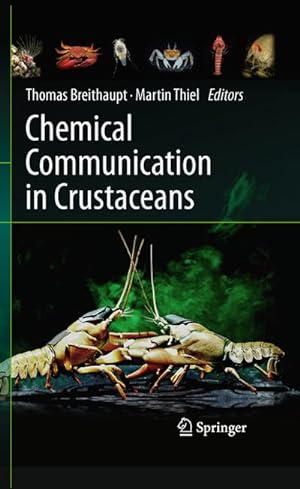
Aggiungi al carrelloBuch. Condizione: Neu. Druck auf Anfrage Neuware - Printed after ordering - The crustaceans are ecologically and economically important organisms. They constitute one of the dominant invertebrate groups on earth, particularly within the aquatic realm. Crustaceans include some of the preferred scientific model organism, profitable aquaculture specimen, but also invasive nuisance species threatening native animal communities throughout the world. Chemoreception is the most important sensory modality of crustaceans, acquiring important information about their environment and picking up the chemical signals that mediate communication with conspecifics.Significant advances have been made in our understanding of crustacean chemical communication during the past decade. This includes knowledge about the identity, production, transfer, reception and behavioral function of chemical signals in selected crustacean groups. While it is well known that chemical communication is an integral part of the behavioral ecology of most living organisms, the intricate ways in which organisms allocate chemicals in communication remains enigmatic. How does the environment influence the evolution of chemical communication What are the environmental cues that induce production or release of chemicals How do individuals economize production and utilization of chemicals What is the importance of molecule specificity or mix of a molecule cocktail in chemical communication What is the role of chemical cues in multimodal communication How does the ontogenetic stage, the sex or the physiological status of an individual affect its reaction to chemical cues Many of these questions still represent important challenges to biologists.
-

Chemical Communication in Crustaceans
Lingua: Inglese
Editore: Springer New York, Springer New York, 2014
ISBN 10: 1489981497 ISBN 13: 9781489981493
EUR 331,86
Spedizione EUR 64,37
Spedito da Germania a U.S.A.Quantità: 1 disponibili
Aggiungi al carrelloTaschenbuch. Condizione: Neu. Druck auf Anfrage Neuware - Printed after ordering - The crustaceans are ecologically and economically important organisms. They constitute one of the dominant invertebrate groups on earth, particularly within the aquatic realm. Crustaceans include some of the preferred scientific model organism, profitable aquaculture specimen, but also invasive nuisance species threatening native animal communities throughout the world. Chemoreception is the most important sensory modality of crustaceans, acquiring important information about their environment and picking up the chemical signals that mediate communication with conspecifics.Significant advances have been made in our understanding of crustacean chemical communication during the past decade. This includes knowledge about the identity, production, transfer, reception and behavioral function of chemical signals in selected crustacean groups. While it is well known that chemical communication is an integral part of the behavioral ecology of most living organisms, the intricate ways in which organisms allocate chemicals in communication remains enigmatic. How does the environment influence the evolution of chemical communication What are the environmental cues that induce production or release of chemicals How do individuals economize production and utilization of chemicals What is the importance of molecule specificity or mix of a molecule cocktail in chemical communication What is the role of chemical cues in multimodal communication How does the ontogenetic stage, the sex or the physiological status of an individual affect its reaction to chemical cues Many of these questions still represent important challenges to biologists.
-
Chemical Communication in Crustaceans
Da: Revaluation Books, Exeter, Regno Unito
Valutazione del venditore 5 su 5 stelle
EUR 457,91
Spedizione EUR 17,38
Spedito da Regno Unito a U.S.A.Quantità: 2 disponibili
Aggiungi al carrelloHardcover. Condizione: Brand New. 565 pages. 9.00x6.00x1.25 inches. In Stock.
-
Chemical Communication in Crustaceans (eng)
Da: Brook Bookstore On Demand, Napoli, NA, Italia
Valutazione del venditore 3 su 5 stelle

EUR 246,33
Spedizione EUR 8,00
Spedito da Italia a U.S.A.Quantità: Più di 20 disponibili
Aggiungi al carrelloCondizione: new. Questo è un articolo print on demand.
-
Chemical Communication in Crustaceans (eng)
Da: Brook Bookstore On Demand, Napoli, NA, Italia
Valutazione del venditore 3 su 5 stelle
EUR 246,33
Spedizione EUR 11,00
Spedito da Italia a U.S.A.Quantità: Più di 20 disponibili
Aggiungi al carrelloCondizione: new. Questo è un articolo print on demand.
-

Chemical Communication in Crustaceans
Lingua: Inglese
Editore: Springer New York Aug 2014, 2014
ISBN 10: 1489981497 ISBN 13: 9781489981493
Da: BuchWeltWeit Ludwig Meier e.K., Bergisch Gladbach, Germania
Valutazione del venditore 5 su 5 stelle
EUR 266,43
Spedizione EUR 23,00
Spedito da Germania a U.S.A.Quantità: 2 disponibili
Aggiungi al carrelloTaschenbuch. Condizione: Neu. This item is printed on demand - it takes 3-4 days longer - Neuware -The crustaceans are ecologically and economically important organisms. They constitute one of the dominant invertebrate groups on earth, particularly within the aquatic realm. Crustaceans include some of the preferred scientific model organism, profitable aquaculture specimen, but also invasive nuisance species threatening native animal communities throughout the world. Chemoreception is the most important sensory modality of crustaceans, acquiring important information about their environment and picking up the chemical signals that mediate communication with conspecifics.Significant advances have been made in our understanding of crustacean chemical communication during the past decade. This includes knowledge about the identity, production, transfer, reception and behavioral function of chemical signals in selected crustacean groups. While it is well known that chemical communication is an integral part of the behavioral ecology of most living organisms, the intricate ways in which organisms allocate chemicals in communication remains enigmatic. How does the environment influence the evolution of chemical communication What are the environmental cues that induce production or release of chemicals How do individuals economize production and utilization of chemicals What is the importance of molecule specificity or mix of a molecule cocktail in chemical communication What is the role of chemical cues in multimodal communication How does the ontogenetic stage, the sex or the physiological status of an individual affect its reaction to chemical cues Many of these questions still represent important challenges to biologists. 584 pp. Englisch.
-

EUR 267,86
Spedizione EUR 48,99
Spedito da Germania a U.S.A.Quantità: Più di 20 disponibili
Aggiungi al carrelloCondizione: New. Dieser Artikel ist ein Print on Demand Artikel und wird nach Ihrer Bestellung fuer Sie gedruckt. This book covers a wide range of topics, including the identity, production, transmission, reception and behavioral function of chemical signals in selected crustacean groups.Chemical signaling is the most widespread form of communication in crustaceans.Dur.
-

EUR 267,86
Spedizione EUR 48,99
Spedito da Germania a U.S.A.Quantità: Più di 20 disponibili
Aggiungi al carrelloCondizione: New. Dieser Artikel ist ein Print on Demand Artikel und wird nach Ihrer Bestellung fuer Sie gedruckt. This book covers a wide range of topics, including the identity, production, transmission, reception and behavioral function of chemical signals in selected crustacean groups.Chemical signaling is the most widespread form of communication in crustaceans.Dur.
-

Chemical Communication in Crustaceans
Lingua: Inglese
Editore: Springer New York Nov 2010, 2010
ISBN 10: 038777100X ISBN 13: 9780387771007
Da: BuchWeltWeit Ludwig Meier e.K., Bergisch Gladbach, Germania
Valutazione del venditore 5 su 5 stelle
EUR 320,99
Spedizione EUR 23,00
Spedito da Germania a U.S.A.Quantità: 2 disponibili
Aggiungi al carrelloBuch. Condizione: Neu. This item is printed on demand - it takes 3-4 days longer - Neuware -The crustaceans are ecologically and economically important organisms. They constitute one of the dominant invertebrate groups on earth, particularly within the aquatic realm. Crustaceans include some of the preferred scientific model organism, profitable aquaculture specimen, but also invasive nuisance species threatening native animal communities throughout the world. Chemoreception is the most important sensory modality of crustaceans, acquiring important information about their environment and picking up the chemical signals that mediate communication with conspecifics.Significant advances have been made in our understanding of crustacean chemical communication during the past decade. This includes knowledge about the identity, production, transfer, reception and behavioral function of chemical signals in selected crustacean groups. While it is well known that chemical communication is an integral part of the behavioral ecology of most living organisms, the intricate ways in which organisms allocate chemicals in communication remains enigmatic. How does the environment influence the evolution of chemical communication What are the environmental cues that induce production or release of chemicals How do individuals economize production and utilization of chemicals What is the importance of molecule specificity or mix of a molecule cocktail in chemical communication What is the role of chemical cues in multimodal communication How does the ontogenetic stage, the sex or the physiological status of an individual affect its reaction to chemical cues Many of these questions still represent important challenges to biologists. 584 pp. Englisch.
-

Chemical Communication in Crustaceans
Lingua: Inglese
Editore: Springer New York, Humana Nov 2010, 2010
ISBN 10: 038777100X ISBN 13: 9780387771007
Da: buchversandmimpf2000, Emtmannsberg, BAYE, Germania
Valutazione del venditore 5 su 5 stelle
EUR 320,99
Spedizione EUR 60,00
Spedito da Germania a U.S.A.Quantità: 1 disponibili
Aggiungi al carrelloBuch. Condizione: Neu. This item is printed on demand - Print on Demand Titel. Neuware -The crustaceans are ecologically and economically important organisms. They constitute one of the dominant invertebrate groups on earth, particularly within the aquatic realm. Crustaceans include some of the preferred scientific model organism, profitable aquaculture specimen, but also invasive nuisance species threatening native animal communities throughout the world. Chemoreception is the most important sensory modality of crustaceans, acquiring important information about their environment and picking up the chemical signals that mediate communication with conspecifics.Significant advances have been made in our understanding of crustacean chemical communication during the past decade. This includes knowledge about the identity, production, transfer, reception and behavioral function of chemical signals in selected crustacean groups. While it is well known that chemical communication is an integral part of the behavioral ecology of most living organisms, the intricate ways in which organisms allocate chemicals in communication remains enigmatic. How does the environment influence the evolution of chemical communication What are the environmental cues that induce production or release of chemicals How do individuals economize production and utilization of chemicals What is the importance of molecule specificity or mix of a molecule cocktail in chemical communication What is the role of chemical cues in multimodal communication How does the ontogenetic stage, the sex or the physiological status of an individual affect its reaction to chemical cues Many of these questions still represent important challenges to biologists.Springer-Verlag GmbH, Tiergartenstr. 17, 69121 Heidelberg 584 pp. Englisch.
-

Chemical Communication in Crustaceans
Lingua: Inglese
Editore: Springer New York, Springer New York Aug 2014, 2014
ISBN 10: 1489981497 ISBN 13: 9781489981493
Da: buchversandmimpf2000, Emtmannsberg, BAYE, Germania
Valutazione del venditore 5 su 5 stelle
EUR 320,99
Spedizione EUR 60,00
Spedito da Germania a U.S.A.Quantità: 1 disponibili
Aggiungi al carrelloTaschenbuch. Condizione: Neu. This item is printed on demand - Print on Demand Titel. Neuware -The crustaceans are ecologically and economically important organisms. They constitute one of the dominant invertebrate groups on earth, particularly within the aquatic realm. Crustaceans include some of the preferred scientific model organism, profitable aquaculture specimen, but also invasive nuisance species threatening native animal communities throughout the world. Chemoreception is the most important sensory modality of crustaceans, acquiring important information about their environment and picking up the chemical signals that mediate communication with conspecifics.Significant advances have been made in our understanding of crustacean chemical communication during the past decade. This includes knowledge about the identity, production, transfer, reception and behavioral function of chemical signals in selected crustacean groups. While it is well known that chemical communication is an integral part of the behavioral ecology of most living organisms, the intricate ways in which organisms allocate chemicals in communication remains enigmatic. How does the environment influence the evolution of chemical communication What are the environmental cues that induce production or release of chemicals How do individuals economize production and utilization of chemicals What is the importance of molecule specificity or mix of a molecule cocktail in chemical communication What is the role of chemical cues in multimodal communication How does the ontogenetic stage, the sex or the physiological status of an individual affect its reaction to chemical cues Many of these questions still represent important challenges to biologists.Springer Verlag GmbH, Tiergartenstr. 17, 69121 Heidelberg 584 pp. Englisch.


