

Importo totale (1 articolo articoli):
Destinazione ordine:

tierney keith (9 risultati)
Vai alla pagina principale dei risultati di ricerca
Filtri di ricerca
Tipo di articolo
- Tutti i tipi di prodotto
- Libri (9)
- Riviste e Giornali (Nessun altro risultato corrispondente a questo perfezionamento)
- Fumetti (Nessun altro risultato corrispondente a questo perfezionamento)
- Spartiti (Nessun altro risultato corrispondente a questo perfezionamento)
- Arte, Stampe e Poster (Nessun altro risultato corrispondente a questo perfezionamento)
- Fotografie (Nessun altro risultato corrispondente a questo perfezionamento)
- Mappe (Nessun altro risultato corrispondente a questo perfezionamento)
- Manoscritti e Collezionismo cartaceo (Nessun altro risultato corrispondente a questo perfezionamento)
Condizioni Maggiori informazioni
- Nuovo (6)
- Come nuovo, Ottimo o Quasi ottimo (Nessun altro risultato corrispondente a questo perfezionamento)
- Molto buono o Buono (3)
- Discreto o Mediocre (Nessun altro risultato corrispondente a questo perfezionamento)
- Come descritto (Nessun altro risultato corrispondente a questo perfezionamento)
Legatura
Ulteriori caratteristiche
- Prima ed. (2)
- Copia autograf. (Nessun altro risultato corrispondente a questo perfezionamento)
- Sovracoperta (1)
- Con foto (3)
- Non Print on Demand (7)
Lingua (2)
Spedizione gratuita
- Spedizione gratuita in U.S.A. (Nessun altro risultato corrispondente a questo perfezionamento)
Paese del venditore
Valutazione venditore
-

The Responsive University: Restructuring for High Performance (First Edition)
Lingua: Inglese
Editore: The Johns Hopkins University Press, Baltimore, 1997
ISBN 10: 0801857155 ISBN 13: 9780801857157
Da: Dan Pope Books, West Hartford, CT, U.S.A.
Valutazione del venditore 5 su 5 stelle

Prima edizione
Hardcover. Condizione: Very Good. Condizione sovraccoperta: Very Good. 1st Edition. First printing, with full number line. A very good copy in a near-fine jacket. A tight copy. Note: Light wear and curling to jacket edges. A crease on rear jacket flap and a couple creases on rear jacket cover. A few dog-eared pages, and just a couple pen notes in text (otherwise a fine copy).
-
Myrddin Three The photos in this listing are of the item offered for sale.
Editore: Lawson W. Hill, Northbrook, IL, 1976
Da: biblioboy, North Providence, RI, U.S.A.
Valutazione del venditore 5 su 5 stelle
Prima edizione
Softcover. Condizione: Very Good. First Edition. Lawson Hill 1976 #91/1000 copies. Includes Addenda and Record in pocket on rear cover Very good with light wear, rubbing to rear cover. See photos mag6E.
-

Paperback. Condizione: Very Good. Covers and edges show some rubbing and wear. Pages are clear and free of writing and notes.
-

Fish Physiology: Organic Chemical Toxicology of Fishes: Fish Physiology Volume 33
Da: Chiron Media, Wallingford, Regno Unito
Valutazione del venditore 5 su 5 stelle
EUR 89,37
Spedizione EUR 17,75
Spedito da Regno Unito a U.S.A.Quantità: 1 disponibili
Aggiungi al carrelloHardcover. Condizione: New.
-
Fish Physiology: Organic Chemical Toxicology of Fishes
Da: Revaluation Books, Exeter, Regno Unito
Valutazione del venditore 5 su 5 stelle
EUR 101,63
Spedizione EUR 14,33
Spedito da Regno Unito a U.S.A.Quantità: 1 disponibili
Aggiungi al carrelloHardcover. Condizione: Brand New. 1st edition. 574 pages. 9.25x6.25x1.50 inches. In Stock.
-
Fish Physiology: Organic Chemical Toxicology of Fishes: Volume 33
Lingua: Inglese
Editore: Elsevier Science Publishing Co Inc, 2013
ISBN 10: 0123982545 ISBN 13: 9780123982544
Da: THE SAINT BOOKSTORE, Southport, Regno Unito
Valutazione del venditore 5 su 5 stelle
EUR 112,73
Spedizione EUR 22,66
Spedito da Regno Unito a U.S.A.Quantità: 1 disponibili
Aggiungi al carrelloHardback. Condizione: New. New copy - Usually dispatched within 4 working days.
-

Organic Chemical Toxicology of Fishes Fish Physiology Volume 33
Lingua: Inglese
Editore: Academic Press, 2014
Da: Books in my Basket, New Delhi, India
Valutazione del venditore 5 su 5 stelle
EUR 143,16
Spedizione EUR 16,00
Spedito da India a U.S.A.Quantità: 4 disponibili
Aggiungi al carrelloN.A. Condizione: New. ISBN:9780123982544.
-
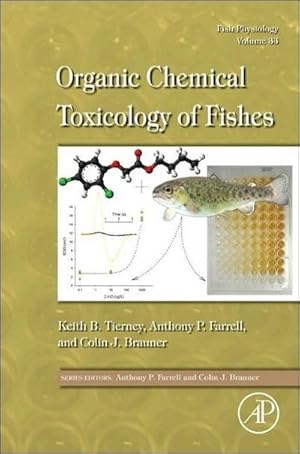
Fish Physiology: Organic Chemical Toxicology of Fishes
Da: BuchWeltWeit Ludwig Meier e.K., Bergisch Gladbach, Germania
Valutazione del venditore 5 su 5 stelle
EUR 150,00
Spedizione EUR 23,00
Spedito da Germania a U.S.A.Quantità: 2 disponibili
Aggiungi al carrelloBuch. Condizione: Neu. This item is printed on demand - it takes 3-4 days longer - Neuware -Fish Physiology: Organic Chemical Toxicology of Fishes discusses the different types of organic chemical contaminants and their respective toxic effects in fish. The book also covers the detection of dissolved organic compounds and methods to assess organic toxicity. Substances addressed in this book include organometallics, hydrocarbons, endocrine disrupting compounds (EDCs), insecticides, herbicides, and pharmaceuticals. Fish are exposed to an ever-increasing array of organic chemicals that find their way into rivers and oceans. Some of these compounds are no longer being produced but nonetheless persist within the environment (persistent organic pollutants, or POPs). The exposure of fish to toxic organic compounds has potential impact on human, fish, and ecosystem health. Yet the regulations that govern environmental water quality vary worldwide, and compliance is never complete. This book provides a crucial resource on these issues for researchers in zoology, fish physiology, and related fields; applied researchers in environmental monitoring, conservation biology, and toxicology; and university-level students and instructors in these areas. 574 pp. Englisch.
-

EUR 165,99
Spedizione EUR 64,58
Spedito da Germania a U.S.A.Quantità: 2 disponibili
Aggiungi al carrelloBuch. Condizione: Neu. nach der Bestellung gedruckt Neuware - Printed after ordering - Fish Physiology: Organic Chemical Toxicology of Fishes discusses the different types of organic chemical contaminants and their respective toxic effects in fish. The book also covers the detection of dissolved organic compounds and methods to assess organic toxicity. Substances addressed in this book include organometallics, hydrocarbons, endocrine disrupting compounds (EDCs), insecticides, herbicides, and pharmaceuticals. Fish are exposed to an ever-increasing array of organic chemicals that find their way into rivers and oceans. Some of these compounds are no longer being produced but nonetheless persist within the environment (persistent organic pollutants, or POPs). The exposure of fish to toxic organic compounds has potential impact on human, fish, and ecosystem health. Yet the regulations that govern environmental water quality vary worldwide, and compliance is never complete. This book provides a crucial resource on these issues for researchers in zoology, fish physiology, and related fields; applied researchers in environmental monitoring, conservation biology, and toxicology; and university-level students and instructors in these areas.


