Importo totale (1 articolo articoli):
Destinazione ordine:

uncle herbert lauderbach (2 risultati)
Vai alla pagina principale dei risultati di ricerca
Filtri di ricerca
Tipo di articolo
- Tutti i tipi di prodotto
- Libri (2)
- Riviste e Giornali (Nessun altro risultato corrispondente a questo perfezionamento)
- Fumetti (Nessun altro risultato corrispondente a questo perfezionamento)
- Spartiti (Nessun altro risultato corrispondente a questo perfezionamento)
- Arte, Stampe e Poster (Nessun altro risultato corrispondente a questo perfezionamento)
- Fotografie (Nessun altro risultato corrispondente a questo perfezionamento)
- Mappe (Nessun altro risultato corrispondente a questo perfezionamento)
- Manoscritti e Collezionismo cartaceo (Nessun altro risultato corrispondente a questo perfezionamento)
Condizioni Maggiori informazioni
- Nuovo (Nessun altro risultato corrispondente a questo perfezionamento)
- Come nuovo, Ottimo o Quasi ottimo (Nessun altro risultato corrispondente a questo perfezionamento)
- Molto buono o Buono (Nessun altro risultato corrispondente a questo perfezionamento)
- Discreto o Mediocre (1)
- Come descritto (1)
Legatura
- Tutte
- Rilegato (2)
- Brossura (Nessun altro risultato corrispondente a questo perfezionamento)
Ulteriori caratteristiche
- Prima ed. (Nessun altro risultato corrispondente a questo perfezionamento)
- Copia autograf. (Nessun altro risultato corrispondente a questo perfezionamento)
- Sovracoperta (Nessun altro risultato corrispondente a questo perfezionamento)
- Con foto (1)
- Non Print on Demand (2)
Lingua (1)
Prezzo
- Qualsiasi prezzo
- Inferiore a EUR 20
- EUR 20 a EUR 45
- Superiore a EUR 45 (Nessun altro risultato corrispondente a questo perfezionamento)
Spedizione gratuita
- Spedizione gratuita in U.S.A. (Nessun altro risultato corrispondente a questo perfezionamento)
Paese del venditore
Valutazione venditore
-

The Prattler: a Picture Story Book
Editore: Lippincott, 1876
Da: PONCE A TIME BOOKS, SANTA BARBARA, CA, U.S.A.
Valutazione del venditore 4 su 5 stelle

0 366 p. Includes illustrations. Good. moderate shelfwear, slit to right side of spine covering all the way down.
-
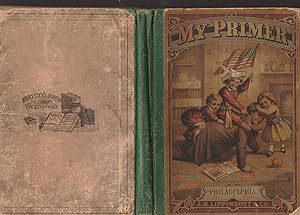
My Primer
Editore: J.B. Lippincott & Co., 1877
Da: Whitledge Books, Austin, TX, U.S.A.
Valutazione del venditore 5 su 5 stelle

Hardcover. Condizione: Poor. No Jacket. Lauderbach, Mesnet, et al. (illustratore). Condition: Poor. But this 140-year-old children?s first reader is so rare and interesting that I believe it should be listed and made available. The text pages are not torn or marked up (except page 36 with a penciled-in sentence), but all are soiled and spotted. The signatures are pulling away from the binding, but all pages are present (the final page ? 48 ? says The End). The cover is badly soiled, which shows this primer got used a lot, but the green spine is intact. 8? x 6?, 48 pages, 7 ounces. Both pastedowns have penciled numbers. There is an inscription on the first free endpaper: Frank Hannum, Danville, Illinois, December 25th 1879. This suggests it was a Christmas gift. Ancestry-dot-com shows a Frank Hannum in Danville in 1880 with a birthdate of about 1875, which would have made the recipient of this gift book four-years-old. His father was a grocery clerk. On that same genealogical website Frank Hannum is listed as a newsboy in 1889. Danville had a population of 7,733 in 1880 and 11,491 in 1890. It was a major coal-mining town featuring some of the earliest open pits. XX Primers introduced children to the alphabet and then used simple stories with similar words to teach reading (with parents?, siblings?, and/or teachers? help). What makes this 1877 primer delightful are the illustrations for each letter of the alphabet and for the stories, which always feature children and often an animal they would be familiar with (dogs are the most frequent, followed by horses, cats, cows, oxen, and birds. Hens, bears, donkeys, roosters, and squirrels only appear once. Besides using primarily 1-syllable words, the little stories accompanied by illustrations often provide some grammatical rules as well as guidance to good behavior. One of the strangest is: Do not hit the boy, bad man. If you do, you will go off in a van. Do not go to him, boy, he will hit you in the eye. Other stories follow traditional Victorian sentimentalism: Poor little Nora has no one to love her; she has to work hard every day, and does not get much to eat. Is it not sad? You must all be kind to the poor, for they have a hard life, and do not have the nice toys and food that you have. Will you try not to forget this?