

Importo totale (1 articolo articoli):
Destinazione ordine:

voll norann (20 risultati)
Vai alla pagina principale dei risultati di ricerca
Filtri di ricerca
Tipo di articolo
- Tutti i tipi di prodotto
- Libri (20)
- Riviste e Giornali (Nessun altro risultato corrispondente a questo perfezionamento)
- Fumetti (Nessun altro risultato corrispondente a questo perfezionamento)
- Spartiti (Nessun altro risultato corrispondente a questo perfezionamento)
- Arte, Stampe e Poster (Nessun altro risultato corrispondente a questo perfezionamento)
- Fotografie (Nessun altro risultato corrispondente a questo perfezionamento)
- Mappe (Nessun altro risultato corrispondente a questo perfezionamento)
- Manoscritti e Collezionismo cartaceo (Nessun altro risultato corrispondente a questo perfezionamento)
Condizioni Maggiori informazioni
- Nuovo (15)
- Come nuovo, Ottimo o Quasi ottimo (2)
- Molto buono o Buono (3)
- Discreto o Mediocre (Nessun altro risultato corrispondente a questo perfezionamento)
- Come descritto (Nessun altro risultato corrispondente a questo perfezionamento)
Legatura
- Tutte
- Rilegato (Nessun altro risultato corrispondente a questo perfezionamento)
- Brossura (20)
Ulteriori caratteristiche
- Prima ed. (Nessun altro risultato corrispondente a questo perfezionamento)
- Copia autograf. (Nessun altro risultato corrispondente a questo perfezionamento)
- Sovracoperta (Nessun altro risultato corrispondente a questo perfezionamento)
- Con foto (8)
- Non Print on Demand (20)
Lingua (1)
Prezzo
- Qualsiasi prezzo
- Inferiore a EUR 20
- EUR 20 a EUR 45 (Nessun altro risultato corrispondente a questo perfezionamento)
- Superiore a EUR 45 (Nessun altro risultato corrispondente a questo perfezionamento)
Spedizione gratuita
Paese del venditore
Valutazione venditore
-
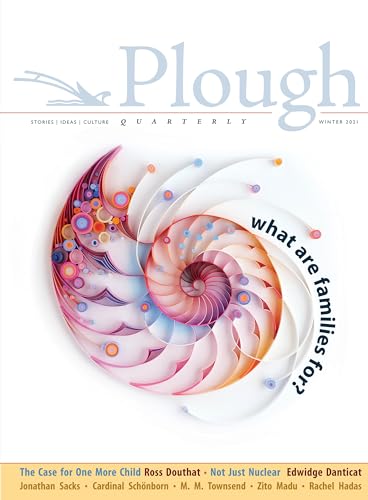
Plough Quarterly No. 26 â" What Are Families For?
Lingua: Inglese
Editore: Plough Publishing House (edition ), 2020
ISBN 10: 1636080146 ISBN 13: 9781636080147
Da: BooksRun, Philadelphia, PA, U.S.A.
Valutazione del venditore 5 su 5 stelle

Paperback. Condizione: Good. It's a preowned item in good condition and includes all the pages. It may have some general signs of wear and tear, such as markings, highlighting, slight damage to the cover, minimal wear to the binding, etc., but they will not affect the overall reading experience.
-

paperback. Condizione: Very Good. Connecting readers with great books since 1972! Used books may not include companion materials, and may have some shelf wear or limited writing. We ship orders daily and Customer Service is our top priority!
-
EUR 11,08
Spedizione gratuita
Spedito in U.S.A.Quantità: Più di 20 disponibili
Aggiungi al carrelloCondizione: As New. Unread copy in mint condition.
-
EUR 11,17
Spedizione gratuita
Spedito in U.S.A.Quantità: Più di 20 disponibili
Aggiungi al carrelloCondizione: New. Brand New.
-

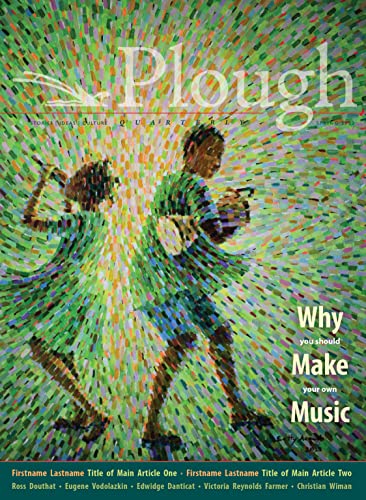
Plough Quarterly No. 31 - Why We Make Music
Lingua: Inglese
Editore: Plough Publishing House, US, 2022
ISBN 10: 1636080510 ISBN 13: 9781636080512
Da: Rarewaves.com USA, London, LONDO, Regno Unito
Valutazione del venditore 5 su 5 stelle
EUR 11,66
Spedizione gratuita
Spedito da Regno Unito a U.S.A.Quantità: Più di 20 disponibili
Aggiungi al carrelloPaperback. Condizione: New. Communal music has the power to shape a soul and a society.In many places today, a culture of singing and making music remains robust, despite pressure from the commercial music industry. Or it was until the Covid pandemic hit and we glimpsed what a world without communal music-making could be like. According to Plato, virtuous music is vital for building a virtuous community. Jewish and Christian traditions take this insight even further: good communal music shapes and builds up the people of God. So how can we choose good music and avoid the bad? The sheer ubiquity of music available for consumption - its presence as a near-constant soundtrack to our daily lives - poses a hazard. Digital music on tap is a temptation to chronic distraction of the soul, to a habit of superficiality and non-attention. Fortunately, the remedy is straightforward: spend less time consuming prepackaged tunes and more time making music. This will be doubly rewarding if done with others - singing with one's family, singing in church, playing in a string quartet, starting a regular jam session. If personal media players tend to cut us off from the physical presence of others, sharing in good music together breaks the spell of isolation and disembodiment. It builds friendship and community.On this theme:- Maureen Swinger's amateur choir sings Bach's Saint Matthew Passion.- Stephen Michael Newby says Black spirituals aren't just for Black people. - Mary Townsend finds Dolly Parton magnificent, but would Aristotle? - Phil Christman finds catharsis in the YouTube comments of eighties songs. - Ben Crosby says congregational singing should be unabashedly weird to visitors.- Joseph Julián González draws on ancient Nahua poets in his music.- Christopher Tin explains why he weaves so many historical influences into his music.- Seven musicians talk about making your own music in schools, churches, prisons, backyards, or children's bedrooms: Nathan Schram, Esther Keiderling, Norann Voll, Chaka Watch Ngwenya, Eileen Maendel, Adora Wong, and Brittany Petruzzi.Also in the issue: Exclusive excerpts from forthcoming books by Eugene Vodolazkin and Esther Maria Magnis- Thoughts on music from Augustine, Gregory of Nyssa, Hildegard of Bingen, Martin Luther, and Eberhard Arnold- Catholics and Anabaptists unite to commemorate the Radical Reformation- New poems by Jacqueline Saphra- A profile of Argentinian singer Mercedes Sosa.- Reviews of Kate Clifford Larson's Walk with Me, Rowan Williams's Shakeshafte, and Sam Quinones's The Least of UsPlough Quarterly features stories, ideas, and culture for people eager to apply their faith to the challenges we face. Each issue includes in-depth articles, interviews, poetry, book reviews, and art.
-
EUR 12,03
Spedizione gratuita
Spedito in U.S.A.Quantità: Più di 20 disponibili
Aggiungi al carrelloCondizione: As New. Unread copy in mint condition.
-

Plough Quarterly No. 33 - The Vows That Bind
Lingua: Inglese
Editore: Plough Publishing House, US, 2022
ISBN 10: 1636080642 ISBN 13: 9781636080642
Da: Rarewaves.com USA, London, LONDO, Regno Unito
Valutazione del venditore 5 su 5 stelle
EUR 12,07
Spedizione gratuita
Spedito da Regno Unito a U.S.A.Quantità: Più di 20 disponibili
Aggiungi al carrelloPaperback. Condizione: New. In a culture that prizes keeping one's options open, making commitments offers something more valuable.The consumerism and instant gratification of "liquid modernity" feed a general reluctance to make commitments, a refusal to be pinned down for the long term. Consider the decline of three forms of commitment that involve giving up options: marriage, military service, and monastic life.Yet increasing numbers of people question whether unprecedented freedom might be leading to less flourishing, not more. They are dissatisfied with an atomized way of life that offers endless choices of goods, services, and experiences but undermines ties of solidarity and mutuality. They yearn for more heroic virtues, more sacrificial commitments, more comprehensive visions of the individual and common good.It turns out that the American Founders were right: the Creator did endow us with an unalienable right of liberty. But he has endowed us with something else as well, a gift that is equally unalienable: desire for unreserved commitment of all we have and are. Our liberty is given us so that we in turn can freely dedicate ourselves to something greater. Ultimately, to take a leap of commitment, even without knowing where one will land, is the way to a happiness worth everything.On this theme:- Lydia S. Dugdale asks what happened to the Hippocratic Oath in modern medicine.- Caitrin Keiper looks at competing vows in Victor Hugo's Les Misérables. - Kelsey Osgood, an Orthodox Jew, asks why lifestyle discipline is admired in sports but not religion.- Wendell Berry says being on the side of love does not allow one to have enemies. - Phil Christman spoofs the New York Times Vows column.- Andreas Knapp tells why he chose poverty.- Norann Voll recounts the places a vow of obedience took her.- Carino Hodder says chastity is for everyone, not just nuns.- Dori Moody revisits her grandparents' broken but faithful marriage.- Randall Gauger, a Bruderhof pastor, finds that lifelong vows make faithfulness possible.- King-Ho Leung looks at vows, oaths, promises, and covenants in the Bible.Also in the issue: - A young Black pastor reads Clarence Jordan today.- Activists discuss the pro-life movement after Roe and Dobbs.- Children learn from King Arthur, Robin Hood, and the occasional cowboy.- Original poetry by Ned Balbo- Reviews of Montgomery and Biklé's What Your Food Ate, Mohsin Hamid's The Last White Man, and Bonnie Kristian's Untrustworthy- A profile of Sadhu Sundar SinghPlough Quarterly features stories, ideas, and culture for people eager to apply their faith to the challenges we face. Each issue includes in-depth articles, interviews, poetry, book reviews, and art.
-
EUR 12,11
Spedizione gratuita
Spedito in U.S.A.Quantità: Più di 20 disponibili
Aggiungi al carrelloCondizione: New. Brand New.
-

Plough Quarterly No. 31 - Why We Make Music
Lingua: Inglese
Editore: Plough Publishing House, US, 2022
ISBN 10: 1636080510 ISBN 13: 9781636080512
EUR 12,29
Spedizione gratuita
Spedito in U.S.A.Quantità: Più di 20 disponibili
Aggiungi al carrelloPaperback. Condizione: New. Communal music has the power to shape a soul and a society.In many places today, a culture of singing and making music remains robust, despite pressure from the commercial music industry. Or it was until the Covid pandemic hit and we glimpsed what a world without communal music-making could be like. According to Plato, virtuous music is vital for building a virtuous community. Jewish and Christian traditions take this insight even further: good communal music shapes and builds up the people of God. So how can we choose good music and avoid the bad? The sheer ubiquity of music available for consumption - its presence as a near-constant soundtrack to our daily lives - poses a hazard. Digital music on tap is a temptation to chronic distraction of the soul, to a habit of superficiality and non-attention. Fortunately, the remedy is straightforward: spend less time consuming prepackaged tunes and more time making music. This will be doubly rewarding if done with others - singing with one's family, singing in church, playing in a string quartet, starting a regular jam session. If personal media players tend to cut us off from the physical presence of others, sharing in good music together breaks the spell of isolation and disembodiment. It builds friendship and community.On this theme:- Maureen Swinger's amateur choir sings Bach's Saint Matthew Passion.- Stephen Michael Newby says Black spirituals aren't just for Black people. - Mary Townsend finds Dolly Parton magnificent, but would Aristotle? - Phil Christman finds catharsis in the YouTube comments of eighties songs. - Ben Crosby says congregational singing should be unabashedly weird to visitors.- Joseph Julián González draws on ancient Nahua poets in his music.- Christopher Tin explains why he weaves so many historical influences into his music.- Seven musicians talk about making your own music in schools, churches, prisons, backyards, or children's bedrooms: Nathan Schram, Esther Keiderling, Norann Voll, Chaka Watch Ngwenya, Eileen Maendel, Adora Wong, and Brittany Petruzzi.Also in the issue: Exclusive excerpts from forthcoming books by Eugene Vodolazkin and Esther Maria Magnis- Thoughts on music from Augustine, Gregory of Nyssa, Hildegard of Bingen, Martin Luther, and Eberhard Arnold- Catholics and Anabaptists unite to commemorate the Radical Reformation- New poems by Jacqueline Saphra- A profile of Argentinian singer Mercedes Sosa.- Reviews of Kate Clifford Larson's Walk with Me, Rowan Williams's Shakeshafte, and Sam Quinones's The Least of UsPlough Quarterly features stories, ideas, and culture for people eager to apply their faith to the challenges we face. Each issue includes in-depth articles, interviews, poetry, book reviews, and art.
-

Plough Quarterly No. 33 - The Vows That Bind
Lingua: Inglese
Editore: Plough Publishing House, US, 2022
ISBN 10: 1636080642 ISBN 13: 9781636080642
EUR 12,48
Spedizione gratuita
Spedito in U.S.A.Quantità: Più di 20 disponibili
Aggiungi al carrelloPaperback. Condizione: New. In a culture that prizes keeping one's options open, making commitments offers something more valuable.The consumerism and instant gratification of "liquid modernity" feed a general reluctance to make commitments, a refusal to be pinned down for the long term. Consider the decline of three forms of commitment that involve giving up options: marriage, military service, and monastic life.Yet increasing numbers of people question whether unprecedented freedom might be leading to less flourishing, not more. They are dissatisfied with an atomized way of life that offers endless choices of goods, services, and experiences but undermines ties of solidarity and mutuality. They yearn for more heroic virtues, more sacrificial commitments, more comprehensive visions of the individual and common good.It turns out that the American Founders were right: the Creator did endow us with an unalienable right of liberty. But he has endowed us with something else as well, a gift that is equally unalienable: desire for unreserved commitment of all we have and are. Our liberty is given us so that we in turn can freely dedicate ourselves to something greater. Ultimately, to take a leap of commitment, even without knowing where one will land, is the way to a happiness worth everything.On this theme:- Lydia S. Dugdale asks what happened to the Hippocratic Oath in modern medicine.- Caitrin Keiper looks at competing vows in Victor Hugo's Les Misérables. - Kelsey Osgood, an Orthodox Jew, asks why lifestyle discipline is admired in sports but not religion.- Wendell Berry says being on the side of love does not allow one to have enemies. - Phil Christman spoofs the New York Times Vows column.- Andreas Knapp tells why he chose poverty.- Norann Voll recounts the places a vow of obedience took her.- Carino Hodder says chastity is for everyone, not just nuns.- Dori Moody revisits her grandparents' broken but faithful marriage.- Randall Gauger, a Bruderhof pastor, finds that lifelong vows make faithfulness possible.- King-Ho Leung looks at vows, oaths, promises, and covenants in the Bible.Also in the issue: - A young Black pastor reads Clarence Jordan today.- Activists discuss the pro-life movement after Roe and Dobbs.- Children learn from King Arthur, Robin Hood, and the occasional cowboy.- Original poetry by Ned Balbo- Reviews of Montgomery and Biklé's What Your Food Ate, Mohsin Hamid's The Last White Man, and Bonnie Kristian's Untrustworthy- A profile of Sadhu Sundar SinghPlough Quarterly features stories, ideas, and culture for people eager to apply their faith to the challenges we face. Each issue includes in-depth articles, interviews, poetry, book reviews, and art.
-

Plough Quarterly No. 39 â" The Riddle of Nature: UK Edition
Da: Bahamut Media, Reading, Regno Unito
Valutazione del venditore 5 su 5 stelle
EUR 11,76
Spedizione EUR 7,99
Spedito da Regno Unito a U.S.A.Quantità: 2 disponibili
Aggiungi al carrelloCondizione: Very Good. Shipped within 24 hours from our UK warehouse. Clean, undamaged book with no damage to pages and minimal wear to the cover. Spine still tight, in very good condition. Remember if you are not happy, you are covered by our 100% money back guarantee.
-
Plough Quarterly No. 31 Why We Make Music
Da: Revaluation Books, Exeter, Regno Unito
Valutazione del venditore 5 su 5 stelle
EUR 9,47
Spedizione EUR 11,44
Spedito da Regno Unito a U.S.A.Quantità: 2 disponibili
Aggiungi al carrelloPaperback. Condizione: Brand New. 112 pages. 10.25x7.50x0.39 inches. In Stock.
-
Plough Quarterly No. 39 The Riddle of Nature: UK Edition
Da: Revaluation Books, Exeter, Regno Unito
Valutazione del venditore 5 su 5 stelle
EUR 9,47
Spedizione EUR 14,30
Spedito da Regno Unito a U.S.A.Quantità: 2 disponibili
Aggiungi al carrelloPaperback. Condizione: Brand New. 10.24x7.48x0.63 inches. In Stock.
-
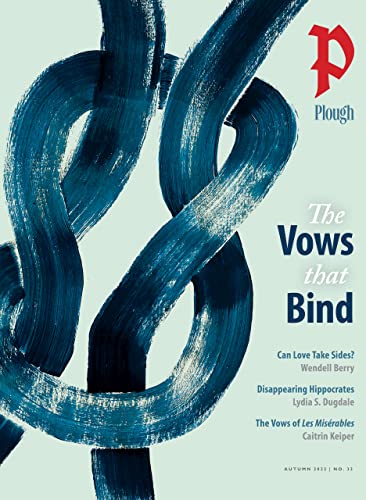
Plough Quarterly No. 33 The Vows That Bind
Da: Revaluation Books, Exeter, Regno Unito
Valutazione del venditore 5 su 5 stelle
EUR 9,47
Spedizione EUR 14,30
Spedito da Regno Unito a U.S.A.Quantità: 2 disponibili
Aggiungi al carrelloPaperback. Condizione: Brand New. 120 pages. 10.25x7.50x0.28 inches. In Stock.
-

Plough Quarterly No. 43 Why We Work: UK Edition
Da: Revaluation Books, Exeter, Regno Unito
Valutazione del venditore 5 su 5 stelle
EUR 9,47
Spedizione EUR 14,30
Spedito da Regno Unito a U.S.A.Quantità: 2 disponibili
Aggiungi al carrelloPaperback. Condizione: Brand New. 120 pages. 6.00x0.25x9.00 inches. In Stock.
-
Plough Quarterly No. 33 The Vows That Bind
Da: Revaluation Books, Exeter, Regno Unito
Valutazione del venditore 5 su 5 stelle
EUR 14,76
Spedizione EUR 14,30
Spedito da Regno Unito a U.S.A.Quantità: 2 disponibili
Aggiungi al carrelloPaperback. Condizione: Brand New. 120 pages. 10.25x7.50x0.28 inches. In Stock.
-

Plough Quarterly No. 31 - Why We Make Music
Lingua: Inglese
Editore: Plough Publishing House, US, 2022
ISBN 10: 1636080510 ISBN 13: 9781636080512
Da: Rarewaves USA United, OSWEGO, IL, U.S.A.
Valutazione del venditore 5 su 5 stelle
EUR 13,62
Spedizione EUR 43,20
Spedito in U.S.A.Quantità: Più di 20 disponibili
Aggiungi al carrelloPaperback. Condizione: New. Communal music has the power to shape a soul and a society.In many places today, a culture of singing and making music remains robust, despite pressure from the commercial music industry. Or it was until the Covid pandemic hit and we glimpsed what a world without communal music-making could be like. According to Plato, virtuous music is vital for building a virtuous community. Jewish and Christian traditions take this insight even further: good communal music shapes and builds up the people of God. So how can we choose good music and avoid the bad? The sheer ubiquity of music available for consumption - its presence as a near-constant soundtrack to our daily lives - poses a hazard. Digital music on tap is a temptation to chronic distraction of the soul, to a habit of superficiality and non-attention. Fortunately, the remedy is straightforward: spend less time consuming prepackaged tunes and more time making music. This will be doubly rewarding if done with others - singing with one's family, singing in church, playing in a string quartet, starting a regular jam session. If personal media players tend to cut us off from the physical presence of others, sharing in good music together breaks the spell of isolation and disembodiment. It builds friendship and community.On this theme:- Maureen Swinger's amateur choir sings Bach's Saint Matthew Passion.- Stephen Michael Newby says Black spirituals aren't just for Black people. - Mary Townsend finds Dolly Parton magnificent, but would Aristotle? - Phil Christman finds catharsis in the YouTube comments of eighties songs. - Ben Crosby says congregational singing should be unabashedly weird to visitors.- Joseph Julián González draws on ancient Nahua poets in his music.- Christopher Tin explains why he weaves so many historical influences into his music.- Seven musicians talk about making your own music in schools, churches, prisons, backyards, or children's bedrooms: Nathan Schram, Esther Keiderling, Norann Voll, Chaka Watch Ngwenya, Eileen Maendel, Adora Wong, and Brittany Petruzzi.Also in the issue: Exclusive excerpts from forthcoming books by Eugene Vodolazkin and Esther Maria Magnis- Thoughts on music from Augustine, Gregory of Nyssa, Hildegard of Bingen, Martin Luther, and Eberhard Arnold- Catholics and Anabaptists unite to commemorate the Radical Reformation- New poems by Jacqueline Saphra- A profile of Argentinian singer Mercedes Sosa.- Reviews of Kate Clifford Larson's Walk with Me, Rowan Williams's Shakeshafte, and Sam Quinones's The Least of UsPlough Quarterly features stories, ideas, and culture for people eager to apply their faith to the challenges we face. Each issue includes in-depth articles, interviews, poetry, book reviews, and art.
-

Plough Quarterly No. 33 - The Vows That Bind
Lingua: Inglese
Editore: Plough Publishing House, US, 2022
ISBN 10: 1636080642 ISBN 13: 9781636080642
Da: Rarewaves USA United, OSWEGO, IL, U.S.A.
Valutazione del venditore 5 su 5 stelle
EUR 13,79
Spedizione EUR 43,20
Spedito in U.S.A.Quantità: Più di 20 disponibili
Aggiungi al carrelloPaperback. Condizione: New. In a culture that prizes keeping one's options open, making commitments offers something more valuable.The consumerism and instant gratification of "liquid modernity" feed a general reluctance to make commitments, a refusal to be pinned down for the long term. Consider the decline of three forms of commitment that involve giving up options: marriage, military service, and monastic life.Yet increasing numbers of people question whether unprecedented freedom might be leading to less flourishing, not more. They are dissatisfied with an atomized way of life that offers endless choices of goods, services, and experiences but undermines ties of solidarity and mutuality. They yearn for more heroic virtues, more sacrificial commitments, more comprehensive visions of the individual and common good.It turns out that the American Founders were right: the Creator did endow us with an unalienable right of liberty. But he has endowed us with something else as well, a gift that is equally unalienable: desire for unreserved commitment of all we have and are. Our liberty is given us so that we in turn can freely dedicate ourselves to something greater. Ultimately, to take a leap of commitment, even without knowing where one will land, is the way to a happiness worth everything.On this theme:- Lydia S. Dugdale asks what happened to the Hippocratic Oath in modern medicine.- Caitrin Keiper looks at competing vows in Victor Hugo's Les Misérables. - Kelsey Osgood, an Orthodox Jew, asks why lifestyle discipline is admired in sports but not religion.- Wendell Berry says being on the side of love does not allow one to have enemies. - Phil Christman spoofs the New York Times Vows column.- Andreas Knapp tells why he chose poverty.- Norann Voll recounts the places a vow of obedience took her.- Carino Hodder says chastity is for everyone, not just nuns.- Dori Moody revisits her grandparents' broken but faithful marriage.- Randall Gauger, a Bruderhof pastor, finds that lifelong vows make faithfulness possible.- King-Ho Leung looks at vows, oaths, promises, and covenants in the Bible.Also in the issue: - A young Black pastor reads Clarence Jordan today.- Activists discuss the pro-life movement after Roe and Dobbs.- Children learn from King Arthur, Robin Hood, and the occasional cowboy.- Original poetry by Ned Balbo- Reviews of Montgomery and Biklé's What Your Food Ate, Mohsin Hamid's The Last White Man, and Bonnie Kristian's Untrustworthy- A profile of Sadhu Sundar SinghPlough Quarterly features stories, ideas, and culture for people eager to apply their faith to the challenges we face. Each issue includes in-depth articles, interviews, poetry, book reviews, and art.
-

Plough Quarterly No. 31 - Why We Make Music
Lingua: Inglese
Editore: Plough Publishing House, US, 2022
ISBN 10: 1636080510 ISBN 13: 9781636080512
Da: Rarewaves.com UK, London, Regno Unito
Valutazione del venditore 5 su 5 stelle
EUR 11,51
Spedizione EUR 74,38
Spedito da Regno Unito a U.S.A.Quantità: Più di 20 disponibili
Aggiungi al carrelloPaperback. Condizione: New. Communal music has the power to shape a soul and a society.In many places today, a culture of singing and making music remains robust, despite pressure from the commercial music industry. Or it was until the Covid pandemic hit and we glimpsed what a world without communal music-making could be like. According to Plato, virtuous music is vital for building a virtuous community. Jewish and Christian traditions take this insight even further: good communal music shapes and builds up the people of God. So how can we choose good music and avoid the bad? The sheer ubiquity of music available for consumption - its presence as a near-constant soundtrack to our daily lives - poses a hazard. Digital music on tap is a temptation to chronic distraction of the soul, to a habit of superficiality and non-attention. Fortunately, the remedy is straightforward: spend less time consuming prepackaged tunes and more time making music. This will be doubly rewarding if done with others - singing with one's family, singing in church, playing in a string quartet, starting a regular jam session. If personal media players tend to cut us off from the physical presence of others, sharing in good music together breaks the spell of isolation and disembodiment. It builds friendship and community.On this theme:- Maureen Swinger's amateur choir sings Bach's Saint Matthew Passion.- Stephen Michael Newby says Black spirituals aren't just for Black people. - Mary Townsend finds Dolly Parton magnificent, but would Aristotle? - Phil Christman finds catharsis in the YouTube comments of eighties songs. - Ben Crosby says congregational singing should be unabashedly weird to visitors.- Joseph Julián González draws on ancient Nahua poets in his music.- Christopher Tin explains why he weaves so many historical influences into his music.- Seven musicians talk about making your own music in schools, churches, prisons, backyards, or children's bedrooms: Nathan Schram, Esther Keiderling, Norann Voll, Chaka Watch Ngwenya, Eileen Maendel, Adora Wong, and Brittany Petruzzi.Also in the issue: Exclusive excerpts from forthcoming books by Eugene Vodolazkin and Esther Maria Magnis- Thoughts on music from Augustine, Gregory of Nyssa, Hildegard of Bingen, Martin Luther, and Eberhard Arnold- Catholics and Anabaptists unite to commemorate the Radical Reformation- New poems by Jacqueline Saphra- A profile of Argentinian singer Mercedes Sosa.- Reviews of Kate Clifford Larson's Walk with Me, Rowan Williams's Shakeshafte, and Sam Quinones's The Least of UsPlough Quarterly features stories, ideas, and culture for people eager to apply their faith to the challenges we face. Each issue includes in-depth articles, interviews, poetry, book reviews, and art.
-

Plough Quarterly No. 33 - The Vows That Bind
Lingua: Inglese
Editore: Plough Publishing House, US, 2022
ISBN 10: 1636080642 ISBN 13: 9781636080642
Da: Rarewaves.com UK, London, Regno Unito
Valutazione del venditore 5 su 5 stelle
EUR 10,89
Spedizione EUR 74,38
Spedito da Regno Unito a U.S.A.Quantità: Più di 20 disponibili
Aggiungi al carrelloPaperback. Condizione: New. In a culture that prizes keeping one's options open, making commitments offers something more valuable.The consumerism and instant gratification of "liquid modernity" feed a general reluctance to make commitments, a refusal to be pinned down for the long term. Consider the decline of three forms of commitment that involve giving up options: marriage, military service, and monastic life.Yet increasing numbers of people question whether unprecedented freedom might be leading to less flourishing, not more. They are dissatisfied with an atomized way of life that offers endless choices of goods, services, and experiences but undermines ties of solidarity and mutuality. They yearn for more heroic virtues, more sacrificial commitments, more comprehensive visions of the individual and common good.It turns out that the American Founders were right: the Creator did endow us with an unalienable right of liberty. But he has endowed us with something else as well, a gift that is equally unalienable: desire for unreserved commitment of all we have and are. Our liberty is given us so that we in turn can freely dedicate ourselves to something greater. Ultimately, to take a leap of commitment, even without knowing where one will land, is the way to a happiness worth everything.On this theme:- Lydia S. Dugdale asks what happened to the Hippocratic Oath in modern medicine.- Caitrin Keiper looks at competing vows in Victor Hugo's Les Misérables. - Kelsey Osgood, an Orthodox Jew, asks why lifestyle discipline is admired in sports but not religion.- Wendell Berry says being on the side of love does not allow one to have enemies. - Phil Christman spoofs the New York Times Vows column.- Andreas Knapp tells why he chose poverty.- Norann Voll recounts the places a vow of obedience took her.- Carino Hodder says chastity is for everyone, not just nuns.- Dori Moody revisits her grandparents' broken but faithful marriage.- Randall Gauger, a Bruderhof pastor, finds that lifelong vows make faithfulness possible.- King-Ho Leung looks at vows, oaths, promises, and covenants in the Bible.Also in the issue: - A young Black pastor reads Clarence Jordan today.- Activists discuss the pro-life movement after Roe and Dobbs.- Children learn from King Arthur, Robin Hood, and the occasional cowboy.- Original poetry by Ned Balbo- Reviews of Montgomery and Biklé's What Your Food Ate, Mohsin Hamid's The Last White Man, and Bonnie Kristian's Untrustworthy- A profile of Sadhu Sundar SinghPlough Quarterly features stories, ideas, and culture for people eager to apply their faith to the challenges we face. Each issue includes in-depth articles, interviews, poetry, book reviews, and art.
