

Importo totale (1 articolo articoli):
Destinazione ordine:

walusinski (77 risultati)
Vai alla pagina principale dei risultati di ricerca
Filtri di ricerca
Tipo di articolo
- Tutti i tipi di prodotto
- Libri (77)
- Riviste e Giornali (Nessun altro risultato corrispondente a questo perfezionamento)
- Fumetti (Nessun altro risultato corrispondente a questo perfezionamento)
- Spartiti (Nessun altro risultato corrispondente a questo perfezionamento)
- Arte, Stampe e Poster (Nessun altro risultato corrispondente a questo perfezionamento)
- Fotografie (Nessun altro risultato corrispondente a questo perfezionamento)
- Mappe (Nessun altro risultato corrispondente a questo perfezionamento)
- Manoscritti e Collezionismo cartaceo (Nessun altro risultato corrispondente a questo perfezionamento)
Condizioni Maggiori informazioni
Legatura
Ulteriori caratteristiche
- Prima ed. (21)
- Copia autograf. (Nessun altro risultato corrispondente a questo perfezionamento)
- Sovracoperta (Nessun altro risultato corrispondente a questo perfezionamento)
- Con foto (39)
- Non Print on Demand (67)
Lingua (3)
Spedizione gratuita
Paese del venditore
Valutazione venditore
-

EUR 3,50
Spedizione EUR 16,50
Spedito da Francia a U.S.A.Quantità: 1 disponibili
Aggiungi al carrelloHardcover. Condizione: Bon. Ancien livre de bibliothèque. Couverture différente. Ammareal reverse jusqu'à 15% du prix net de cet article à des organisations caritatives. ENGLISH DESCRIPTION Book Condition: Used, Good. Former library book. Different cover. Ammareal gives back up to 15% of this item's net price to charity organizations.
-

EUR 3,50
Spedizione EUR 16,50
Spedito da Francia a U.S.A.Quantità: 1 disponibili
Aggiungi al carrelloHardcover. Condizione: Très bon. Ancien livre de bibliothèque. Couverture différente. Edition 1998. Ammareal reverse jusqu'à 15% du prix net de cet article à des organisations caritatives. ENGLISH DESCRIPTION Book Condition: Used, Very good. Former library book. Different cover. Edition 1998. Ammareal gives back up to 15% of this item's net price to charity organizations.
-

Dix ans après, les librairies
Lingua: Francese
Editore: Ministpre de la culture, 1987
Da: La Bouquinerie des Antres, Delémont, Svizzera
Valutazione del venditore 5 su 5 stelle

EUR 10,00
Spedizione EUR 12,00
Spedito da Svizzera a U.S.A.Quantità: 1 disponibili
Aggiungi al carrelloCouverture souple. Condizione: Bel exemplaire. Fascucule de 40 p., illustré de photos en n/b. 20x20 cm, 120 gr. réf. T082506.
-

ATOMES. L'hibernation artificielle / Comment enseigner aujourd'hui les mathématiques de demain / Le role du soleil dans l'amélioration des conditions de vie humaine (suite)
Editore: Décembre 1957, 1957
EUR 5,00
Spedizione EUR 15,20
Spedito da Francia a U.S.A.Quantità: 1 disponibili
Aggiungi al carrelloRevue Atomes N° 139, Décembre 1957, cahier de 32 pages Etat satisfaisant - Pour les envois hors de France, la tafication «livre & brochure» pour les frais de port a disparue.Les frais de port annoncés correspondent à une moyenne. Ils seront calculés au plus juste en fonction du poids de votre article.
-

Georges Gilles de la Tourette : Beyond the Eponym
Da: GreatBookPrices, Columbia, MD, U.S.A.
Valutazione del venditore 5 su 5 stelle
EUR 43,98
Spedizione EUR 2,27
Spedito in U.S.A.Quantità: Più di 20 disponibili
Aggiungi al carrelloCondizione: New.
-

EUR 15,00
Spedizione EUR 15,20
Spedito da Francia a U.S.A.Quantità: 1 disponibili
Aggiungi al carrelloEditions Belin, Paris - 1994, CLEA, 19,50x27 cm, broché, 144 pages Bon état - Pour les envois hors de France, la tafication «livre & brochure» pour les frais de port a disparue.Les frais de port annoncés correspondent à une moyenne. Ils seront calculés au plus juste en fonction du poids de votre article.
-
Georges Gilles de la Tourette : Beyond the Eponym
Da: GreatBookPrices, Columbia, MD, U.S.A.
Valutazione del venditore 5 su 5 stelle
EUR 44,42
Spedizione EUR 2,27
Spedito in U.S.A.Quantità: Più di 20 disponibili
Aggiungi al carrelloCondizione: As New. Unread book in perfect condition.
-

Georges Gilles de la Tourette
Lingua: Inglese
Editore: Oxford University Press Inc, US, 2019
ISBN 10: 0190636033 ISBN 13: 9780190636036
Da: Rarewaves.com USA, London, LONDO, Regno Unito
Valutazione del venditore 5 su 5 stelle
EUR 50,85
Spedizione gratuita
Spedito da Regno Unito a U.S.A.Quantità: Più di 20 disponibili
Aggiungi al carrelloHardback. Condizione: New. The 19th Century brought many medical advances and discoveries in neurology, with the famed Parisian La Salpêtrière hospital at its center. Medical giants such as Jean-Martin Charcot, Joseph Babinski, and even for a short time Sigmund Freud, walked these halls, so it is a wonder that, an equal among these men, very little exists in the literature on Georges Gilles de la Tourette.This biography is the first comprehensive volume to delve into the life, scholarship, writing, and hobbies of the famed doctor. In Part One, we learn Georges' family history, follow his schooling and mentorship under Charcot, travel to the Worlds Fair of 1900, evade an attempted assassination, all before succumbing to death by syphilis. Part Two provides an in-depth analysis of his neurological and psychiatric works, notably the epynomous neurological disorder that will forever remain "Tourette's Syndrome." Part Three looks at the lighter side of Georges, inspecting his favorite past-times as poet, historian, and art critic. Part Four brings an extensive bibliography of Georges' complete body of work. Author Olivier Walusinski pulls together unpublished family archives, Georges' correspondence with the Parisian journalist Georges Montorgueil, journal articles, and police archives to shed an original light on the famed doctor's life and lasting legacy. These archives have never before been studied or made available to the public, making this one of the first and most comprehensive biographies available and a must-have for any medical library.
-
EUR 52,65
Spedizione gratuita
Spedito in U.S.A.Quantità: Più di 20 disponibili
Aggiungi al carrelloCondizione: New. Brand New.
-
Georges Gilles de la Tourette: Beyond the Eponym
Da: Ria Christie Collections, Uxbridge, Regno Unito
Valutazione del venditore 5 su 5 stelle
EUR 41,34
Spedizione EUR 13,87
Spedito da Regno Unito a U.S.A.Quantità: Più di 20 disponibili
Aggiungi al carrelloCondizione: New. In.
-
EUR 7,70
Spedizione EUR 28,95
Spedito da Francia a U.S.A.Quantità: 1 disponibili
Aggiungi al carrelloBrochure. In-12 (11,5 x 18 cm), brochure dos agrafé, 67 pages ; tampon au premier plat en queue, quelques rousseurs éparses, assez bon état. Livraison a domicile (La Poste) ou en Mondial Relay sur simple demande.
-
Georges Gilles de la Tourette : Beyond the Eponym
Da: GreatBookPricesUK, Woodford Green, Regno Unito
Valutazione del venditore 5 su 5 stelle
EUR 41,33
Spedizione EUR 17,36
Spedito da Regno Unito a U.S.A.Quantità: Più di 20 disponibili
Aggiungi al carrelloCondizione: New.
-

Baillements Et Pandiculations Ethologie, Neurophysiologie, Pathologie
Da: Michener & Rutledge Booksellers, Inc., Baldwin City, KS, U.S.A.
Valutazione del venditore 5 su 5 stelle
Paperback. Condizione: Very Good. Plastic coating peeling from front cover corner, otherwise text clean and tight; in French ; 8vo 8" - 9" tall.
-
Georges Gilles de la Tourette : Beyond the Eponym
Da: GreatBookPricesUK, Woodford Green, Regno Unito
Valutazione del venditore 5 su 5 stelle
EUR 44,90
Spedizione EUR 17,36
Spedito da Regno Unito a U.S.A.Quantità: Più di 20 disponibili
Aggiungi al carrelloCondizione: As New. Unread book in perfect condition.
-
Astronomes et observatoires Walusinski, Gilbert
Da: Hubert Colau, LA BAZOCHE GOUET, Francia
Valutazione del venditore 4 su 5 stelle

EUR 7,50
Spedizione EUR 40,00
Spedito da Francia a U.S.A.Quantità: 1 disponibili
Aggiungi al carrelloCondizione: 2. BROCHE.
-

The Mystery Of Yawning In Physiology And Disease
Libro 1 di 19: Frontiers of Neurology and NeuroscienceDa: Basi6 International, Irving, TX, U.S.A.
Valutazione del venditore 5 su 5 stelle
Condizione: Brand New. New. US edition. Expediting shipping for all USA and Europe orders excluding PO Box. Excellent Customer Service.
-
Les Moreau de Tours.
Lingua: Francese
Editore: Editions Glyphe, 2018, 2018
Da: Jean-Pierre AUBERT, Quiberon, Francia
Valutazione del venditore 5 su 5 stelle
Prima edizione
AffareEUR 11,70
Spedizione EUR 38,00
Spedito da Francia a U.S.A.Quantità: 1 disponibili
Aggiungi al carrelloCouverture souple. Condizione: Très bon. Edition originale. 1 vol. in-8 (24 x 16 cm), 300, (2) pp., figures dans le texte (parfois à pleine page) et 2 ff. de planches en couleurs hors-texte, broché, couverture illustrée de l'éditeur, excellent état. Ouvrage en grande partie consacré à Jacques Joseph Moreau de Tours (auteur du célèbre ouvrage sur le hachisch et l'aliénation mentale) mais aussi à son fils Paul (auteur du premier traité de psychiatrie de l'enfant), aux autres membres de la dynastie, etc.
-

EUR 12,00
Spedizione EUR 32,99
Spedito da Francia a U.S.A.Quantità: 1 disponibili
Aggiungi al carrelloCouverture souple. Condizione: Comme neuf. Edition originale. 1 vol. in-8 (24 x 16 cm), 300, (2) pp., figures dans le texte (parfois à pleine page) et 2 ff. de planches en couleurs hors-texte, broché, couverture illustrée de l'éditeur, excellent état. Ouvrage en grande partie consacré à Jacques Joseph Moreau de Tours (auteur du célèbre ouvrage sur le hachisch et l'aliénation mentale) mais aussi à son fils Paul (auteur du premier traité de psychiatrie de l'enfant), aux autres membres de la dynastie, etc.
-

Georges Gilles de la Tourette (Hardcover)
Lingua: Inglese
Editore: Oxford University Press Inc, New York, 2019
ISBN 10: 0190636033 ISBN 13: 9780190636036
Da: Grand Eagle Retail, Bensenville, IL, U.S.A.
Valutazione del venditore 5 su 5 stelle
Hardcover. Condizione: new. Hardcover. The 19th Century brought many medical advances and discoveries in neurology, with the famed Parisian La Salpetriere hospital at its center. Medical giants such as Jean-Martin Charcot, Joseph Babinski, and even for a short time Sigmund Freud, walked these halls, so it is a wonder that, an equal among these men, very little exists in the literature on Georges Gilles de la Tourette.This biography is the first comprehensive volume todelve into the life, scholarship, writing, and hobbies of the famed doctor. In Part One, we learn Georges' family history, follow his schooling and mentorship under Charcot, travel to the Worlds Fair of 1900, evadean attempted assassination, all before succumbing to death by syphilis. Part Two provides an in-depth analysis of his neurological and psychiatric works, notably the epynomous neurological disorder that will forever remain "Tourette's Syndrome." Part Three looks at the lighter side of Georges, inspecting his favorite past-times as poet, historian, and art critic. Part Four brings an extensive bibliography of Georges' complete body of work. Author Olivier Walusinski pullstogether unpublished family archives, Georges' correspondence with the Parisian journalist Georges Montorgueil, journal articles, and police archives to shed an original light on the famed doctor's lifeand lasting legacy. These archives have never before been studied or made available to the public, making this one of the first and most comprehensive biographies available and a must-have for any medical library. This biography is the first comprehensive volume to delve into the life, scholarship, writing, and hobbies of the famed doctor, for whom Tourette's Syndrome is named. In Part One, we learn Georges' family history, follow his schooling and mentorship under Charcot, travel to the World's Fair of 1900, and evade an attempted assassination, all before succumbing to death by syphilis. Part Two provides an in-depth analysis of his neurological and psychiatric works,notably the eponymous neurological disorder that will forever remain " Part Three looks at the lighter side of Georges, inspecting his favorite past-times as poet, historian, and art critic. Part Four brings an extensive bibliography of Georges' complete body of work. Shipping may be from multiple locations in the US or from the UK, depending on stock availability.
-

EUR 15,00
Spedizione EUR 32,99
Spedito da Francia a U.S.A.Quantità: 1 disponibili
Aggiungi al carrelloCouverture souple. Condizione: Comme neuf. Edition originale. Grand in-8° broché - (24 x 16 cm), 300, (2) pp., figures dans le texte (parfois à pleine page) et 2 ff. de planches en couleurs hors-texte, broché, couverture illustrée de l'éditeur, excellent état. Ouvrage en grande partie consacré à Jacques Joseph Moreau de Tours (auteur du célèbre ouvrage sur le hachisch et l'aliénation mentale) mais aussi à son fils Paul (auteur du premier traité de psychiatrie de l'enfant), aux autres membres de la dynastie, etc.
-
Frontiers of Neurology and Neuroscience: The Mystery of Yawning in Physiology and Disease (Volume 28)
Libro 1 di 19: Frontiers of Neurology and NeuroscienceEUR 65,90
Spedizione EUR 15,74
Spedito da Regno Unito a U.S.A.Quantità: 1 disponibili
Aggiungi al carrelloCondizione: Good. Volume 28. This is an ex-library book and may have the usual library/used-book markings inside.This book has hardback covers. In good all round condition. No dust jacket. Please note the Image in this listing is a stock photo and may not match the covers of the actual item,700grams, ISBN:9783805594042.
-
Guide Paris architecture moderne 1977-1986
Editore: L'Equerre, 1986
Da: Librairie de l'Avenue - Henri Veyrier, Saint-Ouen, FR, Francia
Valutazione del venditore 4 su 5 stelle
EUR 15,00
Spedizione EUR 35,00
Spedito da Francia a U.S.A.Quantità: 1 disponibili
Aggiungi al carrelloCouverture souple. Condizione: Bon état. In-8 broché 21 cm sur 11,5. 102 pages. Nombreuses photographies en noir et blanc. Bon état d'occasion.
-
The Mystery of Yawning in Physiology and Disease (Frontiers of Neurology and Neuroscience)
Libro 1 di 19: Frontiers of Neurology and NeuroscienceDa: killarneybooks, Inagh, CLARE, Irlanda
Valutazione del venditore 5 su 5 stelle
Prima edizione
EUR 49,50
Spedizione EUR 33,70
Spedito da Irlanda a U.S.A.Quantità: 1 disponibili
Aggiungi al carrelloHardcover. Condizione: Very Good. 1st Edition. Oversized hardcover, xiv + 159 pages, NOT ex-library. Book is clean and bright with unmarked text, free of inscriptions and stamps, firmly bound. Light handling wear only. Short creases to the boards' corners and spine ends. Issued without a dust jacket. -- This is the first multi-disciplinary medical textbook dedicated solely to the phenomenon of yawning. It contains 17 technical chapters, bridging ethology, neurobiology, and clinical pathology. Historical and Cultural Context: - Historical Perspectives: it follows the evolution of medical knowledge on yawning from antiquity to the 20th century; - Popular Knowledge and Beliefs: an overview of myths across Arabic, Western, and Indian cultures. Developmental Perspectives: - Yawning throughout Life: analyses frequency and diurnal variations from infancy to old age; Fetal Yawning: documents the ontogenesis of the yawn reflex in the womb; - Sleep, Sleepiness and Yawning: examining the link between boredom, vigilance, and the sleep-wake transition; - Non-Human Primates: a comparative look at development in other species. Physiological and Neurological Drivers: - Interplay between Yawning and Vigilance: a review of experimental evidence regarding brain arousal; - A Thermoregulatory Behaviour: focuses on the "brain cooling" hypothesis. - Neuropharmacology of Yawning: detailing the chemical triggers (dopamine, oxytocin, etc.) and the hypothalamic paraventricular nucleus. The Social Aspect (Contagious Yawning): - Yawn, Yawn, Yawn, Yawn; Yawn, Yawn, Yawn! The Social, Evolutionary and Neuroscientific Facets of Contagious Yawning: exploring the empathy link; - Developmental and Comparative Perspectives: why children and animals mirror yawns; - Methodological Problems: a critique of how contagion is studied in lab settings. Neuroimaging & Clinical and Pathological Yawning: - Exploring Yawning with Neuroimaging; - Associated Movements in Hemiplegic Limbs: a specialised look at how paralysed limbs sometimes move during a yawn (parakinesia); - Associated Diseases: covering yawning in the context of stroke, Parkinson's, and MS. Alternative Theories: - The Hidden Sexuality of the Yawn: discussing the erotic and "chasmological" theories of the yawn. Key Finding: the work includes the study "Punishment-Induced Fear Modifies the Daily Course of Yawning in Rats". -- The "Oxygen" Myth: The text explicitly highlights that yawning is not a response to blood oxygen levels, a common misconception debunked in the Neuropharmacology and Thermoregulatory chapters. Key Concept: It has popularised the arousal hypothesis, suggesting yawning is a "brain cooling" or "vigilance" mechanism rather than a simple oxygen-deficiency response. Edited by Olivier Walusinski, a French family physician and the world's leading researcher on "chasmology" (the study of yawning). The book has been praised for transforming a "trivial" daily occurrence into a serious subject of neuroscientific inquiry.
-
Astronomies et observatoires
Editore: Epigones, 1990
Da: Librairie Lire et Chiner, Colmar, ALSAC, Francia
Valutazione del venditore 4 su 5 stelle
EUR 6,00
Spedizione EUR 46,00
Spedito da Francia a U.S.A.Quantità: 1 disponibili
Aggiungi al carrelloCondizione: TBE. Paris, cartonnage de l'éditeur; in-4, 30 pp.
-
Ciel : Grandes découvertes de l'astronomie (Collection Axes)
Da: crealivres, La fontennelle, Francia
Valutazione del venditore 5 su 5 stelle
EUR 7,00
Spedizione EUR 55,00
Spedito da Francia a U.S.A.Quantità: 1 disponibili
Aggiungi al carrelloCondizione: Good. Envoi rapide Bon état bords jaunis intérieur propre. in8. 1981. Relié. 222 pages. Good.
-
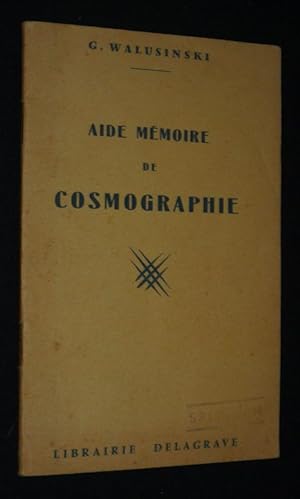
AIDE-MEMOIRE DE COSMOGRAPHIE
Editore: Delagrave, Paris, 1957
Da: LibrairieLaLettre2, Villefranche de Lauragais, Francia
Valutazione del venditore 5 su 5 stelle
EUR 6,00
Spedizione EUR 35,00
Spedito da Francia a U.S.A.Quantità: 1 disponibili
Aggiungi al carrelloAgrafé. Condizione: Etat moyen. in-8 Langue : Français Nb de volumes : 1.
-
Georges Gilles De La Tourette
Da: Kennys Bookshop and Art Galleries Ltd., Galway, GY, Irlanda
Valutazione del venditore 5 su 5 stelle
EUR 82,71
Spedizione EUR 10,50
Spedito da Irlanda a U.S.A.Quantità: Più di 20 disponibili
Aggiungi al carrelloCondizione: New.
-

Une Leçon clinique à La Salpêtrière. André Brouillet (1857-1914). Une peinture de la neurologie autour de Charcot.
Editore: Oscitatio, 2021
Prima edizione
EUR 22,00
Spedizione EUR 32,99
Spedito da Francia a U.S.A.Quantità: 4 disponibili
Aggiungi al carrelloCouverture souple. Condizione: Neuf. Edition originale. In-8, broché, couverture illustrée, 233 pages, nombreuses illustrations. "Une Leçon clinique à La Salpêtrière, tableau du peintre André Brouillet, présenté à Paris au Salon de 1887, est une toile culte des neurologues, des psychiatres et même - bien que Sigmund Freud n'y figure pas - des psychanalystes. Jusqu'à présent, la seule étude d'ensemble de ce tableau et des personnages qui y sont représentés était l'article du professeur Jean-Louis Signoret paru dans la "Revue neurologique" en 1983. Le projet que propose ici Olivier Walusinski est plus ambitieux et fait appel à une érudition remarquable. Il donne, en effet, pour chacun des 31 personnages figurant sur la toile, une notice biographie le plus souvent très détaillée et très riche en informations toujours parfaitement documentées de sources de première main. Les textes sont accompagnés de nombreuses illustrations d'excellente qualité, notamment de photographies ou des portraits des personnages. Le livre contient de plus une excellente biographie d'André Brouillet. Ce nouvel ouvrage, dû à la plume du Maître de l'histoire de la neuropsychiatrie française, constitue une sorte de précieux compendium de l'histoire de La Salpêtrière dans les années glorieuses du règne de Charcot, fondateur de la neurologie française.".
-

Jean-Martin Charcot Membre de jurys de thèses à la Faculté de Médecine de Paris (1862-1893)
Editore: OSCITATIO, 2020
Prima edizione
EUR 24,00
Spedizione EUR 32,99
Spedito da Francia a U.S.A.Quantità: 4 disponibili
Aggiungi al carrelloCouverture souple. Condizione: Neuf. Edition originale. In-8° broché 188 pages. Très belle iconographie en couleurs et en noir et blanc - - - - - - Jean-Martin Charcot (1825-1893), père fondateur de la neurologie moderne, a bénéficié de multiples biographies et travaux étudiant les différentes facettes de son oeuvre. Pourtant une part, objectivement limitée, de l'activité attachée à la fonction de professeur de Faculté tenue par Charcot, n'a jusqu'à présent été l'objet d'aucun examen, c'est l'étude de la fonction de membre de jurys de thèses de doctorat en médecine, et en particulier de président de ces jurys. Olivier Walusinski a passé en revue, une à une, environ 12 500 thèses soutenues à la Faculté de Médecine de Paris entre 1862, première année d'exercice d'agrégé de Charcot jusqu'à sa mort en 1893. Parmi elles, il a sélectionné toutes celles qui abordaient un thème de neuropsychiatrie au sens large (3663), puis choisi de porter une attention particulière à celles pour lesquelles Charcot, Alfred Vulpian, ou Alexandre Axenfeld, trois médecins de la même génération partageant les mêmes centres d'intérêt, avaient siégé dans le jury, soit 1 774 thèses. Après quelques données statistiques s'y rapportant, Olivier Walusinski propose de brèves recensions individualisées des thèses choisies comme représentatives, soit pour leur sujet (sclérose en plaques, aphasie, tabes, paralysie générale, etc.), soit pour des critères particuliers (étrangers, femmes, etc.) mais toutes ont en commun la présence de Charcot comme membre du jury. Ce survol de près de trente ans autorise une appréciation de l'évolution des centres d'intérêt du monde médical et de Charcot en particulier. Des illustrations, souvent inédites, provenant de la presse de l'époque ou des thèses elles-mêmes, enrichissent cette présentation. De cette vaste fresque sortent quelques pépites négligées, des oeuvres devenues des classiques de la neurologie, des noms illustres ou d'autres bannis du piédestal de la notoriété posthume. - - - - - - - In-8 ° paperback 188 pages. Very beautiful iconography in color and in black and white - - - - - - Jean-Martin Charcot (1825-1893), founding father of modern neurology, benefited from multiple biographies and works studying the different facets of his work. However, an objectively limited part of the activity attached to the function of Faculty professor held by Charcot, has so far been the subject of no examination, it is the study of the function of member juries of doctoral theses in medicine, and in particular the chairman of these juries. Olivier Walusinski reviewed, one by one, about 12,500 theses defended at the Faculty of Medicine in Paris between 1862, the first year of Charcot's aggregation until his death in 1893. Among them, he selected all those who approached a topic of neuropsychiatry in the broad sense (3663), then chose to pay particular attention to those for which Charcot, Alfred Vulpian, or Alexandre Axenfeld, three doctors of the same generation sharing the same centers of interest, had sat on the jury, or 1,774 theses. After some statistical data relating to it, Olivier Walusinski offers brief individualized reviews of the theses chosen as representative, either for their subject (multiple sclerosis, aphasia, tabes, general paralysis, etc.), or for specific criteria (foreigners, women, etc.) but all have in common the presence of Charcot as a member of the jury. This overview of almost thirty years allows an appreciation of the evolution of the centers of interest of the medical world and of Charcot in particular. Illustrations, often unpublished, from the press of the time or the theses themselves, enrich this presentation. From this vast fresco come some neglected nuggets, works that have become classics of neurology, illustrious names or others banished from the pedestal of posthumous notoriety.
-

Paul Richer (1849-1933). Un neurologue professeur à l'Ecole des Beaux-Arts.
Editore: Oscitatio, 2023
Prima edizione
EUR 24,00
Spedizione EUR 32,99
Spedito da Francia a U.S.A.Quantità: 3 disponibili
Aggiungi al carrelloCouverture souple. Condizione: Neuf. Edition originale. In-8, broché, couverture illustrée, 205 pages, nombreuses illustrations. Préface par Philippe Comar, professeur à l'École nationale supérieure des Beaux-Arts "En 1874, Jean-Martin Charcot est émerveillé par trois planches à l'eau-forte illustrant une thèse sur les déformations de la main : "On ferait le diagnostic sur ces dessins", s'exclame-t-il. L'auteur est un étudiant en médecine préparant l'internat : Paul Richer. Ce jeune homme, chez qui la curiosité pour l'anatomie et le goût du dessin sont indissociables, devient l'élève de Charcot, puis son illustrateur attitré lors des fameuses Leçons du Mardi à l'hôpital de la Salpêtrière, où, devant un large public, composé de médecins, d'écrivains et de célébrités (parmi lesquels on compte Max Nordau, Sigmund Freud, Jules Clarétie ou encore Alphonse Daudet), les malades, le plus souvent nus, sont soumis à de longues séances d'observation. C'est d'ailleurs, à côté de Charcot, crayon à la main, que Paul Richer figure dans le tableau d'André Brouillet, Une Leçon clinique à la Salpêtrière. Développant sa thèse de doctorat, Richer publie, en 1881, Études cliniques sur l'hystéro-épilepsie ou grande hystérie. L'ouvrage, préfacé par Charcot, fait sensation. Une centaine d'illustrations traduisent de manière presque cinématographique les différentes phases de l'attaque hystérique. Parallèlement, il sculpte des statuettes qui figurent des types morbides, comme La Parkinsonienne ou Le Jeune Homme atteint de myopathie, d'une « vérité criante". Devenu Chef de laboratoire de la Clinique des maladies du système nerveux, dirigée par Charcot, Richer publie avec lui Les Démoniaques dans l'Art (1887) et Les Malades et les Difformes dans l'Art (1889). À la même époque, il fonde avec Georges Gilles de la Tourette et le photographe Albert Londe, la Nouvelle Iconographie de la Salpêtrière, monumentale chronique illustrée, où l'observation clinique et l'histoire de l'art s'entrecroisent, non sans ambiguïté parfois. Comme beaucoup de médecins de cette époque pour qui le sentiment amoureux était une maladie, le talent une forme de dégénérescence, la foi une névrose , Richer est fasciné par les attaques hystériques, les possessions démoniaques et les guérisons miraculeuses, contre lesquelles il oppose son positivisme et son athéisme ses « garde-fous ». Face aux désordres du corps, Richer se préoccupe de définir une norme, un idéal morphologique de l'individu sain. Aussi publie-t-il, en 1893, un Canon des proportions du corps humain, substituant "à l'idée esthétique du beau, la notion scientifique du parfait". En 1902, Richer publie L'Art et la médecine, ainsi qu'une Introduction à la figure humaine. Nommé l'année suivante à la chaire d'anatomie de l'École des Beaux-Arts, il se consacre, outre son enseignement, à la sculpture et à la réalisation d'une vaste encyclopédie du Nu dans l'art, conjuguant approches de l'historien, du savant et de l'artiste. Membre de l'Académie de Médecine et de celle des Beaux-Arts, lié à toutes les sommités de l'anthropologie Marey, Topinard, Bertillon , apprécié par les artistes officiels de l'époque Gérôme, Frémiet, Dalou , Paul Richer occupe une place singulière dans l'histoire. Face à l'effondrement des valeurs esthétiques qui marque le tournant du siècle, Richer rêve de donner à l'art un fondement scientifique et de faire du regard de l'artiste un modèle de connaissance positive. Même si ce projet, qui évoque parfois celui de Paul Valéry, cherchant « l'attitude centrale à partir de laquelle les entreprises de la connaissance et les opérations de l'art sont également possibles », est aujourd'hui contesté, l'uvre de Paul Richer, à la croisée de champs disciplinaires alors en pleine mutation, reflète les curiosités, les ambitions et les illusions d'une époque.


