
Importo totale (1 articolo articoli):
Destinazione ordine:

edition axel menges fellbach (267 risultati)
Casa editrice:
edition axel menges fellbach
Perfeziona con la Ricerca avanzata
Vai alla pagina principale dei risultati di ricerca
Filtri di ricerca
Tipo di articolo
- Tutti i tipi di prodotto
- Libri (267)
- Riviste e Giornali (Nessun altro risultato corrispondente a questo perfezionamento)
- Fumetti (Nessun altro risultato corrispondente a questo perfezionamento)
- Spartiti (Nessun altro risultato corrispondente a questo perfezionamento)
- Arte, Stampe e Poster (Nessun altro risultato corrispondente a questo perfezionamento)
- Fotografie (Nessun altro risultato corrispondente a questo perfezionamento)
- Mappe (Nessun altro risultato corrispondente a questo perfezionamento)
- Manoscritti e Collezionismo cartaceo (Nessun altro risultato corrispondente a questo perfezionamento)
Condizioni Maggiori informazioni
- Nuovo (265)
- Come nuovo, Ottimo o Quasi ottimo (1)
- Molto buono o Buono (Nessun altro risultato corrispondente a questo perfezionamento)
- Discreto o Mediocre (Nessun altro risultato corrispondente a questo perfezionamento)
- Come descritto (1)
Legatura
Ulteriori caratteristiche
- Prima ed. (Nessun altro risultato corrispondente a questo perfezionamento)
- Copia autograf. (Nessun altro risultato corrispondente a questo perfezionamento)
- Sovracoperta (1)
- Con foto (18)
- Non Print on Demand (267)
Lingua (4)
Spedizione gratuita
Paese del venditore
Valutazione venditore
-
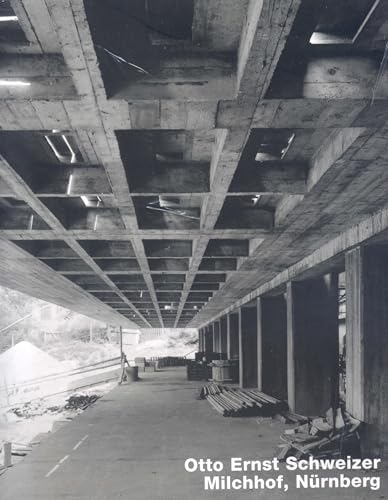
Otto Ernst Schweizer: Milchhof Nurnberg, Opus 59
Lingua: Inglese
Editore: Edition Axel Menges, Fellbach, Germany, 2006
ISBN 10: 3932565592 ISBN 13: 9783932565595
Da: Montana Book Company, Fond du Lac, WI, U.S.A.
Valutazione del venditore 5 su 5 stelle

Hardcover. Condizione: Fine. 60 pp. Tightly bound. Corners not bumped. Text is free of markings. No ownership markings. Book still in original publisher shrink wrap.
-

Ruins (Hardcover)
Lingua: Inglese
Editore: Edition Axel Menges, Fellbach, 2011
ISBN 10: 3936681465 ISBN 13: 9783936681468
Da: Grand Eagle Retail, Bensenville, IL, U.S.A.
Valutazione del venditore 5 su 5 stelle
Hardcover. Condizione: new. Hardcover. Text in English & German. Chaos and anarchy represent the opposite pole to an ordered life. Nothing works any more, everything is devastated, everything is falling apart. City walls, buildings that once afforded protection, have fallen victim to the excesses of armed conflict. Infernal threats, ambushes, fiery rain and other catastrophes were described even in the Bible. Pillaging and plunder were part of everyday life in the Middle Ages. Cruel deeds familiar from the Bible, or those described by other people or experienced personally, inspired painters in the transitional period from the Middle Ages to the Renaissance, and were picked out as a central theme in their pictures. In the 18th century it became fashionable to build artificial ruins in parks and landscape gardens. Ruins became an image of human inadequacy in the attempt to come to terms with nature. 18th century landscape painters used ruin motifs in order to suggest the mysterious magic of pain, the sadness of beauty, to viewers. In the first half of the last century the world had to endure two wars that costs millions of people their lives and reduced many cities to rubble. Countless ruins remained.Few of them have survived. Overgrown with grass, ivy and Virginia creeper they now tower up out of the landscape like many others from various epochs bearing witness to those who see them of the vanity of human endeavour, of transience, of death; filling them with horror, but at the same time exuding a feeling of gloom and sadness, of melancholy. In this book, the author delivers a detailed assessment of ruins as a phenomenon in architecture, landscape design, fine art, film and the media. The result is an extraordinarily intense contribution to the theme of transience. In this book, the author delivers a detailed assessment of ruins as a phenomenon in architecture, landscape design, fine art, film and the media. The result is an extraordinarily intense contribution to the theme of transience. Shipping may be from multiple locations in the US or from the UK, depending on stock availability.
-
Daring the Gap (Hardcover)
Lingua: Inglese
Editore: Edition Axel Menges, Fellbach, 2001
ISBN 10: 3932565223 ISBN 13: 9783932565229
Da: Grand Eagle Retail, Bensenville, IL, U.S.A.
Valutazione del venditore 5 su 5 stelle
Hardcover. Condizione: new. Hardcover. Text in English and German. A yawning gap between two 1960s buildings. Not at all unusual in Cologne. A gap between two buildings, 2,56 m wide and 33 m long. Scarcely wide enough to park a few bicycles. This gap has been used as an office by the rendel & spitz advertising agency since early 1999. The architects b&k+ hooked a few concrete floors into the walls of the adjacent buildings, made sure there were stairs and a bit of infrastructure, suspended a glass facade at the front and back -- finished. To give any curious or interested parties an impression of the building, it was cleared out for a week and used by three selected European designers for a comprehensive development on the theme of 'braving the gap'. The traditional disciplines of product, furniture and lighting design were complemented with contributions addressing the other senses: music and perfume. Johanna Grawunder (Milan) devised a light installation leading from a cold area by the entrance to a warm and comfortable rest area at the end of the space. Konstantin Grcic (Munich) filled the whole volume of the space with a pink ball that fitted into it exactly.Visitors had to show that they were prepared to brave the gap by squeezing between this 'puff ball' and the wall to get to the other side of the room.They were rewarded at the end by reaching the stainless steel fireplace by Timo Salli (Helsinki). The Dusseldorf firm aerome enhanced the installation with a variety of fragrances. Finally, the Hamburg photographer Uli Mattes recorded the whole project and provided his own interpretation of the work. A gap yawns between two buildings constructed in the 1960s.Nothing unusual.A gap 2.56m wide and around 33m long . Hardly wide enough to park a couple of bicycles. In many buildings this corresponds to the space required for thermal insulation. Shipping may be from multiple locations in the US or from the UK, depending on stock availability.
-
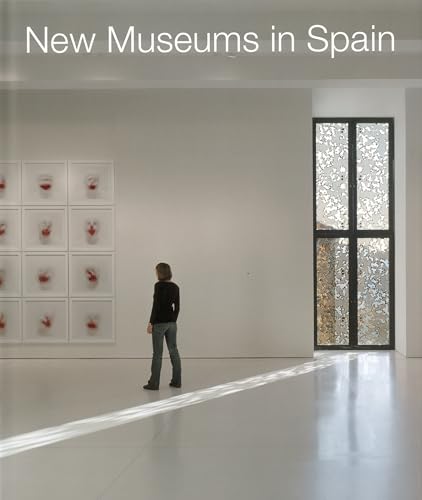
New Museums in Spain (Hardcover)
Lingua: Inglese
Editore: Edition Axel Menges, Fellbach, 2010
ISBN 10: 3936681171 ISBN 13: 9783936681178
Da: Grand Eagle Retail, Bensenville, IL, U.S.A.
Valutazione del venditore 5 su 5 stelle
Hardcover. Condizione: new. Hardcover. Spanish museum architecture has experienced a marked upturn since the 1990s, helping even small towns off the tourist beaten track to acquire extraordinary museum buildings. This is expressed most visibly without a shadow of a doubt in Frank O. Gehry's Guggenheim Museum in Bilbao. But there are not just the international stars who have contributed to this success. Spanish architects in particular have designed unique museums that have changed the look of whole towns. The present book, which is also suitable as a museum guide, shows that this tendency is particularly conspicuous in the new museums. It confirms the world-class nature of Spanish architecture, recorded from Rafael Moneo's early Museo Nacional de Arte Romano in Merida to Herzog & de Meuron's new CaixaForum art gallery in Madrid. Spanish museum architecture has experienced a marked upturn since the 1990s, helping even small towns off the tourist beaten track to acquire extraordinary museum buildings. This book confirms the nature of Spanish architecture, recorded from Rafael Moneo's early Museo de Arte Romano in Merida to Herzog and de Meuron's Calixa Forum art gallery. Shipping may be from multiple locations in the US or from the UK, depending on stock availability.
-

Dear Diary / Liebes Tagebuch (Hardcover)
Lingua: Inglese
Editore: Edition Axel Menges, Fellbach, 2006
ISBN 10: 3936681090 ISBN 13: 9783936681093
Da: Grand Eagle Retail, Bensenville, IL, U.S.A.
Valutazione del venditore 5 su 5 stelle
Hardcover. Condizione: new. Hardcover. Text in English and German. The narrowest building in Cologne is the office of the advertising agency rendel & spitz. Once a year, during the 'Passagen', the offsite- programme of the international furniture fair in Cologne, the office is turned into an exhibition space: It serves as a stage for an installation of a chosen designer. In 2005 there was no exhibition. The accompanying book to the exhibition that never took place contained only empty pages. Just as in previous years, the book was sent out to designers, architects, artists, journalists and friends. One of the recipients then asked rendel & spitz whether he was supposed to fill the empty pages and sent the book back. An idea was born: each recipient was asked to lend his (used) book for the 2006 exhibition 'Dear Diary / Liebes Tagebuch'. The result is a collection of private notes, sketches, photographs, collages, and objects. The accompanying book shows a synopsis of the contributions, which in some cases are very personal. In addition to the book, there is a CD-ROM with the complete contents of each book that was contributed. Since in 2005 there was no furniture fair, the accompanying book to the exhibition had empty pages and was sent out to designers, architects, artists, journalists and friends. Each recipient was asked to lend his book for the 2006 exhibition. The result is a collection of private notes, sketches, photographs, collages, and objects. Shipping may be from multiple locations in the US or from the UK, depending on stock availability.
-
Blossoming Gap (Hardcover)
Lingua: Inglese
Editore: Edition Axel Menges, Fellbach, 2004
ISBN 10: 3932565355 ISBN 13: 9783932565359
Da: Grand Eagle Retail, Bensenville, IL, U.S.A.
Valutazione del venditore 5 su 5 stelle
Hardcover. Condizione: new. Hardcover. A yawning gap between two 1960s buildings is not at all unusual in Cologne. A gap scarcely wide enough to park a few bicycles has been used as an office by the Rendel and Spitz Advertising Agency since 1999. A yawning gap between two 1960s buildings is not at all unusual in Cologne. A gap scarcely wide enough to park a few bicycles has been used as an office by the Rendel and Spitz Advertising Agency since 1999. Shipping may be from multiple locations in the US or from the UK, depending on stock availability.
-

Ernst von Ihne / Heinz Tesar Bode Museum, Berlin (Hardcover)
Lingua: Inglese
Editore: Edition Axel Menges, Fellbach, 2007
ISBN 10: 3932565630 ISBN 13: 9783932565632
Da: Grand Eagle Retail, Bensenville, IL, U.S.A.
Valutazione del venditore 5 su 5 stelle
Hardcover. Condizione: new. Hardcover. Text in English and German. Heinz Tesar has carefully preserved the existing Bode Museum building on the Museum Island in Berlin, and provided it with highly unusual additional sections for the anticipated hordes of visitors. His work proved its extraordinary qualities even at the opening. There is scarcely anywhere else in the world where the contrasting styles arising from a museum's various building periods come together to form such an individual whole, at best comparable in its density with the Italian architect Carlo Scarpa's museum designs. The essential basis for this successful symbiosis of heterogeneous stylistic elements is the variable historical architecture that museum director Wilhelm Bode invited architect Ernst Eberhard von Ihne to develop around 1900 for the collections, which were very disparate in both style and genre. When the museum opened in 1904, the magnificent architecture still had a political message to proclaim. It was called the 'Kaiser-Friedrich-Museum' at first, and there was a definite programme behind this: invoking the name of the art-minded earlier emperor and erecting ostentatious equestrian statues of figures from Prussian history was intended as a powerful pictorial display to anchor the Prussian dynasty in German history and European culture. But as Ihne eschewed any sense of regional identification, the museum could have carried his name after the abolition of the monarchy. But it was renamed Bode-Museum after its inventor Wilhelm von Bode in the GDR years, which indicates the significance of the stylistic spaces Bode created for the development of exhibition techniques. The text in the book provides a reminder of museum's first collection, a mixed one consisting of paintings, sculpture and furniture. The pictorial section then records the present content of the restored galleries, shaped by Heinz Tesar and using objects from the sculpture collection, the Byzantine museum and the numismatic collection. Tesar carried out some architectural interventions of considerable sculptural quality in the new basement under the small dome, in other words in the rotunda where the planned underground passage from the Pergamon-Museum will come in, and in the new stairwell added as a slim section in one of the courtyards. Heinz Tesar has carefully preserved the existing Bode Museum building on the Museum Island in Berlin, and provided it with highly unusual additional sections for the anticipated hordes of visitors. This book provides a reminder of the museum's first collection, a mixed one consisting of paintings, sculpture and furniture. Shipping may be from multiple locations in the US or from the UK, depending on stock availability.
-

Prussian Gardens (Hardcover)
Lingua: Inglese
Editore: Edition Axel Menges, Fellbach, 2013
ISBN 10: 3936681686 ISBN 13: 9783936681680
Da: Grand Eagle Retail, Bensenville, IL, U.S.A.
Valutazione del venditore 5 su 5 stelle
Hardcover. Condizione: new. Hardcover. For the first time, texts and photographs present an overall view of all the Prussian gardens and parks in Berlin, Potsdam and elsewhere in Brandenburg created under the Hohenzollerns over a period of more than three centuries. Only the cross-genre collaborative effort of garden designers, gardeners, architects, scenographers, sculptors, painters, and creative rulers, made it possible to turn the environs of Berlin and Potsdam [] step by step into a garden, as Frederick William IV put it in 1840. Figures such as David Garmatter, Friedrich Christian Glume, Simeon Godeau, Georg Wenzeslaus von Knobelsdorff, Peter Joseph Lenne, Antoine Pesne, Prince Hermann von Pueckler-Muskau, Georg Potente, Karl Friedrich Schinkel, the Sello brothers, and Antoine Watteau picked artistic forces that created the Prussian garden realm. The present volume is an attempt to approach the ideas forming the basis of the high standard of princely landscape art. The Prussian gardens in Berlin, Potsdam and elsewhere in Bran- denburg: for the first time, texts and photographs present an over- all view of all the gardens and parks created under the Hohenzol- lerns over a period of more than three centuries. Only the cross-genre collaborative effort of garden designers, gardeners, architects, scenographers, sculptors, painters, and cre- ative rulers, the most prominent of whom were Frederick II and Frederick William IV, made it possible to turn the environs of Ber- lin and Potsdam [.] step by step into a garden, as Frederick Wil- liam IV put it in 1840. Figures such as David Garmatter, Friedrich Christian Glume, Simeon Godeau, Georg Wenzeslaus von Knobels- dorff, Peter Joseph Lenne, Antoine Pesne, Prince Hermann von Puckler-Muskau, Georg Potente, Karl Friedrich Schinkel, the Sello brothers, and Antoine Watteau picked from a whole cornucopia of names indicate the spectrum of artistic forces that created the Prussian garden realm. Impatient with his royal client, who had once again cut his fund- ing, Lenne alluded to the high standard of princely landscape art: Your Majesty still does not understand how ingenious my idea is. The present volume is an attempt to examine the ingeniousness of the idea specifically inherent in the gardens of the Hohenzol- lerns in Prussia. Until his retirement, Hillert Ibbeken was professor of geology at the Freie Universitat Berlin. He has been involved in architecture and landscape photography throughout his life. His book Karl Friedrich Schinkel. Das architektonische Werk heute /The architectural work today, edited in co-operation with Elke Blauert, was published by Edition Axel Menges in 2001. Later there followed, in the same for- mat, this time with him as sole editor, his monographson Ludwig Persius (2005) and Friedrich August Stuler (2006), and, among oth- ers, Schlosser der Weserrenaissance/Castles of the Weser Renais- sance(2008), edited in co-operation with Michael Bischoff, as well as Das andere Italien/The other Italy. Geschichten und Bilder aus Ligurien und Kalabrien/Stories and pictures from Liguria and Cala- bria(2011). Katja Schoene is an art historian and museologist. She was for- merly on the staff of the National Trust in the landscape gardens at Stowe, Buckinghamshire, and of the Stiftung Preussische Schlos- ser und Garten Berlin-Brandenburg. As a freelance author she has written about Schloss Sanssouci, Friedrich August Stuler and the Pomeranian curiosity cabinet. Shipping may be from multiple locations in the US or from the UK, depending on stock availability.
-

Wanderndes Licht Duft der Zeit Wandering Light Fragrance of Time (Paperback)
Lingua: Inglese
Editore: Edition Axel Menges, Fellbach, 2022
ISBN 10: 3869050284 ISBN 13: 9783869050287
Da: Grand Eagle Retail, Bensenville, IL, U.S.A.
Valutazione del venditore 5 su 5 stelle
Paperback. Condizione: new. Paperback. Text in English & German. An ode to light sings the way of the wandering light, which comes from the universe and is born from the union of night and light. Wandering, it lingers for a short time in each place it visits, wandering around it, going from door to door and leaving its gift of light behind. It overcomes boundaries, falls in love, is angry, shows the future and laughs. It visits places of humiliation, powerlessness and hopelessness, and gives them a home, courage and protection. The wandering light tries to understand each place it visits and shows itself to them in different guises: as a shimmering cube, a folded labyrinth of light, as a pulsating vibration in rainbow colours, as a diamond light floating above the horizon, gently humming the music of the night. It dissolves boundaries, unites continents in the air, transforms what is fear, is here and there at the same time, lifts up the reality of time. At the end of its wanderings around the earth, it moves on into space, but not before leaving behind its scent, like the scent of time and its omnipresence. Beijing, Agra, Barcelona, New York, Gerona, Ankara and Zaatari are the places it encounters on its journey. The movements, frozen for a moment, allow us to sense its vibrations and its pulse on its way around the earth. Shipping may be from multiple locations in the US or from the UK, depending on stock availability.
-

The Other Italy (Hardcover)
Lingua: Inglese
Editore: Edition Axel Menges, Fellbach, 2011
ISBN 10: 3936681430 ISBN 13: 9783936681437
Da: Grand Eagle Retail, Bensenville, IL, U.S.A.
Valutazione del venditore 5 su 5 stelle
Hardcover. Condizione: new. Hardcover. The author has travelled hundreds of kilometres through this rural Italy on foot, and travelled thousands of kilometres through it by car. Although he was acting in a professional capacity as a geologist, his interests went beyond this wonderful country's geology to embrace everything it had to offer. In the year 1959, he embarked on ten years working in Liguria (north of Genoa) and twenty years in Calabria, on the toe of the Italian>boot<, on the flank of the Aspromonte facing the Ionian Sea. Further visits to both areas up to the present day have contributed to his fifty-year relationship with Italy, and a body of Italian experiences which was simply begging to be set down with accompanying pictures. Deals with the 'other Italy', that is the rural Italy, far from the bustle of the cities. This book features eight stories that tell of the land and the people, of the wild landscape of Calabria and its Mafia, of rural festivals, Christmas customs, Italian food, abandoned farms - and of 'Nonno', a grand-father. Shipping may be from multiple locations in the US or from the UK, depending on stock availability.
-

Steidle + Partner, Wacker-Haus, Munchen (Opus 31) (Hardcover)
Lingua: Inglese
Editore: Edition Axel Menges, Fellbach, 2002
ISBN 10: 3930698315 ISBN 13: 9783930698318
Da: Grand Eagle Retail, Bensenville, IL, U.S.A.
Valutazione del venditore 5 su 5 stelle
Hardcover. Condizione: new. Hardcover. Text in English and German. Otto Steidle acquired international recognition for his extraordinary early residential buildings in Munich and for exemplary solutions for school and office buildings. His office and residential complex for Wacker-Chemie in Munich is a lively accent on a particularly conspicuous site in architecturally conservative Munich. Individually balanced buildings are arranged along the block perimeter in Prinzregentenstrasse, the most important east-west axis in the inner city, diagonally opposite the Haus der Kunst, and in Bruderstrasse, which leads to Lehel, a traditional residential area. Steidle has not packed the different functions in layers one above the other, as is usual in commercial projects of this kind, but has separated them clearly from each other. The office building on the noisy carriageway of Prinzregentenstrasse takes the curve to the narrow side street in an elegant sweep, with the glass skin suspended in front of the corner giving the building an almost Mendelsohn-like verve.The series of residential buildings in Bruderstrasse is given a different quality by Berlin painter Erich Wiesner's strong colours and the projecting and recessed facades. And as here too the normal Munich scale is considerably exceeded -- the three residential towers placed diagonally to the courtyard rise eight storeys high -- there is a surprising amount of room for publicly accessible gardens inside the block, designed by landscape architects Latz + Partner, and also scope for revealing the torrential Stadtmuhlbach in a spectacular fashion, which used to be covered, but now shoots directly past one of the windows of the sunken cafeteria and then under the entrance hall of the office building, before playing at waterfalls as it gushes into the Englischer Garten at the other side of the road. Thus Prinzregentenstrasse, as a mile of museum and government buildings, and the Lehel residential area have acquired an architectural attraction of elemental impact in the shape of the Wacker building. Otto Steidle acquired international recognition for his extraordinary early residential buildings in Munich and for exemplary solutions for school and office buildings. Shipping may be from multiple locations in the US or from the UK, depending on stock availability.
-

Heinz Tesar, Sammlung Essl, Klosterneuberg, Austria (Hardcover)
Lingua: Inglese
Editore: Edition Axel Menges, Fellbach, 2002
ISBN 10: 3930698382 ISBN 13: 9783930698387
Da: Grand Eagle Retail, Bensenville, IL, U.S.A.
Valutazione del venditore 5 su 5 stelle
Hardcover. Condizione: new. Hardcover. Text in English and German. Heinz Tesar's buildings occupy a very particular place on the Austrian architectural scene, which is anyway populated by a lot of individualists. There is a great deal of creative imagination at work here, which always operates outside the scope of modern routine. The town of Klosterneuburg, north of Vienna, has become something like an artistic home for Tesar. The Schomerhaus, an office building whose huge oval central hall leaves convention far behind, and the Protestant church, which has a rounded floor plan like a tear-drop, were now followed by the impressive museum he has built here to house 4000 objects from the private Essl collection, which includes the most important collection of Austrian art after 1945. The floor plan is based on a triangle. Above a storage floor that runs the whole length of the building three individually shaped architectural entities are grouped around a green courtyard. The elaborately orchestrated section of the building on the short leg of the triangle accommodates the entrance foyer, staircase, library, offices and a flat.The long side of the triangle contains the hall for temporary exhibitions extending over two storeys; on the lower floor it is glazed on the courtyard side, and in the upper storey it is lit partly from the side and partly from the skylights in the slightly undulating roof.The hypotenuse is made up of a sequence of parallel galleries; they are topped by lanterns, which admit a great deal of daylight. Finally, Tesar gives the cubic building an organic touch with a curved flourish at the tip of the triangle. Following Gehry and Zumthor, who have recently made important contributions to the theme of art museums, Tesar is now offering a variant that responds very physically to its surroundings, creating individual spaces with a variety of light. impressive museum to house 4000 objects fromt he private Essl collection, which includes the most important works of Austrian art since 1945. Shipping may be from multiple locations in the US or from the UK, depending on stock availability.
-

Stadttagebcher (Hardcover)
Editore: Edition Axel Menges, Fellbach, 2009
ISBN 10: 3936681317 ISBN 13: 9783936681314
Da: Grand Eagle Retail, Bensenville, IL, U.S.A.
Valutazione del venditore 5 su 5 stelle
Hardcover. Condizione: new. Hardcover. Text in German. What runs through our minds when somebody says the names of the following cities: Rome, Venice, Warsaw, Singapore, Tel Aviv, Jerusalem, Lisbon, San Francisco, Los Angeles, Las Vegas, Vienna, Paris, Tartu, Tallinn, New York, Moscow, Saint Petersburg, Barcelona, Geneva, Brussels, London? Each name's aura of associations is so powerful that no-one will be able to give an answer that applies for everybody. When asked this question, almost everyone's answer will be triggered by their own biography, by any personal experience of the city in question they might have. One person might remember a dishonest taxi driver who drove them from the airport into the city. Another might remember a successful or unsuccessful business deal, while yet another might remember a terrible or excellent hotel, a project that he or she completed in that city or people met there. Some people will have met the love of their lives there -- or quarrelled with them for the final time. Some will have spent their honeymoons there, while other will have been divorced there. Some of those asked will certainly have had a bad accident in one city or the other, or been robbed there. They might say any of the following things: "It's a beautiful city!", "It's one of the ugliest and most dangerous cities I've ever been to!", "You see nothing but rubbish and chaos in that city!", "You can forget the passage of time in that city -- it's so wonderfully old-fashioned that it makes me cry!", "This city is so lively and colourful and loud that it was where I finally found out what life can be like!", "That city is so sensible, neat and well-controlled that it made me even more introverted and depressed than I am usually!", "You should only judge a city by its dogs!", "A good city for shopping!" Although the houses, alleys, streets and city squares really do exist, every city is created mostly from stories, beliefs, prejudices, cliches, scraps of knowledge, observations, personal experiences, first-hand or second-hand impressions, dreams, hopes and fears. The architect Hans Dieter Schaal, who has designed scenery for almost every major theatre and opera house in the world, often spent many days in the same city. He began to research the cities, to get the feel of them and to travel them on foot like a wanderer. Alongside these subjective impressions, the author presents plenty of facts, making this book an accurate picture of an age dominated by cities. Architect Hans Dieter Schaal, who has designed scenery for almost every major theatre and opera house in the world, often spent many days in the same city. He began to research the cities, to get the feel of them and to travel them on foot like a wanderer. This work presents a picture of an age dominated by cities. Shipping may be from multiple locations in the US or from the UK, depending on stock availability.
-

Gerber Architekten, Messe Karlsruhe (Hardcover)
Lingua: Inglese
Editore: Edition Axel Menges, Fellbach, 2005
ISBN 10: 3932565576 ISBN 13: 9783932565571
Da: Grand Eagle Retail, Bensenville, IL, U.S.A.
Valutazione del venditore 5 su 5 stelle
Hardcover. Condizione: new. Hardcover. Text in English and German. Despite their usually very large volumes, works by Eckhard Gerber's Dortmund practice are structurally light and transparent, precise in their detail, and make an unmistakable impact on the urban space. Presenting the new exhibition centre in Karlsruhe, this Opus volume is devoted to a building complex with all the self-confidence of a city-within-a-city. Admittedly visitors are not aware of that until they have passed a breath-taking exhibition loggia whose daring roof, protruding powerfully along the whole length of the building, attracts attention even from a distance. The basic concept, tailored to the urban landscape, the functional ground-plan arrangement, the unusually subtle use of structures and materials for a large building of this kind, and not least the high design quality of all structural parts will certainly mean a high level of acceptance and a long future for the Neue Messe in Karlsruhe. This new exhibition centre is designed as a city-within-a city. All four of the 160 m long and 80 m wide halls are freely spanned by airy, arched timber structures with hourglass daylight apertures. Shipping may be from multiple locations in the US or from the UK, depending on stock availability.
-

Licht Tanz / Light Dance
Lingua: Inglese
Editore: Edition Axel Menges, Fellbach, 2024
ISBN 10: 3869050411 ISBN 13: 9783869050416
Da: Grand Eagle Retail, Bensenville, IL, U.S.A.
Valutazione del venditore 5 su 5 stelle
Condizione: new. What is between us?Between us and the universe?Between everything?Quantum physicists, astronomers and astrophysicists teach that there is something between all and everything a world far from physical laws as so far untouched reality and infinite sea of energy of multidimensional implicit order.It is worth a try to make this space, this 'vacuum', this invisible, perceived as empty, visible as light phenomena: in their movements, their bubbling, floating, flying, their up-and-down as evolutionary primal forces that create matter and life in brilliantly sparkling light dust of ecstatic weightlessness.To sense this in-between as a web of boundlessly flowing vibrations of light in immanent beauty in frozen snapshots of its hitherto invisible self on our planet earth, as outside of it: in places of devotion, of nature, as of the city, at the level of the quantum, as in the filaments of our universe this is the contribution of this enquiry.""Space is not empty. It is full, a plenum as opposed to a vacuum, and it is the ground for the existence of everything. . We are all connected by a web of invisible links. This web is constantly changing and evolving." -- David BohmIncludes the award-wining film "Licht Tanz / Light Dance" on DVD. To sense this in-between as a web of boundlessly flowing vibrations of light in immanent beauty - in frozen snapshots of its hitherto invisible self - on our planet earth, as outside of it: in places of devotion, of nature, as of the city, at the level of the quantum, as in the filaments of our universe - this is the contribution of this enquiry. . Shipping may be from multiple locations in the US or from the UK, depending on stock availability.
-

Schinkel's Look towards India (Hardcover)
Lingua: Inglese
Editore: Edition Axel Menges, Fellbach, 2013
ISBN 10: 3936681716 ISBN 13: 9783936681710
Da: Grand Eagle Retail, Bensenville, IL, U.S.A.
Valutazione del venditore 5 su 5 stelle
Hardcover. Condizione: new. Hardcover. This book discusses a subject to which little attention has been paid to date: Schinkel's interest in Indian architecture and culture. At the royal court of Prussia, Lalla Rookh, based on Thomas Moore's romance, was celebrated in 1821 as an oriental festival. In 1822 the Indian-themed pageant Nurmahal was performed at the opera. For both productions Schinkel created enchantingly beautiful stage sets. His unrealised project for the summer palace Orianda on the Crimea, at the geographical interface of eastern and western culture, was Schinkel's convincing and timeless memorial to his dream of the unity of world cultures. The style of the exterior is classical, while that of the interior is Indian and Islamic. The work is characterized by the hall of caryatids that lies in front of the building and the museum of Caucasian antiquities, its counterpart in the interior of the palace. Shipping may be from multiple locations in the US or from the UK, depending on stock availability.
-

Expanding the Gap / Das Weite Suchen (Hardcover)
Lingua: Tedesco
Editore: Edition Axel Menges, Fellbach, 2002
ISBN 10: 3932565282 ISBN 13: 9783932565281
Da: Grand Eagle Retail, Bensenville, IL, U.S.A.
Valutazione del venditore 5 su 5 stelle
Hardcover. Condizione: new. Hardcover. As in 2001, during the 2002 Cologne International Furniture Fair three internationally known designers squeezed themselves into the town's best known building between buildings. There they presented their ideas on the subject of "expanding the gap". From Tokyo came the idea of expanding the exhibition space with an installation to make it snow. Designer Tokujin Yoshioka had 18 kilos of down whirled up by fans at the end of the room to create an everlasting blizzard, and the largest snowball of the year. - In order to burst through the austere geometry of the exhibition building, projections from lava lamps from the London-based designer Ross Lovegrove covered the greater part of the interior. The coloured, gently moving bubbles created in these lamps by heat caused the sharp contours and hard black and white contrasts of the ceilings and walls to melt and flow. - Greg Lynn from Los Angeles installed an overdimensioned, organic sculpture on one of the side walls. It reached out well into the room, and so the visitors were obliged to squeeze past it and search on the other side for space. As in 2001, during the 2002 Cologne International Furniture Fair, three internationally known designers squeezed themselves into the town's best known building between buildings. There they presented their ideas on the subject of 'expanding the gap'. From Tokyo came the idea of expanding the exhibition space with an installation to make it snow. Shipping may be from multiple locations in the US or from the UK, depending on stock availability.
-

Oswald Matthias Ungers, Haus Belvederestrae 60, Kln-Mngersdorf (Hardcover)
Lingua: Inglese
Editore: Edition Axel Menges, Fellbach, 2016
ISBN 10: 3932565800 ISBN 13: 9783932565809
Da: Grand Eagle Retail, Bensenville, IL, U.S.A.
Valutazione del venditore 5 su 5 stelle
Hardcover. Condizione: new. Hardcover. "A house is a representation of the idea of the world, of life, of existence." Oswald Mathias Ungers (1926 to 2007)In the course of his life, Ungers built himself and his family no less than three houses, two in the Cologne suburb of Muengersdorf, and one in the Eifel highlands. Even the first house, to which this richly illustrated volume is dedicated, caused an international sensation; it was considered to be an important example of so-called Brutalism. It showed "everything I knew how to do at the time", Ungers wrote regarding the building. He wanted a house that enveloped and sheltered, he wanted metamorphosis and transformation; architecture that was autonomous but at the same time respected the genius loci. Shipping may be from multiple locations in the US or from the UK, depending on stock availability.
-

Erich Engelbrecht Chteau des Fougis, Parc de sculptures (Paperback)
Lingua: Inglese
Editore: Edition Axel Menges, Fellbach, 2018
ISBN 10: 3932565843 ISBN 13: 9783932565847
Da: Grand Eagle Retail, Bensenville, IL, U.S.A.
Valutazione del venditore 5 su 5 stelle
Paperback. Condizione: new. Paperback. In their sculptural works, artists have always broken out of the workshop or studio and into open-air spaces. After all, the place where sculptures are best able to show their three-dimensional quality is in an open space not enclosed by walls and ceiling, in which all flows of power and movement can have free rein. However, because public spaces offer only very limited possibilities for sculpture development, sculpture parks have been developed almost everywhere in the world where invited artists can work without restrictive conditions. During his search for a place in France where he could present his large sculptures, Erich Engelbrecht discovered in 2000 the open, meadow-like land, with the chateau tucked into a piece of forest behind it. This open space, picturesquely framed by groups of trees, was precisely what he had imagined. And the fact that a chateau was waiting for its new owner at the end of this tract of land made this discovery a stroke of luck rarely experienced by anyone in general, and almost never by artists in particular. His monumental sculptures that dominate the landscape have given Erich Engelbrecht a place in the history of modern sculpture. His method of drawing images plastically in the space, and of using these drawings transformed into solid bodies to occupy whole landscapes, is unparalleled. Shipping may be from multiple locations in the US or from the UK, depending on stock availability.
-

Zaha Hadid, Judith Turner (Hardcover)
Lingua: Inglese
Editore: Edition Axel Menges, Fellbach, 2015
ISBN 10: 3936681910 ISBN 13: 9783936681918
Da: Grand Eagle Retail, Bensenville, IL, U.S.A.
Valutazione del venditore 5 su 5 stelle
Hardcover. Condizione: new. Hardcover. The juxtapositions of Zaha Hadids architectural models and drawings and Judith Turners photographs of the architects buildings in this volume reveal that Hadid and Turner are complicit. There is a clear agreement of sensibilities. Each understands the other. Hadid does not design with complete geometries in stable con-figurations, but designs instead with incomplete or distorted geometries that are dynamic and visually unstable. Turner does the same in her photographs, cropping before a form completes itself in a frame that leaves the rest of the form suggested outside the frame. Hadids work is abstract a permutation of Modernisms trifecta of point, line and plane. Turners photography, too, is abstract so that Turners photographs of Hadids buildings compound the abstraction, arguably intensifying the three-dimension-al abstraction by compressing it into two. Hadids neutral palette of materials, especially concrete, takes on value in Turners graphic compositions of black, white and gray, counterintuitively giving neutrality subtle intensity.Hadid structures her designs dynamically with diagonal lines and oblique planes playing with and against each other in three-dimensional fields. Likewise Turner works on the diagonal, always positioning herself obliquely to buildings, shooting glancingly rather than frontally: her diagonal position further dynamizes Hadids already energized diagonals. Often Turner doubles down on the diagonality by cranking the cameras lens off its up-down axis to heighten the architectural dynamism. Turning her photographic angle lofts Hadids already anti-gravitational architectural system off the ground. Judith Turner resides in New York where she began taking photographs in 1972. She has had solo exhibitions in various cities in the United States, Europe, South America, Israel, and Japan. Turner has been awarded several grants and fellowships. She received an Honor Award from The American Institute of Architects in 1994 and a Stars of Design Award in Photography from The Design Center of New York in 2007. The juxtapositions of Zaha Hadids architectural models and drawings and Judith Turners photographs of the architects buildings in this volume reveal that Hadid and Turner are complicit. There is a clear agreement of sensibilities. Each understands the other. Hadid does not design with complete geometries in stable con-figurations, but designs inste Shipping may be from multiple locations in the US or from the UK, depending on stock availability.
-

Opus 26 (Paperback)
Lingua: Inglese
Editore: Edition Axel Menges, Fellbach, 2020
ISBN 10: 3869050268 ISBN 13: 9783869050263
Da: Grand Eagle Retail, Bensenville, IL, U.S.A.
Valutazione del venditore 5 su 5 stelle
Paperback. Condizione: new. Paperback. Spread over a hill that climbs up from the plain, Himeji Castle with its white walls shimmering in the sunlight like the feathers of a fantastic bird seems to be rising into the blue sky like a great heron. This impression has given it the name "Castle of the White Heron". The castle, which has nothing martial about it, on the contrary, it is extraordinarily elegant, is undoubtedly one of Japans most impressive fortresses. It was built between 1601 and 1609, when the period of war was almost over, and was used primarily for administration and residence, with defence as a secondary role. Thus its aesthetic impact was as important when it was built as its actual purpose as a fortification. The main building in the castle is the Tenshu or Tenshu-kaku in the northem part of the complex, a wooden structure about 46 m high. Its complicated intermediate roofs make it look more like a skyscraper than a tower. Himeji Castle represents an architectural type that probably does not occur in other areas of the world. Large parts of the building were classified as "Kokuho State Treasure" as early as 1951, and others as "Important Cultural Property". The building was placed on the World Cultural Heritage list in 1993. Art historian Irmtraud Schaarschmidt-Richter specialized in classical and modern Japanese art and architecture at an early stage, as is shown by numerous publications. Her book on the Japanese garden has long been a standard work. Most recently she was involved in publications on architects Kazuo Shinohara and Toyo Ito. Photographer Mo Nishikawa, a pupil of Ken Domon, one of the most important photographers of our century, sees his work as a spiritual and intellectual contemplation of art. His photographs of the Katsura Palace, the Himeji Castle and the Ise Shrine are among the great masterpieces of contemporary photography. The building was placed on the WorldCultural Heritage list in 1993. Shipping may be from multiple locations in the US or from the UK, depending on stock availability.
-

Unidentified / Nicht Identifiziert (Hardcover)
Lingua: Tedesco
Editore: Edition Axel Menges, Fellbach, 2004
ISBN 10: 3932565401 ISBN 13: 9783932565403
Da: Grand Eagle Retail, Bensenville, IL, U.S.A.
Valutazione del venditore 5 su 5 stelle
Hardcover. Condizione: new. Hardcover. Text in German & English. In Cologne's narrowest building, which is also one of the best known examples of modern architecture in the city, special installations have been staged during the International Furniture Fair for several years. Well-known designers are invited to implement a design on a particular topic in this unusual environment for the week's duration of the trade fair. In Cologne's narrowest building, which is also one of the best known examples of modern architecture in the city, special installations have been staged during the International Furniture Fair for several years. Well-known designers are invited to implement a design on a particular topic in this unusual environment. Shipping may be from multiple locations in the US or from the UK, depending on stock availability.
-
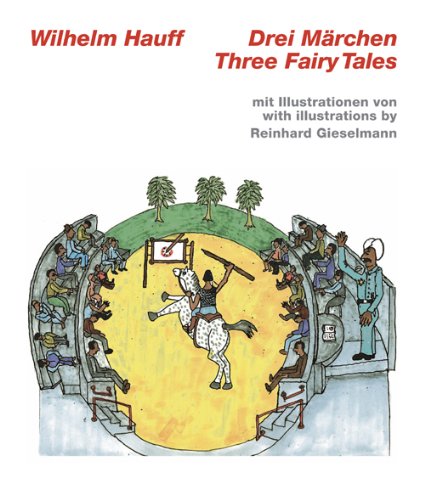
Wilhelm Hauff, Three Fairy Tales (Hardcover)
Lingua: Inglese
Editore: Edition Axel Menges, Fellbach, 2009
ISBN 10: 3936681333 ISBN 13: 9783936681338
Da: Grand Eagle Retail, Bensenville, IL, U.S.A.
Valutazione del venditore 5 su 5 stelle
Hardcover. Condizione: new. Gieselmann, Reinhard (illustratore). Hardcover. Text in English & German. "Poverty is the greatest plague, wealth is the highest good", Goethe wrote in his ballad "The Treasure Seeker". Over the course of the poem, however, it becomes apparent that this is a mistaken conclusion. The search for riches, fame and power often brings with it greed, inhumanity and violence, as Wilhelm Hauff shows us in this book of fairytales. The best known of these is The Cold Heart, in which the wish for a better life leads Peter Munk the charcoal-burner to seek the help of the spirits of the Black Forest. The first spirit he encounters is the kindly glass manikin, who makes him the owner of a glassworks, but, as he never wished for the necessary understanding, he cannot give the running of his glassworks the attention it deserves. He becomes idle, fails miserably and falls victim to Hollander Michael, the evil spirit, who demands Peter's heart in return for helping him and gives him a stone in return. With a heart of stone, Peter loses all his social competence, and is filled with avarice, which, however, does not prevent him from pursuing his new profession as a businessman and money-lender. Rather, it helps him to succeed.But when he kills his wife for showing kindness to a destitute man, he finally comes to his senses, with the assistance of the glass manikin, who helps him to recover his original heart. And so everything turns out for the best. Peter Munk becomes a charcoal-burner again, and lives humbly but happily with his mother and his wife, restored to life by the glass manikin, for the rest of his days. The Cave of Steenfoll has a less happy outcome. In this story, greed becomes an obsession and even a madness that finally leads to the death of William Falcon. Having found the long-sought treasure -- a little chest full of gold pieces -- he is still not satisfied, and he dives into the sea a second time, never to emerge again. The fairytale of Said's Adventures is the opposite of the other two. The hero, a man under the protection of a good fairy, embarks on a dangerous journey. The hero encounters greed and avarice everywhere during his adventures, but they have no place in his own character. He is a skilful fighter, but always guided by compassion. Finally, he is rewarded with wealth, good fortune and contentment. This bi-lingual edition (German/English) contains three of his famous fairy tales (The Cold Heart, SaidOs Adventures, The Cave of Steenfoll) telling from the search for riches, fame and power which often brings with it greed, inhumanity and violence. The fairy tales are accompanied by sensitive and colorful illustrations by Reinhard Gieselmann. Shipping may be from multiple locations in the US or from the UK, depending on stock availability.
-

Hans Dieter Schaal. Scenic Architecture (Hardcover)
Lingua: Inglese
Editore: Edition Axel Menges, Fellbach, 2016
ISBN 10: 393668197X ISBN 13: 9783936681970
Da: Grand Eagle Retail, Bensenville, IL, U.S.A.
Valutazione del venditore 5 su 5 stelle
Hardcover. Condizione: new. Hardcover. The pioneering character and continuing success of Schaals scenic compositions for stage sets and exhibitions is significantly due to this field allowing him to take full advantage of his multiple talents. He succeeds equally in the thinking and practical skills of an architect, a painter, a sculptor, a landscape designer, an urban visionary, cineast, and a man of literature, and this allows him to discover, through his space-embracing scenographic installations, unique three-dimensional equivalents for his paper-drawn 'thought spaces' and 'path spaces' or 'thought buildings' from the 1970s. Shipping may be from multiple locations in the US or from the UK, depending on stock availability.
-
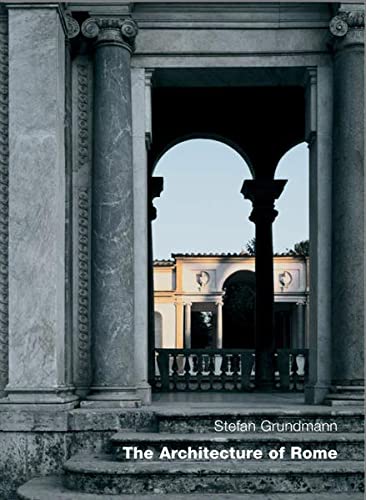
The Architecture Of Rome (Paperback)
Lingua: Inglese
Editore: Edition Axel Menges, Fellbach, 2007
ISBN 10: 3936681163 ISBN 13: 9783936681161
Da: Grand Eagle Retail, Bensenville, IL, U.S.A.
Valutazione del venditore 5 su 5 stelle
Paperback. Condizione: new. Paperback. Rome is where the history of European architecture was written. The foundations were laid in ancient Roman times when the first attempts were made to design interiors which could be experienced as something physical. Ancient Roman architects also started to develop building types that are still valid today, thus creating the cornerstone of later Western architecture. This guide has been arranged chronologically. Every epoch is preceded by an introduction that identifies its key features. This produces a continuous, lavishly illustrated history of the architecture of Rome, indeed, the whole of the West. The book includes an alphabetical index and detailed maps, whose information does not just immediately illustrate the historical picture, but also makes it possible to choose a personal route through history. In order to clarify the historical development, the key buildings of each period and other major works are emphasised both in the text and on the maps. Rome is where the history of European architecture was written. This book includes an alphabetical index and detailed maps, whose information does not just immediately illustrate the historical picture, but also makes it possible to choose a personal route through history. It also includes key buildings of each period and other major works. Shipping may be from multiple locations in the US or from the UK, depending on stock availability.
-
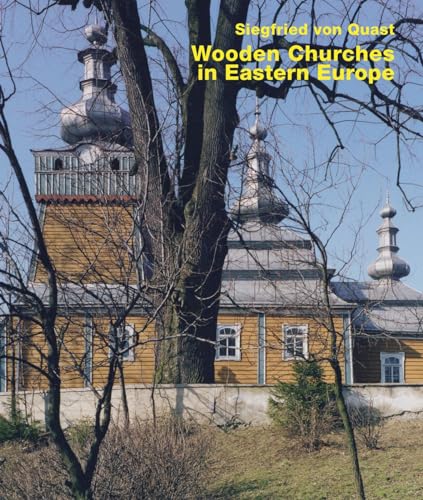
Wooden Churches in Eastern Europe (Hardcover)
Lingua: Inglese
Editore: Edition Axel Menges, Fellbach, 2023
ISBN 10: 3869050365 ISBN 13: 9783869050362
Da: Grand Eagle Retail, Bensenville, IL, U.S.A.
Valutazione del venditore 5 su 5 stelle
Hardcover. Condizione: new. Hardcover. What all these buildings have in common is that with the available material, wood, and the most modest means, places of worship, centres in the villages, were built with much feeling and love. The constructions in wood were derived in an old tradition from the dwellings and farm buildings of the peasant population. Their architecture, the typological forms probably penetrated into this seclusion as an idea. "The idea of a church as a building", brought with them by clergymen and wandering master craftsmen from the more fertile plains and the rich, large mining and trading towns.The oldest churches were built as early as in the 15th century, most of those still standing were built in the 18th and 19th centuries, and quite a few are still being built today. Many were destroyed in the two world wars, many fell victim to ethnic cleansing after 1945. Many were destroyed in the two world wars, many fell victim to ethnic cleansing after 1945, some fell into disrepair during the Soviet era, others were burnt down by lightning or short circuits, and quite a few simply gave way to the more "representative" stone churches as early as the 19th century. But a large number are still standing, consecrated, and believers gather in them. In fact, almost all of them in the various Carpathian countries are protected monuments, and many have been lovingly restored in recent times.More than the architectural-historical value, the question arises here of the aesthetic assessment of these small buildings. It is not a refined canon of forms of great architecture that can be derived and proven from the history of architecture that inspires us so much. Basically, they are not overly sophisticated constructions in terms of craftsmanship, they are safe and beautiful in their simplicity. Their aesthetic appeal, however, also includes the surface-weathered material, deformed structures, colour improvisations, recently ornamented sheet metal, inside wall paintings, altar and iconostasis furnishings derived from Renaissance and Baroque periods, but above all their location in the village, mostly isolated, often elevated, surrounded by old trees, enclosures and graves without cemetery order. Shipping may be from multiple locations in the US or from the UK, depending on stock availability.
-

Selected Works/Ausgewahlte Arbeiten 19712023 (Hardcover)
Lingua: Inglese
Editore: Edition Axel Menges, Fellbach, 2023
ISBN 10: 3869050330 ISBN 13: 9783869050331
Da: Grand Eagle Retail, Bensenville, IL, U.S.A.
Valutazione del venditore 5 su 5 stelle
Hardcover. Condizione: new. Hardcover. In his note to the edition of Neue Landschafts-architektur/New Landscape Architecture published 1994 in England as Landscape as Inspiration, Geoffrey Jellicoe compares my drawing considerations with the works of Paul Klee. What at first sounds a bit highfalutin is correct insofar as I do not move exclusively in the banal everyday and functional space in everything I draw, design and realize, but always reflect second and third surrealities as well. Art does not reproduce the visible, but makes visible", how Paul Klee formulated the process. Every viewer and reader could rightly ask the question: What do such expressions of art have to do with every-day architecture? I think: a great deal. And that is because all architectural problems and their solutions are multi-layered. Just like pure works of art. Every building summarizes and redefines its architectural, urban, village and landscape surroundings. Intentionally or unintentionally, exaggerated or restrained, each building can look like a meteorite or bomb strike, an inconspicuous remark or a beautification attack. I am interested in the past, the present and the future of an urban or landscape site. My view wants to integrate archaeological working methods just as much as functional fulfilments and imaginative-surreal, sometimes utopian efflorescence. I would never go so far as to formulate: Architecture is the necessary, and art is the unnecessary. Of course, every artist-architect who embarks on this complicated-complex path will have difficulties with the banal, seemingly superficial everyday reality in nature, the landscape and the city. It is therefore not surprising that I have only been able to realize a few architectural and visual productions and that, in the course of the last decades, I have been increasingly pushed into the areas of stage design and other design areas. At the moment, thanks to the ecological movement, hardly anyone is interested in the connection between art and architecture. More important are sustainability and zeroenergy houses in which the windows can hardly be opened. Could it be that building culture, indeed the whole of culture, will soon sink into green primeval forests and huge wetland biotopes? Or will foreign, warlike peoples destroy or occupy our cities and landscapes and cultivate them anew? The book offers a selection from the complete work of the artist Hans Dieter Schaal. Shown are landschape architecture, exhibition design, stage architecture, drawings and collages. Shipping may be from multiple locations in the US or from the UK, depending on stock availability.
-

Urban Fiction (Hardcover)
Lingua: Inglese
Editore: Edition Axel Menges, Fellbach, 2008
ISBN 10: 3930698269 ISBN 13: 9783930698264
Da: Grand Eagle Retail, Bensenville, IL, U.S.A.
Valutazione del venditore 5 su 5 stelle
Hardcover. Condizione: new. Hardcover. Dissatisfied with the world we live in, we have been longing since time immemorial for two opposing environments: the peaceful gardena carefree paradiseand the New Citya harmonious community. For Gunther Feuerstein, all these cities and towns, though only fictitious, have long since been built, and he strolls through them together with the architects, planners, writers, and philosophers, just as Thomas More, Antonio Filarete, William Morris, and many others once led us through their cities.m Utopia has long been sought after by urban architects since the time of Thomas More. Other fictional cities followed, some of which were brought to fruition such as Brasilia and Palmanova. Yet, these cities too have turned out to be imperfect, deeply rooted in their own period. This book takes readers through these cities. Shipping may be from multiple locations in the US or from the UK, depending on stock availability.
-

Brunnert und Partners, Flughafen Leipzig/Halle (Hardcover)
Lingua: Inglese
Editore: Edition Axel Menges, Fellbach, 2004
ISBN 10: 3930698528 ISBN 13: 9783930698523
Da: Grand Eagle Retail, Bensenville, IL, U.S.A.
Valutazione del venditore 5 su 5 stelle
Hardcover. Condizione: new. Hardcover. Text in English and German. The new Leipzig/Halle airport has not just one, but two predecessors. One was Leipzig-Mockau airport, opened in 1923 and often still used after the Second World War in the GDR days to serve the Leipziger Messe. The other was Leipzig/Halle airport which opened in 1927 and by 1937 was already the second-largest airport in Germany. Passenger numbers had increased fourfold by 1994. A master plan was worked out for a second runway, intended for 3.5 million passengers per year. An open architectural competition followed and was won by Brunnert und Partner from Stuttgart. They won with a risky concept that ran counter to the master plan. Instead of filling the site between the two runways the architects designed a huge bridge structure spanning the railway track and integrating the car-park, the mall, the check-in hall, the access road and the transfer to the railway station. This concludes the first building phase, which begins at the existing terminal and ends beyond the railway lines. The concept of the bridge will not be complete until the second building phase, although it can already be made out quite clearly. The architects designed a huge bridge structure spanning the railway track and integrating the car-park, the mall, the check-in hall, the access road and the transfer to the railway station. Shipping may be from multiple locations in the US or from the UK, depending on stock availability.
-

Ernst Gisel- Rathaus Fellbach (Hardcover)
Lingua: Inglese
Editore: Edition Axel Menges, Fellbach, 2011
ISBN 10: 3930698196 ISBN 13: 9783930698196
Da: Grand Eagle Retail, Bensenville, IL, U.S.A.
Valutazione del venditore 5 su 5 stelle
Hardcover. Condizione: new. Hardcover. Ernst Gisel's town hall for Fellbach is one of the very few buildings that make one enthuse about the town. Like Stirling's Neue Staatsgalerie it invites you to linger even without a reason: in the Stuttgart museum you are attracted by terraces, ramps and an open rotunda, whereas in the Fellbach building there is a sense of a strong suction that will draw the public into the inner courtyard of the complex. A bit Italian this is what Gisel himself says about the atmosphere there, and he is right. The urban quality of the new town hall corresponds with thequality of the detailed architectural solutions and the care with which Gisel devoted himself to the architectural design in the interior. Zurich architect Ernst Gisel's town hall for Rathaus Fellbach is one of the very few buildings that make one enthuse about the town. The new town hall is a fairly perfect piece of architecture and urban art: reticent as a whole, monumental in detail. This title deals with this topic. Shipping may be from multiple locations in the US or from the UK, depending on stock availability.
