

Importo totale (1 articolo articoli):
Destinazione ordine:

9780198717058 - The Sceptical Optimist: Why technology isn't the answer to everything di Agar, Nicholas (27 risultati)
Vai alla pagina principale dei risultati di ricerca
Filtri di ricerca
Tipo di articolo
- Tutti i tipi di prodotto
- Libri (27)
- Riviste e Giornali (Nessun altro risultato corrispondente a questo perfezionamento)
- Fumetti (Nessun altro risultato corrispondente a questo perfezionamento)
- Spartiti (Nessun altro risultato corrispondente a questo perfezionamento)
- Arte, Stampe e Poster (Nessun altro risultato corrispondente a questo perfezionamento)
- Fotografie (Nessun altro risultato corrispondente a questo perfezionamento)
- Mappe (Nessun altro risultato corrispondente a questo perfezionamento)
- Manoscritti e Collezionismo cartaceo (Nessun altro risultato corrispondente a questo perfezionamento)
Condizioni Maggiori informazioni
- Nuovo (22)
- Come nuovo, Ottimo o Quasi ottimo (3)
- Molto buono o Buono (2)
- Discreto o Mediocre (Nessun altro risultato corrispondente a questo perfezionamento)
- Come descritto (Nessun altro risultato corrispondente a questo perfezionamento)
Legatura
Ulteriori caratteristiche
- Prima ed. (3)
- Copia autograf. (Nessun altro risultato corrispondente a questo perfezionamento)
- Sovracoperta (1)
- Con foto (8)
- Non Print on Demand (16)
Lingua (2)
Spedizione gratuita
Paese del venditore
Valutazione venditore
-
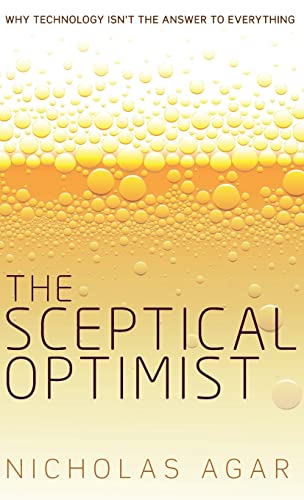
The Sceptical Optimist : Why Technology Isn't the Answer to Everything
Lingua: Inglese
Editore: Oxford University Press, Incorporated, 2015
ISBN 10: 0198717059 ISBN 13: 9780198717058
Da: Better World Books, Mishawaka, IN, U.S.A.
Valutazione del venditore 5 su 5 stelle

Prima edizione
Condizione: Good. 1st Edition. Former library copy. Pages intact with minimal writing/highlighting. The binding may be loose and creased. Dust jackets/supplements are not included. Includes library markings. Stock photo provided. Product includes identifying sticker. Better World Books: Buy Books. Do Good.
-
The Sceptical Optimist: Why technology isn't the answer to everything
Da: WorldofBooks, Goring-By-Sea, WS, Regno Unito
Valutazione del venditore 5 su 5 stelle
EUR 14,10
Spedizione EUR 6,49
Spedito da Regno Unito a U.S.A.Quantità: 1 disponibili
Aggiungi al carrelloPaperback. Condizione: Very Good. The book has been read, but is in excellent condition. Pages are intact and not marred by notes or highlighting. The spine remains undamaged.
-

Sceptical Optimist : Why Technology Isn't the Answer to Everything
Da: GreatBookPrices, Columbia, MD, U.S.A.
Valutazione del venditore 5 su 5 stelle
EUR 28,60
Spedizione EUR 2,32
Spedito in U.S.A.Quantità: Più di 20 disponibili
Aggiungi al carrelloCondizione: New.
-

The Sceptical Optimist
Lingua: Inglese
Editore: Oxford University Press, GB, 2015
ISBN 10: 0198717059 ISBN 13: 9780198717058
Da: Rarewaves.com USA, London, LONDO, Regno Unito
Valutazione del venditore 5 su 5 stelle
EUR 31,03
Spedizione gratuita
Spedito da Regno Unito a U.S.A.Quantità: Più di 20 disponibili
Aggiungi al carrelloHardback. Condizione: New. The rapid developments in technologies -- especially computing and the advent of many 'smart' devices, as well as rapid and perpetual communication via the Internet -- has led to a frequently voiced view which Nicholas Agar describes as 'radical optimism'. Radical optimists claim that accelerating technical progress will soon end poverty, disease, and ignorance, and improve our happiness and well-being. Agar disputes the claim that technological progress will automatically produce great improvements in subjective well-being. He argues that radical optimism 'assigns to technological progress an undeserved pre-eminence among all the goals pursued by our civilization'. Instead, Agar uses the most recent psychological studies about human perceptions of well-being to create a realistic model of the impact technology will have. Although he accepts that technological advance does produce benefits, he insists that these are significantly less than those proposed by the radical optimists, and aspects of such progress can also pose a threat to values such as social justice and our relationship with nature, while problems such as poverty cannot be understood in technological terms. He concludes by arguing that a more realistic assessment of the benefits that technological advance can bring will allow us to better manage its risks in future.
-
The Sceptical Optimist: Why Technology Isn't the Answer to Everything
Da: California Books, Miami, FL, U.S.A.
Valutazione del venditore 4 su 5 stelle

Condizione: New.
-

Sceptical Optimist : Why Technology Isn't the Answer to Everything
Da: GreatBookPrices, Columbia, MD, U.S.A.
Valutazione del venditore 5 su 5 stelle
EUR 33,09
Spedizione EUR 2,32
Spedito in U.S.A.Quantità: Più di 20 disponibili
Aggiungi al carrelloCondizione: As New. Unread book in perfect condition.
-
The Sceptical Optimist (Hardcover)
Lingua: Inglese
Editore: Oxford University Press, Oxford, 2015
ISBN 10: 0198717059 ISBN 13: 9780198717058
Da: Grand Eagle Retail, Bensenville, IL, U.S.A.
Valutazione del venditore 5 su 5 stelle
Hardcover. Condizione: new. Hardcover. The rapid developments in technologies -- especially computing and the advent of many 'smart' devices, as well as rapid and perpetual communication via the Internet -- has led to a frequently voiced view which Nicholas Agar describes as 'radical optimism'. Radical optimists claim that accelerating technical progress will soon end poverty, disease, and ignorance, and improve our happiness and well-being. Agar disputes the claim that technological progress willautomatically produce great improvements in subjective well-being. He argues that radical optimism 'assigns to technological progress an undeserved pre-eminence among all the goals pursued by ourcivilization'.Instead, Agar uses the most recent psychological studies about human perceptions of well-being to create a realistic model of the impact technology will have. Although he accepts that technological advance does produce benefits, he insists that these are significantly less than those proposed by the radical optimists, and aspects of such progress can also pose a threat to values such as social justice and our relationship with nature, while problems such aspoverty cannot be understood in technological terms. He concludes by arguing that a more realistic assessment of the benefits that technological advance can bring will allow us to better manage itsrisks in future. In The Paradox of Progress, Nicholas Agar challenges the central claims of 'radical optimism': that technological progress will automatically make us happier and healthier. Using recent psychological studies about human well-being, he instead presents a more realistic approach to understand the positive and negative issues that progress brings. Shipping may be from multiple locations in the US or from the UK, depending on stock availability.
-
The Sceptical Optimist: Why Technology Isn't the Answer to Everything
Da: Prior Books Ltd, Cheltenham, Regno Unito
Membro dell'associazione: ABA ILAB PBFA
Valutazione del venditore 5 su 5 stelle
Prima edizione
EUR 8,96
Spedizione EUR 25,49
Spedito da Regno Unito a U.S.A.Quantità: 1 disponibili
Aggiungi al carrelloHardcover. Condizione: Like New. Condizione sovraccoperta: Like New. First Edition. Dark blue hardback with gilt lettered spine: firm and square, strong joints, no bumps. Complete with original dustjacket: showing well, no tears, no chips. Contents crisp, tight and clean; no pen-marks. Not from a library so no such stamps or labels. Looks and feels unread. Fully indexed. Thus a nearly, if not new copy.
-
The Sceptical Optimist: Why Technology Isn't the Answer to Everything
Da: Ria Christie Collections, Uxbridge, Regno Unito
Valutazione del venditore 5 su 5 stelle
EUR 28,85
Spedizione EUR 13,88
Spedito da Regno Unito a U.S.A.Quantità: Più di 20 disponibili
Aggiungi al carrelloCondizione: New. In.
-
The Sceptical Optimist: Why technology isn't the answer to everything
Da: THE SAINT BOOKSTORE, Southport, Regno Unito
Valutazione del venditore 5 su 5 stelle
EUR 27,57
Spedizione EUR 17,32
Spedito da Regno Unito a U.S.A.Quantità: 15 disponibili
Aggiungi al carrelloHardback. Condizione: New. New copy - Usually dispatched within 4 working days.
-

Sceptical Optimist : Why Technology Isn't the Answer to Everything
Da: GreatBookPricesUK, Woodford Green, Regno Unito
Valutazione del venditore 5 su 5 stelle
EUR 27,55
Spedizione EUR 17,38
Spedito da Regno Unito a U.S.A.Quantità: Più di 20 disponibili
Aggiungi al carrelloCondizione: New.
-

Sceptical Optimist : Why Technology Isn't the Answer to Everything
Da: GreatBookPricesUK, Woodford Green, Regno Unito
Valutazione del venditore 5 su 5 stelle
EUR 30,78
Spedizione EUR 17,38
Spedito da Regno Unito a U.S.A.Quantità: Più di 20 disponibili
Aggiungi al carrelloCondizione: As New. Unread book in perfect condition.
-
The Sceptical Optimist: Why Technology Isn't the Answer to Everything
Da: Kennys Bookshop and Art Galleries Ltd., Galway, GY, Irlanda
Valutazione del venditore 5 su 5 stelle
Prima edizione
EUR 37,34
Spedizione EUR 10,50
Spedito da Irlanda a U.S.A.Quantità: Più di 20 disponibili
Aggiungi al carrelloCondizione: New. In The Paradox of Progress, Nicholas Agar challenges the central claims of 'radical optimism': that technological progress will automatically make us happier and healthier. Using recent psychological studies about human well-being, he instead presents a more realistic approach to understand the positive and negative issues that progress brings. Num Pages: 224 pages. BIC Classification: PDA; PDR; PDZ. Category: (P) Professional & Vocational; (U) Tertiary Education (US: College). Dimension: 145 x 223 x 24. Weight in Grams: 388. . 2015. 1st Edition. Hardcover. . . . .
-
The Sceptical Optimist: Why technology isn't the answer to everything
Da: Revaluation Books, Exeter, Regno Unito
Valutazione del venditore 5 su 5 stelle
EUR 41,62
Spedizione EUR 11,59
Spedito da Regno Unito a U.S.A.Quantità: 2 disponibili
Aggiungi al carrelloHardcover. Condizione: Brand New. 1st edition. 256 pages. 8.58x5.35x0.94 inches. In Stock.
-
The Sceptical Optimist: Why Technology Isn't the Answer to Everything
Da: Kennys Bookstore, Olney, MD, U.S.A.
Valutazione del venditore 5 su 5 stelle
EUR 46,75
Spedizione EUR 9,22
Spedito in U.S.A.Quantità: Più di 20 disponibili
Aggiungi al carrelloCondizione: New. In The Paradox of Progress, Nicholas Agar challenges the central claims of 'radical optimism': that technological progress will automatically make us happier and healthier. Using recent psychological studies about human well-being, he instead presents a more realistic approach to understand the positive and negative issues that progress brings. Num Pages: 224 pages. BIC Classification: PDA; PDR; PDZ. Category: (P) Professional & Vocational; (U) Tertiary Education (US: College). Dimension: 145 x 223 x 24. Weight in Grams: 388. . 2015. 1st Edition. Hardcover. . . . . Books ship from the US and Ireland.
-

The Sceptical Optimist
Lingua: Inglese
Editore: Oxford University Press, GB, 2015
ISBN 10: 0198717059 ISBN 13: 9780198717058
Da: Rarewaves.com UK, London, Regno Unito
Valutazione del venditore 5 su 5 stelle
EUR 28,09
Spedizione EUR 75,32
Spedito da Regno Unito a U.S.A.Quantità: Più di 20 disponibili
Aggiungi al carrelloHardback. Condizione: New. The rapid developments in technologies -- especially computing and the advent of many 'smart' devices, as well as rapid and perpetual communication via the Internet -- has led to a frequently voiced view which Nicholas Agar describes as 'radical optimism'. Radical optimists claim that accelerating technical progress will soon end poverty, disease, and ignorance, and improve our happiness and well-being. Agar disputes the claim that technological progress will automatically produce great improvements in subjective well-being. He argues that radical optimism 'assigns to technological progress an undeserved pre-eminence among all the goals pursued by our civilization'. Instead, Agar uses the most recent psychological studies about human perceptions of well-being to create a realistic model of the impact technology will have. Although he accepts that technological advance does produce benefits, he insists that these are significantly less than those proposed by the radical optimists, and aspects of such progress can also pose a threat to values such as social justice and our relationship with nature, while problems such as poverty cannot be understood in technological terms. He concludes by arguing that a more realistic assessment of the benefits that technological advance can bring will allow us to better manage its risks in future.
-
Sceptical Optimist
Da: PBShop.store US, Wood Dale, IL, U.S.A.
Valutazione del venditore 5 su 5 stelle
EUR 31,00
Spedizione gratuita
Spedito in U.S.A.Quantità: Più di 20 disponibili
Aggiungi al carrelloHRD. Condizione: New. New Book. Shipped from UK. THIS BOOK IS PRINTED ON DEMAND. Established seller since 2000.
-
The Sceptical Optimist: Why technology isn't the answer to everything (eng)
Da: Brook Bookstore On Demand, Napoli, NA, Italia
Valutazione del venditore 5 su 5 stelle
EUR 25,77
Spedizione EUR 5,50
Spedito da Italia a U.S.A.Quantità: Più di 20 disponibili
Aggiungi al carrelloCondizione: new. Questo è un articolo print on demand.
-
Sceptical Optimist
Da: PBShop.store UK, Fairford, GLOS, Regno Unito
Valutazione del venditore 5 su 5 stelle
EUR 28,90
Spedizione EUR 4,82
Spedito da Regno Unito a U.S.A.Quantità: Più di 20 disponibili
Aggiungi al carrelloHRD. Condizione: New. New Book. Delivered from our UK warehouse in 4 to 14 business days. THIS BOOK IS PRINTED ON DEMAND. Established seller since 2000.
-
The Sceptical Optimist: Why technology isn't the answer to everything
Da: THE SAINT BOOKSTORE, Southport, Regno Unito
Valutazione del venditore 5 su 5 stelle
EUR 32,36
Spedizione EUR 17,32
Spedito da Regno Unito a U.S.A.Quantità: Più di 20 disponibili
Aggiungi al carrelloHardback. Condizione: New. This item is printed on demand. New copy - Usually dispatched within 5-9 working days.
-
The Sceptical Optimist (Hardcover)
Lingua: Inglese
Editore: Oxford University Press, Oxford, 2015
ISBN 10: 0198717059 ISBN 13: 9780198717058
Da: AussieBookSeller, Truganina, VIC, Australia
Valutazione del venditore 5 su 5 stelle
EUR 37,73
Spedizione EUR 32,48
Spedito da Australia a U.S.A.Quantità: 1 disponibili
Aggiungi al carrelloHardcover. Condizione: new. Hardcover. The rapid developments in technologies -- especially computing and the advent of many 'smart' devices, as well as rapid and perpetual communication via the Internet -- has led to a frequently voiced view which Nicholas Agar describes as 'radical optimism'. Radical optimists claim that accelerating technical progress will soon end poverty, disease, and ignorance, and improve our happiness and well-being. Agar disputes the claim that technological progress willautomatically produce great improvements in subjective well-being. He argues that radical optimism 'assigns to technological progress an undeserved pre-eminence among all the goals pursued by ourcivilization'.Instead, Agar uses the most recent psychological studies about human perceptions of well-being to create a realistic model of the impact technology will have. Although he accepts that technological advance does produce benefits, he insists that these are significantly less than those proposed by the radical optimists, and aspects of such progress can also pose a threat to values such as social justice and our relationship with nature, while problems such aspoverty cannot be understood in technological terms. He concludes by arguing that a more realistic assessment of the benefits that technological advance can bring will allow us to better manage itsrisks in future. In The Paradox of Progress, Nicholas Agar challenges the central claims of 'radical optimism': that technological progress will automatically make us happier and healthier. Using recent psychological studies about human well-being, he instead presents a more realistic approach to understand the positive and negative issues that progress brings. This item is printed on demand. Shipping may be from our Sydney, NSW warehouse or from our UK or US warehouse, depending on stock availability.
-
The Sceptical Optimist (Hardcover)
Lingua: Inglese
Editore: Oxford University Press, Oxford, 2015
ISBN 10: 0198717059 ISBN 13: 9780198717058
Da: CitiRetail, Stevenage, Regno Unito
Valutazione del venditore 5 su 5 stelle
EUR 32,80
Spedizione EUR 42,87
Spedito da Regno Unito a U.S.A.Quantità: 1 disponibili
Aggiungi al carrelloHardcover. Condizione: new. Hardcover. The rapid developments in technologies -- especially computing and the advent of many 'smart' devices, as well as rapid and perpetual communication via the Internet -- has led to a frequently voiced view which Nicholas Agar describes as 'radical optimism'. Radical optimists claim that accelerating technical progress will soon end poverty, disease, and ignorance, and improve our happiness and well-being. Agar disputes the claim that technological progress willautomatically produce great improvements in subjective well-being. He argues that radical optimism 'assigns to technological progress an undeserved pre-eminence among all the goals pursued by ourcivilization'. Instead, Agar uses the most recent psychological studies about human perceptions of well-being to create a realistic model of the impact technology will have. Although he accepts that technological advance does produce benefits, he insists that these are significantly less than those proposed by the radical optimists, and aspects of such progress can also pose a threat to values such as social justice and our relationship with nature, while problems such aspoverty cannot be understood in technological terms. He concludes by arguing that a more realistic assessment of the benefits that technological advance can bring will allow us to better manage itsrisks in future. In The Paradox of Progress, Nicholas Agar challenges the central claims of 'radical optimism': that technological progress will automatically make us happier and healthier. Using recent psychological studies about human well-being, he instead presents a more realistic approach to understand the positive and negative issues that progress brings. This item is printed on demand. Shipping may be from our UK warehouse or from our Australian or US warehouses, depending on stock availability.
-

Sceptical Optimist : Why Technology Isn't the Answer to Everything
Lingua: Inglese
Editore: Oxford University Press(UK), 2015
ISBN 10: 0198717059 ISBN 13: 9780198717058
EUR 40,38
Spedizione EUR 62,08
Spedito da Germania a U.S.A.Quantità: 2 disponibili
Aggiungi al carrelloBuch. Condizione: Neu. nach der Bestellung gedruckt Neuware - Printed after ordering - The rapid developments in technologies -- especially computing and the advent of many 'smart' devices, as well as rapid and perpetual communication via the Internet -- has led to a frequently voiced view which Nicholas Agar describes as 'radical optimism'. Radical optimists claim thataccelerating technical progress will soon end poverty, disease, and ignorance, and improve our happiness and well-being. Agar disputes the claim that technological progress will automatically produce great improvements in subjective well-being. He argues that radical optimism 'assigns totechnological progress an undeserved pre-eminence among all the goals pursued by our civilization'. Instead, Agar uses the most recent psychological studies about human perceptions of well-being to create a realistic model of the impact technology will have. Although he accepts that technological advance does produce benefits, he insists that these are significantly less than those proposed bythe radical optimists, and aspects of such progress can also pose a threat to values such as social justice and our relationship with nature, while problems such as poverty cannot be understood in technological terms. He concludes by arguing that a more realistic assessment of the benefits thattechnological advance can bring will allow us to better manage its risks in future.
-

Sceptical Optimist | Why Technology Isn't the Answer to Everything
Lingua: Inglese
Editore: Oxford University Press(UK), 2015
ISBN 10: 0198717059 ISBN 13: 9780198717058
EUR 35,15
Spedizione EUR 70,00
Spedito da Germania a U.S.A.Quantità: 5 disponibili
Aggiungi al carrelloBuch. Condizione: Neu. Sceptical Optimist | Why Technology Isn't the Answer to Everything | Nicholas Agar | Buch | Gebunden | Englisch | 2015 | Oxford University Press(UK) | EAN 9780198717058 | Verantwortliche Person für die EU: Libri GmbH, Europaallee 1, 36244 Bad Hersfeld, gpsr[at]libri[dot]de | Anbieter: preigu Print on Demand.
-
The Paradox of Progress
Editore: Oxford University Press
ISBN 10: 0198717059 ISBN 13: 9780198717058
Da: Majestic Books, Hounslow, Regno Unito
Valutazione del venditore 4 su 5 stelle
EUR 42,08
Spedizione EUR 7,53
Spedito da Regno Unito a U.S.A.Quantità: 4 disponibili
Aggiungi al carrelloCondizione: New. Print on Demand pp. 256.
-
The Paradox of Progress
Editore: Oxford University Press OUP
ISBN 10: 0198717059 ISBN 13: 9780198717058
Da: Books Puddle, New York, NY, U.S.A.
Valutazione del venditore 4 su 5 stelle
Condizione: New. Print on Demand pp. 256 Index.
-
The Paradox of Progress
Editore: Oxford University Press
ISBN 10: 0198717059 ISBN 13: 9780198717058
Da: Biblios, Frankfurt am main, HESSE, Germania
Valutazione del venditore 4 su 5 stelle
EUR 41,98
Spedizione EUR 9,95
Spedito da Germania a U.S.A.Quantità: 4 disponibili
Aggiungi al carrelloCondizione: New. PRINT ON DEMAND pp. 256.

