

Importo totale (1 articolo articoli):
Destinazione ordine:

9780387774886 - Genetics and Genomics of the Triticeae: 7 (8 risultati)
Vai alla pagina principale dei risultati di ricerca
Filtri di ricerca
Tipo di articolo
- Tutti i tipi di prodotto
- Libri (8)
- Riviste e Giornali (Nessun altro risultato corrispondente a questo perfezionamento)
- Fumetti (Nessun altro risultato corrispondente a questo perfezionamento)
- Spartiti (Nessun altro risultato corrispondente a questo perfezionamento)
- Arte, Stampe e Poster (Nessun altro risultato corrispondente a questo perfezionamento)
- Fotografie (Nessun altro risultato corrispondente a questo perfezionamento)
- Mappe (Nessun altro risultato corrispondente a questo perfezionamento)
- Manoscritti e Collezionismo cartaceo (Nessun altro risultato corrispondente a questo perfezionamento)
Condizioni Maggiori informazioni
- Nuovo (6)
- Come nuovo, Ottimo o Quasi ottimo (Nessun altro risultato corrispondente a questo perfezionamento)
- Molto buono o Buono (1)
- Discreto o Mediocre (Nessun altro risultato corrispondente a questo perfezionamento)
- Come descritto (1)
Legatura
- Tutte
- Rilegato (8)
- Brossura (Nessun altro risultato corrispondente a questo perfezionamento)
Ulteriori caratteristiche
- Prima ed. (Nessun altro risultato corrispondente a questo perfezionamento)
- Copia autograf. (Nessun altro risultato corrispondente a questo perfezionamento)
- Sovracoperta (Nessun altro risultato corrispondente a questo perfezionamento)
- Con foto (2)
- Non Print on Demand (8)
Lingua (1)
Prezzo
- Qualsiasi prezzo
- Inferiore a EUR 20 (Nessun altro risultato corrispondente a questo perfezionamento)
- EUR 20 a EUR 40
- Superiore a EUR 40
Spedizione gratuita
Paese del venditore
Valutazione venditore
-

Genetics and Genomics of the Triticeae.
Libro 4 di 16: Plant Genetics and Genomics: Crops and ModelsDa: Universitätsbuchhandlung Herta Hold GmbH, Berlin, Germania
Membro dell'associazione: GIAQ ILAB VDA
Valutazione del venditore 5 su 5 stelle

EUR 21,00
Spedizione EUR 30,00
Spedito da Germania a U.S.A.Quantità: 1 disponibili
Aggiungi al carrelloXXI, 757 p. Hardcover. Versand aus Deutschland / We dispatch from Germany via Air Mail. Einband bestoßen, daher Mängelexemplar gestempelt, sonst sehr guter Zustand. Imperfect copy due to slightly bumped cover, apart from this in very good condition. Stamped. Plant Genetics/Genomics, Vol. 7. Sprache: Englisch.
-
Hardcover. Condizione: Good. Satisfaction 100% guaranteed.
-
Genetics And Genomics Of The Triticeae
Libro 4 di 16: Plant Genetics and Genomics: Crops and ModelsDa: Basi6 International, Irving, TX, U.S.A.
Valutazione del venditore 5 su 5 stelle
Condizione: Brand New. New. US edition. Expediting shipping for all USA and Europe orders excluding PO Box. Excellent Customer Service.
-
Genetics and Genomics of the Triticeae (Plant Genetics and Genomics: Crops and Models, 7)
Libro 4 di 16: Plant Genetics and Genomics: Crops and ModelsDa: Lucky's Textbooks, Dallas, TX, U.S.A.
Valutazione del venditore 5 su 5 stelle
Condizione: New.
-
Genetics and Genomics of the Triticeae (Hardcover)
Libro 4 di 16: Plant Genetics and Genomics: Crops and ModelsLingua: Inglese
Editore: Springer-Verlag New York Inc., New York, NY, 2009
ISBN 10: 0387774882 ISBN 13: 9780387774886
Da: Grand Eagle Retail, Bensenville, IL, U.S.A.
Valutazione del venditore 5 su 5 stelle
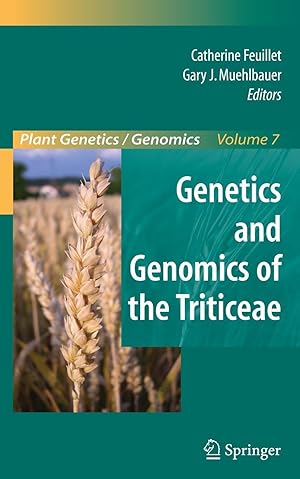
Hardcover. Condizione: new. Hardcover. Sequencing of the model plant genomes such as those of A. thaliana and rice has revolutionized our understanding of plant biology but it has yet to translate into the improvement of major crop species such as maize, wheat, or barley. Moreover, the comparative genomic studies in cereals that have been performed in the past decade have revealed the limits of conservation between rice and the other cereal genomes. This has necessitated the development of genomic resources and programs for maize, sorghum, wheat, and barley to serve as the foundation for future genome sequencing and the acceleration of genomic based improvement of these critically important crops. Cereals constitute over 50% of total crop production worldwide /) and cereal seeds are one of the most important renewable resources for food, feed, and industrial raw materials. Crop species of the Triticeae tribe that comprise wheat, barley, and rye are essential components of human and domestic animal nutrition. With 17% of all crop area, wheat is the staple food for 40% of the worlds population, while barley ranks fifth in the world production. Their domestication in the Fertile Crescent 10,000 years ago ushered in the beginning of agriculture and signified an important breakthrough in the advancement of civilization. Rye is second after wheat among grains most commonly used in the production of bread and is also very important for mixed animal feeds. It can be cultivated in poor soils and climates that are generally not suitable for other cereals. Extensive genetics and cytogenetics studies performed in the Triticeae species over the last 50 years have led to the characterization of their chromosomal composition and origins and have supported intensive work to create new genetic resources. Cytogenetic studies in wheat have allowed the identification and characterization of the different homoeologous genomes and have demonstrated the utility of studying wheatgenome evolution as a model for the analysis of polyploidization, a major force in the evolution of the eukaryotic genomes. Barley with its diploid genome shows high collinearity with the other Triticeae genomes and therefore serves as a good template for supporting genomic analyses in the wheat and rye genomes. The knowledge gained from genetic studies in the Triticeae has also been used to produce Triticale, the first human made hybrid crop that results from a cross between wheat and rye and combines the nutrition quality and productivity of wheat with the ruggedness of rye. Despite the economic importance of the Triticeae species and the need for accelerated crop improvement based on genomics studies, the size (1.7 Gb for the bread wheat genome, i.e., 5x the human genome and 40 times the rice genome), high repeat content (>80%), and complexity (polyploidy in wheat) of their genomes often have been considered too challenging for efficient molecular analysis and genetic improvement in these species. Consequently, Triticeae genomics has lagged behind the genomic advances of other cereal crops for many years. Recently, however, the situation has changed dramatically and robust genomic programs can be established in the Triticeae as a result of the convergence of several technology developments that have led to new, more efficient scientific capabilities and resources such as whole-genome and chromosome-specific BAC libraries, extensive EST collections, transformation systems, wild germplasm and mutant collections, as well as DNA chips. Currently, the Triticeae genomics "toolbox" is comprised of:- 9 publicly available BAC libraries from diploid (5), tetraploid (1) and hexaploid (3) wheat; 3 publicly available BAC libraries from barley and one BAC library from rye;- 3 wheat chromosome specific BAC libraries;- DNA chips including commercially availab Shipping may be from multiple locations in the US or from the UK, depending on stock availability.
-
EUR 227,74
Spedizione EUR 48,99
Spedito da Germania a U.S.A.Quantità: 4 disponibili
Aggiungi al carrelloGebunden. Condizione: New. A modern and comprehensive volume on the status and future of triticeaeSequencing of the model plant genomes such as those of A. thaliana and rice has revolutionized our understanding of plant biology but it has yet to translate into the improvement .
-

Genetics and Genomics of the Triticeae
Libro 4 di 16: Plant Genetics and Genomics: Crops and ModelsLingua: Inglese
Editore: Springer New York Jul 2009, 2009
ISBN 10: 0387774882 ISBN 13: 9780387774886
EUR 216,56
Spedizione EUR 66,31
Spedito da Germania a U.S.A.Quantità: 2 disponibili
Aggiungi al carrelloBuch. Condizione: Neu. Neuware.
-
Genetics and Genomics of the Triticeae (Plant Genetics and Genomics: Crops and Models)
Libro 4 di 16: Plant Genetics and Genomics: Crops and ModelsDa: Revaluation Books, Exeter, Regno Unito
Valutazione del venditore 5 su 5 stelle
EUR 302,75
Spedizione EUR 17,21
Spedito da Regno Unito a U.S.A.Quantità: 2 disponibili
Aggiungi al carrelloHardcover. Condizione: Brand New. 1st edition. 700 pages. 9.30x5.70x1.70 inches. In Stock.

