

Importo totale (1 articolo articoli):
Destinazione ordine:

9780792366928 - Scaling Up: The Institution of Chemical Engineers and the Rise of a New Profession: 20 di Divall, Colin; Johnston, Sean F.; Donnelly, James F. (17 risultati)
Vai alla pagina principale dei risultati di ricerca
Filtri di ricerca
Tipo di articolo
- Tutti i tipi di prodotto
- Libri (17)
- Riviste e Giornali (Nessun altro risultato corrispondente a questo perfezionamento)
- Fumetti (Nessun altro risultato corrispondente a questo perfezionamento)
- Spartiti (Nessun altro risultato corrispondente a questo perfezionamento)
- Arte, Stampe e Poster (Nessun altro risultato corrispondente a questo perfezionamento)
- Fotografie (Nessun altro risultato corrispondente a questo perfezionamento)
- Mappe (Nessun altro risultato corrispondente a questo perfezionamento)
- Manoscritti e Collezionismo cartaceo (Nessun altro risultato corrispondente a questo perfezionamento)
Condizioni Maggiori informazioni
- Nuovo (12)
- Come nuovo, Ottimo o Quasi ottimo (3)
- Molto buono o Buono (2)
- Discreto o Mediocre (Nessun altro risultato corrispondente a questo perfezionamento)
- Come descritto (Nessun altro risultato corrispondente a questo perfezionamento)
Legatura
- Tutte
- Rilegato (17)
- Brossura (Nessun altro risultato corrispondente a questo perfezionamento)
Ulteriori caratteristiche
- Prima ed. (Nessun altro risultato corrispondente a questo perfezionamento)
- Copia autograf. (Nessun altro risultato corrispondente a questo perfezionamento)
- Sovracoperta (Nessun altro risultato corrispondente a questo perfezionamento)
- Con foto (8)
- Non Print on Demand (17)
Lingua (1)
Prezzo
- Qualsiasi prezzo
- Inferiore a EUR 20 (Nessun altro risultato corrispondente a questo perfezionamento)
- EUR 20 a EUR 45 (Nessun altro risultato corrispondente a questo perfezionamento)
- Superiore a EUR 45
Spedizione gratuita
Paese del venditore
Valutazione venditore
-
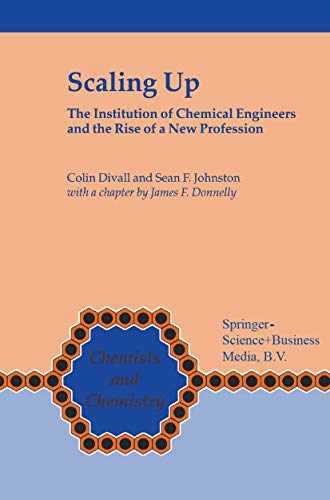
Scaling Up: The Institution of Chemical Engineers and the Rise of a New Profession: 20 (Chemists and Chemistry, 20)
Da: WorldofBooks, Goring-By-Sea, WS, Regno Unito
Valutazione del venditore 5 su 5 stelle

EUR 68,43
Spedizione EUR 6,46
Spedito da Regno Unito a U.S.A.Quantità: 1 disponibili
Aggiungi al carrelloHardback. Condizione: Good. The book has been read but remains in clean condition. All pages are intact and the cover is intact. Some minor wear to the spine.
-
Scaling Up: The Institution of Chemical Engineers and the Rise of a New Profession (Chemists and Chemistry, 20)
Da: BennettBooksLtd, Los Angeles, CA, U.S.A.
Valutazione del venditore 5 su 5 stelle
hardcover. Condizione: New. In shrink wrap. Looks like an interesting title!
-
Scaling Up: The Institution of Chemical Engineers and the Rise of a New Profession (Chemists and Chemistry)
Da: Brit Books, Milton Keynes, Regno Unito
Valutazione del venditore 4 su 5 stelle

EUR 69,60
Spedizione EUR 18,45
Spedito da Regno Unito a U.S.A.Quantità: 1 disponibili
Aggiungi al carrelloHardcover. Condizione: Used; Good. ***Simply Brit*** Welcome to our online used book store, where affordability meets great quality. Dive into a world of captivating reads without breaking the bank. We take pride in offering a wide selection of used books, from classics to hidden gems, ensuring there is something for every literary palate. All orders are shipped within 24 hours and our lightning fast-delivery within 48 hours coupled with our prompt customer service ensures a smooth journey from ordering to delivery. Discover the joy of reading with us, your trusted source for affordable books that do not compromise on quality.
-

Scaling Up : The Institution of Chemical Engineers and the Rise of a New Profession
Da: GreatBookPrices, Columbia, MD, U.S.A.
Valutazione del venditore 5 su 5 stelle
EUR 114,67
Spedizione EUR 2,27
Spedito in U.S.A.Quantità: Più di 20 disponibili
Aggiungi al carrelloCondizione: New.
-
Scaling Up: The Institution of Chemical Engineers and the Rise of a New Profession (Chemists and Chemistry, 20)
Da: California Books, Miami, FL, U.S.A.
Valutazione del venditore 5 su 5 stelle
EUR 117,02
Spedizione gratuita
Spedito in U.S.A.Quantità: Più di 20 disponibili
Aggiungi al carrelloCondizione: New.
-
Scaling Up: The Institution of Chemical Engineers and the Rise of a New Profession
Lingua: Inglese
Editore: Kluwer Academic Publishers, 2001
ISBN 10: 0792366921 ISBN 13: 9780792366928
Da: Fireside Bookshop, Stroud, GLOS, Regno Unito
Membro dell'associazione: PBFA
Valutazione del venditore 5 su 5 stelle
EUR 89,13
Spedizione EUR 28,84
Spedito da Regno Unito a U.S.A.Quantità: 1 disponibili
Aggiungi al carrelloCloth/Laminated Boards. Condizione: Like New. Type: Book Chemical engineering - as a recognized skill in the workplace, as an academic discipline, and as an acknowledged profession - is scarcely a century old. Yet from a contested existence before the First World War, chemical engineering had become one of the "big four" engineering professions in Britain, and a major contributor to Western economies by the end of the 20th century. The subject had distinct national trajectories. In Britain - too long seen as shaped by American experiences - the emergence of recognized chemical engineers was the result of professional aspirations and contingency, and shaped by a shifting ecology of institutions, firms and government. Drawing upon extensive archival research, this book examines the evolution of technical practice, working environment and social interactions of chemical engineering. It should be of considerable interest to historians, sociologists of the professions, and to practitioners themselves. Volume 20 in Chemists and Chemistry series.347pp.
-

Scaling Up : The Institution of Chemical Engineers and the Rise of a New Profession
Da: GreatBookPrices, Columbia, MD, U.S.A.
Valutazione del venditore 5 su 5 stelle
EUR 118,72
Spedizione EUR 2,27
Spedito in U.S.A.Quantità: Più di 20 disponibili
Aggiungi al carrelloCondizione: As New. Unread book in perfect condition.
-
Scaling Up: The Institution of Chemical Engineers and the Rise of a New Profession (Chemists and Chemistry, 20)
Da: Ria Christie Collections, Uxbridge, Regno Unito
Valutazione del venditore 5 su 5 stelle
EUR 112,07
Spedizione EUR 13,82
Spedito da Regno Unito a U.S.A.Quantità: Più di 20 disponibili
Aggiungi al carrelloCondizione: New. In.
-

Scaling Up : The Institution of Chemical Engineers and the Rise of a New Profession
Da: GreatBookPricesUK, Woodford Green, Regno Unito
Valutazione del venditore 5 su 5 stelle
EUR 112,05
Spedizione EUR 17,31
Spedito da Regno Unito a U.S.A.Quantità: Più di 20 disponibili
Aggiungi al carrelloCondizione: New.
-

Scaling Up : The Institution of Chemical Engineers and the Rise of a New Profession
Da: GreatBookPricesUK, Woodford Green, Regno Unito
Valutazione del venditore 5 su 5 stelle
EUR 128,28
Spedizione EUR 17,31
Spedito da Regno Unito a U.S.A.Quantità: Più di 20 disponibili
Aggiungi al carrelloCondizione: As New. Unread book in perfect condition.
-

Scaling Up
Lingua: Inglese
Editore: Kluwer Academic Publishers, US, 2001
ISBN 10: 0792366921 ISBN 13: 9780792366928
Da: Rarewaves.com USA, London, LONDO, Regno Unito
Valutazione del venditore 5 su 5 stelle
EUR 147,19
Spedizione gratuita
Spedito da Regno Unito a U.S.A.Quantità: Più di 20 disponibili
Aggiungi al carrelloHardback. Condizione: New. 2001 ed. Chemical engineering - as a recognized skill in the workplace, as an academic discipline, and as an acknowledged profession - is scarcely a century old. Yet from a contested existence before the First World War, chemical engineering had become one of the "big four" engineering professions in Britain, and a major contributor to Western economies by the end of the 20th century. The subject had distinct national trajectories. In Britain - too long seen as shaped by American experiences - the emergence of recognized chemical engineers was the result of professional aspirations and contingency, and shaped by a shifting ecology of institutions, firms and government. Drawing upon extensive archival research, this book examines the evolution of technical practice, working environment and social interactions of chemical engineering. It should be of considerable interest to historians, sociologists of the professions, and to practitioners themselves.
-
Scaling Up
Lingua: Inglese
Editore: Kluwer Academic Publishers, 2001
ISBN 10: 0792366921 ISBN 13: 9780792366928
Da: Kennys Bookshop and Art Galleries Ltd., Galway, GY, Irlanda
Valutazione del venditore 5 su 5 stelle
EUR 135,70
Spedizione EUR 10,50
Spedito da Irlanda a U.S.A.Quantità: 15 disponibili
Aggiungi al carrelloCondizione: New. Examines the evolution of technical practice, working environment and social interactions of chemical engineering. This book is suitable for historians, sociologists of the professions, and for practitioners themselves. Series: Chemists and Chemistry (Closed). Num Pages: 350 pages, 1, black & white illustrations. BIC Classification: 1DBK; 3JJ; PN; TDC. Category: (P) Professional & Vocational; (UP) Postgraduate, Research & Scholarly; (UU) Undergraduate. Dimension: 235 x 178 x 22. Weight in Grams: 708. . 2001. Hardback. . . . .
-
Scaling Up: The Institution of Chemical Engineers and the Rise of a New Profession
Da: Revaluation Books, Exeter, Regno Unito
Valutazione del venditore 5 su 5 stelle
EUR 156,58
Spedizione EUR 14,42
Spedito da Regno Unito a U.S.A.Quantità: 2 disponibili
Aggiungi al carrelloHardcover. Condizione: Brand New. 1st edition. 347 pages. 10.00x6.75x1.00 inches. In Stock.
-

EUR 124,02
Spedizione EUR 48,99
Spedito da Germania a U.S.A.Quantità: Più di 20 disponibili
Aggiungi al carrelloCondizione: New. Precursors of the modern chemical industry began to emerge in Northern Europe in the middle of the eighteenth century. The Industrial Revolution boosted activities such as soap-making, glassmaking and textiles production, which required increasing quantitie.
-
Scaling Up
Lingua: Inglese
Editore: Kluwer Academic Publishers, 2001
ISBN 10: 0792366921 ISBN 13: 9780792366928
Da: Kennys Bookstore, Olney, MD, U.S.A.
Valutazione del venditore 4 su 5 stelle
Condizione: New. Examines the evolution of technical practice, working environment and social interactions of chemical engineering. This book is suitable for historians, sociologists of the professions, and for practitioners themselves. Series: Chemists and Chemistry (Closed). Num Pages: 350 pages, 1, black & white illustrations. BIC Classification: 1DBK; 3JJ; PN; TDC. Category: (P) Professional & Vocational; (UP) Postgraduate, Research & Scholarly; (UU) Undergraduate. Dimension: 235 x 178 x 22. Weight in Grams: 708. . 2001. Hardback. . . . . Books ship from the US and Ireland.
-

Scaling Up
Lingua: Inglese
Editore: Kluwer Academic Publishers, US, 2001
ISBN 10: 0792366921 ISBN 13: 9780792366928
Da: Rarewaves.com UK, London, Regno Unito
Valutazione del venditore 5 su 5 stelle
EUR 139,41
Spedizione EUR 75,00
Spedito da Regno Unito a U.S.A.Quantità: Più di 20 disponibili
Aggiungi al carrelloHardback. Condizione: New. 2001 ed. Precursors of the modern chemical industry began to emerge in Northern Europe in the middle of the eighteenth century. The Industrial Revolution boosted activities such as soap-making, glassmaking and textiles production, which required increasing quantities of chemical products. The Lead Chamber process for the manufacture of sulphuric acid, required for the production of dye, was developed in the 1740s by John Roebuck then based in Birmingham. Production of this key commodity rose steadily. By the 1820s, British annual production had reached 10 000 tons of 100% acid. By 1900, Britain was producing one quarter of the world's output with an annual production approaching one million tons. Demand for alkalis for glassmaking and soap-making, for textile dyes and for bleach was also growing rapidly in the second half of the eighteenth century, and it became clear that existing sources of these materials would not be sufficient. In response to a prize established by the Academie des Sciences, Nicholas Leblanc had devised by 1791 a method for converting common salt into soda ash, which was to become the central operation of the world alkali industry for about one hundred years.
-

EUR 153,14
Spedizione EUR 63,75
Spedito da Germania a U.S.A.Quantità: 2 disponibili
Aggiungi al carrelloBuch. Condizione: Neu. Neuware - Precursors of the modern chemical industry began to emerge in Northern Europe in the middle of the eighteenth century. The Industrial Revolution boosted activities such as soap-making, glassmaking and textiles production, which required increasing quantities of chemical products. The Lead Chamber process for the manufacture of sulphuric acid, required for the production of dye, was developed in the 1740s by John Roebuck then based in Birmingham. Production of this key commodity rose steadily. By the 1820s, British annual production had reached 10 000 tons of 100% acid. By 1900, Britain was producing one quarter of the world's output with an annual production approaching one million tons. Demand for alkalis for glassmaking and soap-making, for textile dyes and for bleach was also growing rapidly in the second half of the eighteenth century, and it became clear that existing sources of these materials would not be sufficient. In response to a prize established by the Academie des Sciences, Nicholas Leblanc had devised by 1791 a method for converting common salt into soda ash, which was to become the central operation of the world alkali industry for about one hundred years.

