

Importo totale (1 articolo articoli):
Destinazione ordine:

9781846318788 - Manchester: Making the Modern City (17 risultati)
Vai alla pagina principale dei risultati di ricerca
Filtri di ricerca
Tipo di articolo
- Tutti i tipi di prodotto
- Libri (17)
- Riviste e Giornali (Nessun altro risultato corrispondente a questo perfezionamento)
- Fumetti (Nessun altro risultato corrispondente a questo perfezionamento)
- Spartiti (Nessun altro risultato corrispondente a questo perfezionamento)
- Arte, Stampe e Poster (Nessun altro risultato corrispondente a questo perfezionamento)
- Fotografie (Nessun altro risultato corrispondente a questo perfezionamento)
- Mappe (Nessun altro risultato corrispondente a questo perfezionamento)
- Manoscritti e Collezionismo cartaceo (Nessun altro risultato corrispondente a questo perfezionamento)
Condizioni Maggiori informazioni
- Nuovo (11)
- Come nuovo, Ottimo o Quasi ottimo (3)
- Molto buono o Buono (3)
- Discreto o Mediocre (Nessun altro risultato corrispondente a questo perfezionamento)
- Come descritto (Nessun altro risultato corrispondente a questo perfezionamento)
Legatura
- Tutte
- Rilegato (Nessun altro risultato corrispondente a questo perfezionamento)
- Brossura (17)
Ulteriori caratteristiche
- Prima ed. (2)
- Copia autograf. (Nessun altro risultato corrispondente a questo perfezionamento)
- Sovracoperta (Nessun altro risultato corrispondente a questo perfezionamento)
- Con foto (7)
- Non Print on Demand (17)
Lingua (1)
Spedizione gratuita
Paese del venditore
Valutazione venditore
-
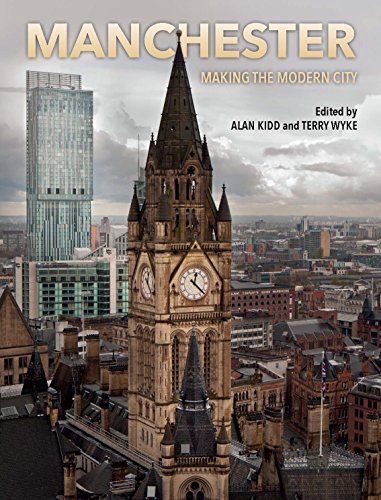
Manchester: Making the Modern City
Lingua: Inglese
Editore: Liverpool University Press, 2016
ISBN 10: 1846318785 ISBN 13: 9781846318788
Da: PlumCircle, West Mifflin, PA, U.S.A.
Valutazione del venditore 5 su 5 stelle

paperback. Condizione: New. New item in gift quality condition. 99% of orders arrive in 4-10 days. Discounted shipping on multiple books.
-
Manchester: Making the Modern City
Lingua: Inglese
Editore: Liverpool University Press, 2016
ISBN 10: 1846318785 ISBN 13: 9781846318788
Da: ThriftBooks-Dallas, Dallas, TX, U.S.A.
Valutazione del venditore 5 su 5 stelle
Paperback. Condizione: Very Good. No Jacket. May have limited writing in cover pages. Pages are unmarked. ~ ThriftBooks: Read More, Spend Less.
-

Manchester : Making the Modern City
Lingua: Inglese
Editore: Liverpool University Press, 2016
ISBN 10: 1846318785 ISBN 13: 9781846318788
Da: GreatBookPrices, Columbia, MD, U.S.A.
Valutazione del venditore 5 su 5 stelle
EUR 31,71
Spedizione EUR 2,22
Spedito in U.S.A.Quantità: Più di 20 disponibili
Aggiungi al carrelloCondizione: As New. Unread book in perfect condition.
-
Manchester: Making the Modern City
Lingua: Inglese
Editore: Liverpool University Press, 2016
ISBN 10: 1846318785 ISBN 13: 9781846318788
Da: Michael Moons Bookshop, PBFA, Whitehaven, CUMBR, Regno Unito
Membro dell'associazione: PBFA
Valutazione del venditore 5 su 5 stelle
Prima edizione
EUR 18,91
Spedizione EUR 16,06
Spedito da Regno Unito a U.S.A.Quantità: 1 disponibili
Aggiungi al carrelloSoft cover. Condizione: Fine. 1st Edition. 1st edition paperback, 2016. Pictorial wrappers fine. Pages very clean & tight. No inscriptions. Well illustrated. 436 pages.
-
Manchester: Making the Modern City
Lingua: Inglese
Editore: Liverpool University Press, 2016
ISBN 10: 1846318785 ISBN 13: 9781846318788
Da: Greener Books, London, Regno Unito
Valutazione del venditore 4 su 5 stelle

EUR 16,26
Spedizione EUR 18,34
Spedito da Regno Unito a U.S.A.Quantità: 1 disponibili
Aggiungi al carrelloPaperback. Condizione: Used; Good. **SHIPPED FROM UK** We believe you will be completely satisfied with our quick and reliable service. All orders are dispatched as swiftly as possible! Buy with confidence! Greener Books.
-
Manchester: Making the Modern City
Lingua: Inglese
Editore: Liverpool University Press, United Kingdom, Liverpool, 2016
ISBN 10: 1846318785 ISBN 13: 9781846318788
Da: WorldofBooks, Goring-By-Sea, WS, Regno Unito
Valutazione del venditore 5 su 5 stelle
EUR 29,63
Spedizione EUR 6,42
Spedito da Regno Unito a U.S.A.Quantità: 7 disponibili
Aggiungi al carrelloPaperback. Condizione: Very Good. Every town and city has its story, but few have a history that is essential to understanding how the modern world was made. Manchester was the first industrial city and arguably the first modern city. During the industrial revolution it became the centre of the world's trade in cotton goods, so associated with that product that it was known as Cottonopolis. In the nineteenth century Manchester was recognised across the globe as a symbol of industrialism and modernity. It was one of those iconic cities that came to stand for something more than itself. Its global reach stretched beyond industrialism as such and encompassed the political and economic ideas that the industrial revolution spawned. Manchester was simultaneously the home of the capitalist ideology of Free Trade (famously naming its chief public building in honour of this idea) and the place where Marx and Engels plotted the communist revolution. The history of modern Manchester opens doors to an understanding of how science helped shape the modern world from the discoveries of Dalton and Joule to Rutherfords splitting of the atom, the first stored-program computer and the invention of graphene. But Manchester has also been home to sporting and cultural achievements from the prowess of its football teams to its media presence in television. The city has been the venue for the expression of numerous voices of protest and affirmation from the Peterloo demonstrators in 1819 to the Suffragettes nearly a century later and the Gay protests of more recent times. It has always been a cosmopolitan city with a lively mix of ethnic groups that has added celebration and tension to its cultural and social life. Over time the population growth in and around Manchester generated an urban sprawl that became a city region. Greater Manchester has been a reality for over a century and along with Greater London is the only metropolitan region to be named after its core city. As the industrial base on which the city and region had depended for two centuries collapsed in the later twentieth century the city had to take a new path. This it has done with remarkable success and twenty-first century Manchester is recognised as the post-industrial city that has been most successful in reinventing itself. Appreciating how this has happened is as much a key to understanding Manchester as is knowledge of its past greatness. Written by leading experts on the history of the city and with numerous insights and unexpected stories, this profusely illustrated book is essential for an understanding of what Manchester has been and what it can become. The book has been read, but is in excellent condition. Pages are intact and not marred by notes or highlighting. The spine remains undamaged.
-
Manchester
Lingua: Inglese
Editore: Liverpool University Press, 2016
ISBN 10: 1846318785 ISBN 13: 9781846318788
Da: PBShop.store UK, Fairford, GLOS, Regno Unito
Valutazione del venditore 4 su 5 stelle
EUR 27,50
Spedizione EUR 9,74
Spedito da Regno Unito a U.S.A.Quantità: 15 disponibili
Aggiungi al carrelloPAP. Condizione: New. New Book. Shipped from UK. Established seller since 2000.
-

Manchester : Making the Modern City
Lingua: Inglese
Editore: Liverpool University Press, 2016
ISBN 10: 1846318785 ISBN 13: 9781846318788
Da: GreatBookPrices, Columbia, MD, U.S.A.
Valutazione del venditore 5 su 5 stelle
EUR 36,08
Spedizione EUR 2,22
Spedito in U.S.A.Quantità: Più di 20 disponibili
Aggiungi al carrelloCondizione: New.
-
Manchester: Making the Modern City
Lingua: Inglese
Editore: Liverpool University Press, 2016
ISBN 10: 1846318785 ISBN 13: 9781846318788
Da: Kennys Bookshop and Art Galleries Ltd., Galway, GY, Irlanda
Valutazione del venditore 5 su 5 stelle
Prima edizione
EUR 30,60
Spedizione EUR 10,50
Spedito da Irlanda a U.S.A.Quantità: Più di 20 disponibili
Aggiungi al carrelloCondizione: New. Manchester was the first industrial city and arguably the first modern city. During the industrial revolution it became the centre of the world's trade in cotton goods. With the history of the city and numerous insights and unexpected stories, this book is essential for an understanding of what Manchester has been and what it can become. Editor(s): Kidd, Alan; Wyke, Terry. Num Pages: 400 pages, 230, 230 colour illustrations, Colour. BIC Classification: 1DBKENL; HBJD1; HBTK. Category: (G) General (US: Trade). Dimension: 193 x 246 x 33. Weight in Grams: 1632. . 2016. 1st Edition. Paperback. . . . .
-
Manchester: Making the Modern City (eng)
Lingua: Inglese
Editore: Liverpool University Press, 2016
ISBN 10: 1846318785 ISBN 13: 9781846318788
Da: Brook Bookstore On Demand, Napoli, NA, Italia
Valutazione del venditore 5 su 5 stelle
EUR 29,30
Spedizione EUR 13,50
Spedito da Italia a U.S.A.Quantità: Più di 20 disponibili
Aggiungi al carrelloCondizione: new.
-

Manchester : Making the Modern City
Lingua: Inglese
Editore: Liverpool University Press, 2016
ISBN 10: 1846318785 ISBN 13: 9781846318788
Da: GreatBookPricesUK, Woodford Green, Regno Unito
Valutazione del venditore 5 su 5 stelle
EUR 27,49
Spedizione EUR 17,21
Spedito da Regno Unito a U.S.A.Quantità: Più di 20 disponibili
Aggiungi al carrelloCondizione: New.
-
Manchester: Making the Modern City
Lingua: Inglese
Editore: Liverpool University Press, 2016
ISBN 10: 1846318785 ISBN 13: 9781846318788
Da: Kennys Bookstore, Olney, MD, U.S.A.
Valutazione del venditore 4 su 5 stelle
EUR 36,50
Spedizione EUR 8,84
Spedito in U.S.A.Quantità: Più di 20 disponibili
Aggiungi al carrelloCondizione: New. Manchester was the first industrial city and arguably the first modern city. During the industrial revolution it became the centre of the world's trade in cotton goods. With the history of the city and numerous insights and unexpected stories, this book is essential for an understanding of what Manchester has been and what it can become. Editor(s): Kidd, Alan; Wyke, Terry. Num Pages: 400 pages, 230, 230 colour illustrations, Colour. BIC Classification: 1DBKENL; HBJD1; HBTK. Category: (G) General (US: Trade). Dimension: 193 x 246 x 33. Weight in Grams: 1632. . 2016. 1st Edition. Paperback. . . . . Books ship from the US and Ireland.
-

Manchester
Lingua: Inglese
Editore: Liverpool University Press, GB, 2016
ISBN 10: 1846318785 ISBN 13: 9781846318788
Da: Rarewaves.com USA, London, LONDO, Regno Unito
Valutazione del venditore 5 su 5 stelle
EUR 46,47
Spedizione gratuita
Spedito da Regno Unito a U.S.A.Quantità: Più di 20 disponibili
Aggiungi al carrelloPaperback. Condizione: New. Every town and city has its story, but few have a history that is essential to understanding how the modern world was made. Manchester was the first industrial city and arguably the first modern city. During the industrial revolution it became the centre of the world's trade in cotton goods, so associated with that product that it was known as 'Cottonopolis'. In the nineteenth century Manchester was recognised across the globe as a symbol of industrialism and modernity. It was one of those iconic cities that came to stand for something more than itself. Its global reach stretched beyond industrialism as such and encompassed the political and economic ideas that the industrial revolution spawned. Manchester was simultaneously the home of the capitalist ideology of Free Trade (famously naming its chief public building in honour of this idea) and the place where Marx and Engels plotted the communist revolution. The history of modern Manchester opens doors to an understanding of how science helped shape the modern world from the discoveries of Dalton and Joule to Rutherford's splitting of the atom, the first stored-program computer and the invention of graphene. But Manchester has also been home to sporting and cultural achievements from the prowess of its football teams to its media presence in television. The city has been the venue for the expression of numerous voices of protest and affirmation from the Peterloo demonstrators in 1819 to the Suffragettes nearly a century later and the Gay protests of more recent times. It has always been a cosmopolitan city with a lively mix of ethnic groups that has added celebration and tension to its cultural and social life. Over time the population growth in and around Manchester generated an urban sprawl that became a city region. 'Greater Manchester' has been a reality for over a century and along with Greater London is the only metropolitan region to be named after its core city. As the industrial base on which the city and region had depended for two centuries collapsed in the later twentieth century the city had to take a new path. This it has done with remarkable success and twenty-first century Manchester is recognised as the post-industrial city that has been most successful in reinventing itself. Appreciating how this has happened is as much a key to understanding Manchester as is knowledge of its past greatness. Written by leading experts on the history of the city and with numerous insights and unexpected stories, this profusely illustrated book is essential for an understanding of what Manchester has been and what it can become.
-

Manchester : Making the Modern City
Lingua: Inglese
Editore: Liverpool University Press, 2016
ISBN 10: 1846318785 ISBN 13: 9781846318788
Da: GreatBookPricesUK, Woodford Green, Regno Unito
Valutazione del venditore 5 su 5 stelle
EUR 30,16
Spedizione EUR 17,21
Spedito da Regno Unito a U.S.A.Quantità: Più di 20 disponibili
Aggiungi al carrelloCondizione: As New. Unread book in perfect condition.
-
Manchester Making the Modern City
Lingua: Inglese
Editore: Liverpool University Press, 2016
ISBN 10: 1846318785 ISBN 13: 9781846318788
Da: Revaluation Books, Exeter, Regno Unito
Valutazione del venditore 5 su 5 stelle
EUR 31,24
Spedizione EUR 22,94
Spedito da Regno Unito a U.S.A.Quantità: 2 disponibili
Aggiungi al carrelloPaperback. Condizione: Brand New. 436 pages. 10.00x8.00x1.25 inches. In Stock.
-
Manchester: Making the Modern City
Lingua: Inglese
Editore: Liverpool University Press, 2016
ISBN 10: 1846318785 ISBN 13: 9781846318788
Da: Books Puddle, New York, NY, U.S.A.
Valutazione del venditore 4 su 5 stelle
Condizione: New. pp. 400.
-

Manchester
Lingua: Inglese
Editore: Liverpool University Press, GB, 2016
ISBN 10: 1846318785 ISBN 13: 9781846318788
Da: Rarewaves.com UK, London, Regno Unito
Valutazione del venditore 5 su 5 stelle
EUR 42,84
Spedizione EUR 74,57
Spedito da Regno Unito a U.S.A.Quantità: Più di 20 disponibili
Aggiungi al carrelloPaperback. Condizione: New. Every town and city has its story, but few have a history that is essential to understanding how the modern world was made. Manchester was the first industrial city and arguably the first modern city. During the industrial revolution it became the centre of the world's trade in cotton goods, so associated with that product that it was known as 'Cottonopolis'. In the nineteenth century Manchester was recognised across the globe as a symbol of industrialism and modernity. It was one of those iconic cities that came to stand for something more than itself. Its global reach stretched beyond industrialism as such and encompassed the political and economic ideas that the industrial revolution spawned. Manchester was simultaneously the home of the capitalist ideology of Free Trade (famously naming its chief public building in honour of this idea) and the place where Marx and Engels plotted the communist revolution. The history of modern Manchester opens doors to an understanding of how science helped shape the modern world from the discoveries of Dalton and Joule to Rutherford's splitting of the atom, the first stored-program computer and the invention of graphene. But Manchester has also been home to sporting and cultural achievements from the prowess of its football teams to its media presence in television. The city has been the venue for the expression of numerous voices of protest and affirmation from the Peterloo demonstrators in 1819 to the Suffragettes nearly a century later and the Gay protests of more recent times. It has always been a cosmopolitan city with a lively mix of ethnic groups that has added celebration and tension to its cultural and social life. Over time the population growth in and around Manchester generated an urban sprawl that became a city region. 'Greater Manchester' has been a reality for over a century and along with Greater London is the only metropolitan region to be named after its core city. As the industrial base on which the city and region had depended for two centuries collapsed in the later twentieth century the city had to take a new path. This it has done with remarkable success and twenty-first century Manchester is recognised as the post-industrial city that has been most successful in reinventing itself. Appreciating how this has happened is as much a key to understanding Manchester as is knowledge of its past greatness. Written by leading experts on the history of the city and with numerous insights and unexpected stories, this profusely illustrated book is essential for an understanding of what Manchester has been and what it can become.


