

Importo totale (1 articolo articoli):
Destinazione ordine:

knowledge sharing integrated enterprise (24 risultati)
Vai alla pagina principale dei risultati di ricerca
Filtri di ricerca
Tipo di articolo
- Tutti i tipi di prodotto
- Libri (24)
- Riviste e Giornali (Nessun altro risultato corrispondente a questo perfezionamento)
- Fumetti (Nessun altro risultato corrispondente a questo perfezionamento)
- Spartiti (Nessun altro risultato corrispondente a questo perfezionamento)
- Arte, Stampe e Poster (Nessun altro risultato corrispondente a questo perfezionamento)
- Fotografie (Nessun altro risultato corrispondente a questo perfezionamento)
- Mappe (Nessun altro risultato corrispondente a questo perfezionamento)
- Manoscritti e Collezionismo cartaceo (Nessun altro risultato corrispondente a questo perfezionamento)
Condizioni Maggiori informazioni
- Nuovo (17)
- Come nuovo, Ottimo o Quasi ottimo (7)
- Molto buono o Buono (Nessun altro risultato corrispondente a questo perfezionamento)
- Discreto o Mediocre (Nessun altro risultato corrispondente a questo perfezionamento)
- Come descritto (Nessun altro risultato corrispondente a questo perfezionamento)
Legatura
Ulteriori caratteristiche
- Prima ed. (1)
- Copia autograf. (Nessun altro risultato corrispondente a questo perfezionamento)
- Sovracoperta (Nessun altro risultato corrispondente a questo perfezionamento)
- Con foto (14)
- Non Print on Demand (17)
Lingua (1)
Spedizione gratuita
- Spedizione gratuita in U.S.A. (Nessun altro risultato corrispondente a questo perfezionamento)
Paese del venditore
Valutazione venditore
-
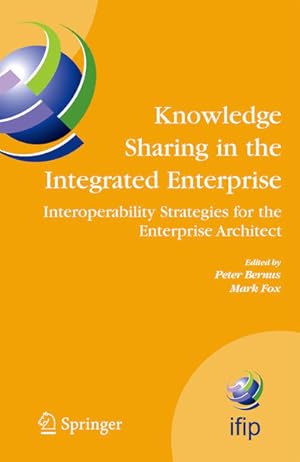
Knowledge Sharing in the Integrated Enterprise : Interoperability Strategies for the Enterprise Architect. (=IFIP International Federation for Information Processing ; 183):
Lingua: Inglese
Editore: Berlin : Springer, 2005
Da: Antiquariat Thomas Haker GmbH & Co. KG, Berlin, Germania
Membro dell'associazione: GIAQ
Valutazione del venditore 5 su 5 stelle

Prima edizione
EUR 6,90
Spedizione EUR 25,00
Spedito da Germania a U.S.A.Quantità: 1 disponibili
Aggiungi al carrelloHardcover. Condizione: Wie neu. 1st ed. XIV, 458 S. Like new. Shrink wrapped. Sprache: Englisch Gewicht in Gramm: 875.
-

Knowledge Sharing in the Integrated Enterprise: Interoperability Strategies for the Enterprise Architect (IFIP Advances in Information and Communication Technology)
Libro 38 di 292: IFIP Advances in Information and Communication TechnologyDa: NEPO UG, Rüsselsheim am Main, Germania
Valutazione del venditore 5 su 5 stelle
EUR 24,54
Spedizione EUR 24,00
Spedito da Germania a U.S.A.Quantità: 1 disponibili
Aggiungi al carrelloCondizione: Sehr gut. Auflage: 2005. 458 Seiten ex Library Book aus einer wissenschafltichen Bibliothek Sprache: Englisch Gewicht in Gramm: 969 24,4 x 16,0 x 2,8 cm, Gebundene Ausgabe.
-

Knowledge Sharing in the Integrated Enterprise: Interoperability Strategies for the Enterprise Architect (IFIP Advances in Information and Communication Technology, 183)
Libro 38 di 292: IFIP Advances in Information and Communication TechnologyDa: Lucky's Textbooks, Dallas, TX, U.S.A.
Valutazione del venditore 5 su 5 stelle
EUR 101,43
Spedizione EUR 3,36
Spedito in U.S.A.Quantità: Più di 20 disponibili
Aggiungi al carrelloCondizione: New.
-

Knowledge Sharing in the Integrated Enterprise : Interoperability Strategies for the Enterprise Architect
Libro 38 di 292: IFIP Advances in Information and Communication TechnologyDa: GreatBookPrices, Columbia, MD, U.S.A.
Valutazione del venditore 5 su 5 stelle
EUR 102,83
Spedizione EUR 2,22
Spedito in U.S.A.Quantità: Più di 20 disponibili
Aggiungi al carrelloCondizione: New.
-

Knowledge Sharing in the Integrated Enterprise: Interoperability Strategies for the Enterprise Architect (IFIP Advances in Information and Communication Technology, 183)
Libro 38 di 292: IFIP Advances in Information and Communication TechnologyDa: Lucky's Textbooks, Dallas, TX, U.S.A.
Valutazione del venditore 5 su 5 stelle
EUR 101,67
Spedizione EUR 3,36
Spedito in U.S.A.Quantità: Più di 20 disponibili
Aggiungi al carrelloCondizione: New.
-
Knowledge Sharing in the Integrated Enterprise : Interoperability Strategies for the Enterprise Architect
Libro 38 di 292: IFIP Advances in Information and Communication TechnologyEUR 13,73
Spedizione EUR 105,00
Spedito da Germania a U.S.A.Quantità: 2 disponibili
Aggiungi al carrelloCondizione: Sehr gut. Zustand: Sehr gut | Seiten: 472 | Sprache: Englisch | Produktart: Bücher | Enterprise Architects, in their endeavor to achieve Enterprise Integration, have limited guidance on how best to use Enterprise Models and Modeling Tools to support their practice. It is widely recognized that the practice of engineering enterprises needs a number of models, but how to maintain the relation between these models with ease is still a problem. Model interoperability is an issue on multiople counts: - How to interchange models between enterprise modeling tools? - How to maintain the interdependencies between models - whether they describe the enterprise on the same level (but from different points of view), or from the same point of view (but on different levels of abstraction and granularity)? - How to maintain a coherent and evolving set of enterprise models in support onf continuous change processes? - How to use and reuse enterprise models as a knowledge resource? The answers to these questions are of great importance to anyone who is implementing ISO9001:2000 requirements, whether through using enterprise architecture practice or not - although it can be argued that a well executed architecture practice should satisfy ISO9001 without additional effort. This volume attacks the problem on three fronts: 1. Authors working in international standardisation and tool development as well as in enterprise modeling research present the latest developments in semantic integration; 2. Authors who are practitioners of, or conducting active research in, enterprise architecting methodologies give an account on the latest developments and strategic directions in architecture frameworks and methodologies; 3. Authors who use or develop information integration infrastructures present best practice and future trends of this aspect of enterprise integration. Chapters of this book include contributions to the International Conference on Enterprise Integration and Modelling Technology (ICEIMT'04), and those presented at the Design of Information Infrastructure Systems for Manufacturing (DIISM'04) Workshop. While DIISM is traditionally oriented at supporting manufacturing practice, the results have a far greater domain of applicability.
-
Knowledge Sharing in the Integrated Enterprise: Interoperability Strategies for the Enterprise Architect (IFIP Advances in Information and Communication Technology, 183)
Libro 38 di 292: IFIP Advances in Information and Communication TechnologyDa: Ria Christie Collections, Uxbridge, Regno Unito
Valutazione del venditore 5 su 5 stelle
EUR 111,66
Spedizione EUR 13,77
Spedito da Regno Unito a U.S.A.Quantità: Più di 20 disponibili
Aggiungi al carrelloCondizione: New. In.
-

Knowledge Sharing in the Integrated Enterprise : Interoperability Strategies for the Enterprise Architect
Libro 38 di 292: IFIP Advances in Information and Communication TechnologyDa: GreatBookPricesUK, Woodford Green, Regno Unito
Valutazione del venditore 5 su 5 stelle
EUR 111,64
Spedizione EUR 17,24
Spedito da Regno Unito a U.S.A.Quantità: Più di 20 disponibili
Aggiungi al carrelloCondizione: New.
-
Knowledge Sharing in the Integrated Enterprise
Libro 38 di 292: IFIP Advances in Information and Communication TechnologyDa: Books Puddle, New York, NY, U.S.A.
Valutazione del venditore 4 su 5 stelle

Condizione: New. pp. 474.
-
Knowledge Sharing in the Integrated Enterprise: Interoperability Strategies for the Enterprise Architect (IFIP Advances in Information and Communication Technology, 183)
Libro 38 di 292: IFIP Advances in Information and Communication TechnologyDa: Ria Christie Collections, Uxbridge, Regno Unito
Valutazione del venditore 5 su 5 stelle
EUR 136,31
Spedizione EUR 13,77
Spedito da Regno Unito a U.S.A.Quantità: Più di 20 disponibili
Aggiungi al carrelloCondizione: New. In.
-

Knowledge Sharing in the Integrated Enterprise
Libro 38 di 292: IFIP Advances in Information and Communication TechnologyEUR 124,02
Spedizione EUR 48,99
Spedito da Germania a U.S.A.Quantità: Più di 20 disponibili
Aggiungi al carrelloCondizione: New. This book provides the very latest research and results to inform enterprise archtitecture practioners, tool developers and decision makers about strategic choices they need to make in their architecture practice as well as in their R&D efforts.E.
-

Knowledge Sharing in the Integrated Enterprise : Interoperability Strategies for the Enterprise Architect
Libro 38 di 292: IFIP Advances in Information and Communication TechnologyEUR 112,94
Spedizione EUR 63,55
Spedito da Germania a U.S.A.Quantità: 1 disponibili
Aggiungi al carrelloTaschenbuch. Condizione: Neu. Druck auf Anfrage Neuware - Printed after ordering - Enterprise Architects, in their endeavor to achieve Enterprise Integration, have limited guidance on how best to use Enterprise Models and Modeling Tools to support their practice. It is widely recognized that the practice of engineering enterprises needs a number of models, but how to maintain the relation between these models with ease is still a problem. Model interoperability is an issue on multiople counts:- How to interchange models between enterprise modeling tools - How to maintain the interdependencies between models - whether they describe the enterprise on the same level (but from different points of view), or from the same point of view (but on different levels of abstraction and granularity) - How to maintain a coherent and evolving set of enterprise models in support onf continuous change processes - How to use and reuse enterprise models as a knowledge resource The answers to these questions are of great importance to anyone who is implementing ISO9001:2000 requirements, whether through using enterprise architecture practice or not - although it can be argued that a well executed architecture practice should satisfy ISO9001 without additional effort.This volume attacks the problem on three fronts:1. Authors working in international standardisation and tool development as well as in enterprise modeling research present the latest developments in semantic integration;2. Authors who are practitioners of, or conducting active research in, enterprise architecting methodologies give an account on the latest developments and strategic directions in architecture frameworks and methodologies;3. Authors who use or develop information integration infrastructures present best practice and future trends of this aspect of enterprise integration.Chapters of this book include contributions to the International Conference on Enterprise Integration and Modelling Technology (ICEIMT'04), and those presented at the Design of Information Infrastructure Systems for Manufacturing (DIISM'04) Workshop. While DIISM is traditionally oriented at supporting manufacturing practice, the results have a far greater domain of applicability.
-

Knowledge Sharing in the Integrated Enterprise : Interoperability Strategies for the Enterprise Architect
Libro 38 di 292: IFIP Advances in Information and Communication TechnologyEUR 112,94
Spedizione EUR 64,37
Spedito da Germania a U.S.A.Quantità: 1 disponibili
Aggiungi al carrelloBuch. Condizione: Neu. Druck auf Anfrage Neuware - Printed after ordering - Enterprise Architects, in their endeavor to achieve Enterprise Integration, have limited guidance on how best to use Enterprise Models and Modeling Tools to support their practice. It is widely recognized that the practice of engineering enterprises needs a number of models, but how to maintain the relation between these models with ease is still a problem. Model interoperability is an issue on multiople counts:- How to interchange models between enterprise modeling tools - How to maintain the interdependencies between models - whether they describe the enterprise on the same level (but from different points of view), or from the same point of view (but on different levels of abstraction and granularity) - How to maintain a coherent and evolving set of enterprise models in support onf continuous change processes - How to use and reuse enterprise models as a knowledge resource The answers to these questions are of great importance to anyone who is implementing ISO9001:2000 requirements, whether through using enterprise architecture practice or not - although it can be argued that a well executed architecture practice should satisfy ISO9001 without additional effort.This volume attacks the problem on three fronts:1. Authors working in international standardisation and tool development as well as in enterprise modeling research present the latest developments in semantic integration;2. Authors who are practitioners of, or conducting active research in, enterprise architecting methodologies give an account on the latest developments and strategic directions in architecture frameworks and methodologies;3. Authors who use or develop information integration infrastructures present best practice and future trends of this aspect of enterprise integration.Chapters of this book include contributions to the International Conference on Enterprise Integration and Modelling Technology (ICEIMT'04), and those presented at the Design of Information Infrastructure Systems for Manufacturing (DIISM'04) Workshop. While DIISM is traditionally oriented at supporting manufacturing practice, the results have a far greater domain of applicability.
-
Knowledge Sharing in the Integrated Enterprise: Interoperability Strategies for the Enterprise Architect (IFIP Advances in Information and Communication Technology, 183)
Libro 38 di 292: IFIP Advances in Information and Communication TechnologyDa: Mispah books, Redhill, SURRE, Regno Unito
Valutazione del venditore 4 su 5 stelle
EUR 162,21
Spedizione EUR 28,74
Spedito da Regno Unito a U.S.A.Quantità: 1 disponibili
Aggiungi al carrelloPaperback. Condizione: Like New. Like New. book.
-

Knowledge Sharing in the Integrated Enterprise : Interoperability Strategies for the Enterprise Architect
Libro 38 di 292: IFIP Advances in Information and Communication TechnologyDa: GreatBookPricesUK, Woodford Green, Regno Unito
Valutazione del venditore 5 su 5 stelle
EUR 177,59
Spedizione EUR 17,24
Spedito da Regno Unito a U.S.A.Quantità: Più di 20 disponibili
Aggiungi al carrelloCondizione: As New. Unread book in perfect condition.
-
Knowledge Sharing in the Integrated Enterprise: Interoperability Strategies for the Enterprise Architect (IFIP Advances in Information and Communication Technology (183))
Libro 38 di 292: IFIP Advances in Information and Communication TechnologyDa: Mispah books, Redhill, SURRE, Regno Unito
Valutazione del venditore 4 su 5 stelle
EUR 168,13
Spedizione EUR 28,74
Spedito da Regno Unito a U.S.A.Quantità: 1 disponibili
Aggiungi al carrelloHardcover. Condizione: Like New. Like New. book.
-

Knowledge Sharing in the Integrated Enterprise : Interoperability Strategies for the Enterprise Architect
Libro 38 di 292: IFIP Advances in Information and Communication TechnologyDa: GreatBookPrices, Columbia, MD, U.S.A.
Valutazione del venditore 5 su 5 stelle
EUR 200,48
Spedizione EUR 2,22
Spedito in U.S.A.Quantità: Più di 20 disponibili
Aggiungi al carrelloCondizione: As New. Unread book in perfect condition.
-

Knowledge Sharing in the Integrated Enterprise
Libro 38 di 292: IFIP Advances in Information and Communication TechnologyDa: BuchWeltWeit Ludwig Meier e.K., Bergisch Gladbach, Germania
Valutazione del venditore 5 su 5 stelle
EUR 106,99
Spedizione EUR 23,00
Spedito da Germania a U.S.A.Quantità: 2 disponibili
Aggiungi al carrelloBuch. Condizione: Neu. This item is printed on demand - it takes 3-4 days longer - Neuware -Enterprise Architects, in their endeavor to achieve Enterprise Integration, have limited guidance on how best to use Enterprise Models and Modeling Tools to support their practice. It is widely recognized that the practice of engineering enterprises needs a number of models, but how to maintain the relation between these models with ease is still a problem. Model interoperability is an issue on multiople counts:- How to interchange models between enterprise modeling tools - How to maintain the interdependencies between models - whether they describe the enterprise on the same level (but from different points of view), or from the same point of view (but on different levels of abstraction and granularity) - How to maintain a coherent and evolving set of enterprise models in support onf continuous change processes - How to use and reuse enterprise models as a knowledge resource The answers to these questions are of great importance to anyone who is implementing ISO9001:2000 requirements, whether through using enterprise architecture practice or not - although it can be argued that a well executed architecture practice should satisfy ISO9001 without additional effort.This volume attacks the problem on three fronts:1. Authors working in international standardisation and tool development as well as in enterprise modeling research present the latest developments in semantic integration;2. Authors who are practitioners of, or conducting active research in, enterprise architecting methodologies give an account on the latest developments and strategic directions in architecture frameworks and methodologies;3. Authors who use or develop information integration infrastructures present best practice and future trends of this aspect of enterprise integration.Chapters of this book include contributions to the International Conference on Enterprise Integration and Modelling Technology (ICEIMT'04), and those presented at the Design of Information Infrastructure Systems for Manufacturing (DIISM'04) Workshop. While DIISM is traditionally oriented at supporting manufacturing practice, the results have a far greater domain of applicability. 472 pp. Englisch.
-

Knowledge Sharing in the Integrated Enterprise
Libro 38 di 292: IFIP Advances in Information and Communication TechnologyDa: BuchWeltWeit Ludwig Meier e.K., Bergisch Gladbach, Germania
Valutazione del venditore 5 su 5 stelle
EUR 106,99
Spedizione EUR 23,00
Spedito da Germania a U.S.A.Quantità: 2 disponibili
Aggiungi al carrelloTaschenbuch. Condizione: Neu. This item is printed on demand - it takes 3-4 days longer - Neuware -Enterprise Architects, in their endeavor to achieve Enterprise Integration, have limited guidance on how best to use Enterprise Models and Modeling Tools to support their practice. It is widely recognized that the practice of engineering enterprises needs a number of models, but how to maintain the relation between these models with ease is still a problem. Model interoperability is an issue on multiople counts:- How to interchange models between enterprise modeling tools - How to maintain the interdependencies between models - whether they describe the enterprise on the same level (but from different points of view), or from the same point of view (but on different levels of abstraction and granularity) - How to maintain a coherent and evolving set of enterprise models in support onf continuous change processes - How to use and reuse enterprise models as a knowledge resource The answers to these questions are of great importance to anyone who is implementing ISO9001:2000 requirements, whether through using enterprise architecture practice or not - although it can be argued that a well executed architecture practice should satisfy ISO9001 without additional effort.This volume attacks the problem on three fronts:1. Authors working in international standardisation and tool development as well as in enterprise modeling research present the latest developments in semantic integration;2. Authors who are practitioners of, or conducting active research in, enterprise architecting methodologies give an account on the latest developments and strategic directions in architecture frameworks and methodologies;3. Authors who use or develop information integration infrastructures present best practice and future trends of this aspect of enterprise integration.Chapters of this book include contributions to the International Conference on Enterprise Integration and Modelling Technology (ICEIMT'04), and those presented at the Design of Information Infrastructure Systems for Manufacturing (DIISM'04) Workshop. While DIISM is traditionally oriented at supporting manufacturing practice, the results have a far greater domain of applicability. 472 pp. Englisch.
-

Knowledge Sharing in the Integrated Enterprise
Libro 38 di 292: IFIP Advances in Information and Communication TechnologyEUR 92,27
Spedizione EUR 48,99
Spedito da Germania a U.S.A.Quantità: Più di 20 disponibili
Aggiungi al carrelloCondizione: New. Dieser Artikel ist ein Print on Demand Artikel und wird nach Ihrer Bestellung fuer Sie gedruckt. This book provides the very latest research and results to inform enterprise archtitecture practioners, tool developers and decision makers about strategic choices they need to make in their architecture practice as well as in their R&D efforts.E.
-
Knowledge Sharing in the Integrated Enterprise
Libro 38 di 292: IFIP Advances in Information and Communication TechnologyDa: Majestic Books, Hounslow, Regno Unito
Valutazione del venditore 4 su 5 stelle
EUR 140,69
Spedizione EUR 7,47
Spedito da Regno Unito a U.S.A.Quantità: 4 disponibili
Aggiungi al carrelloCondizione: New. Print on Demand pp. 474 49:B&W 6.14 x 9.21 in or 234 x 156 mm (Royal 8vo) Perfect Bound on White w/Gloss Lam.
-
Knowledge Sharing in the Integrated Enterprise
Libro 38 di 292: IFIP Advances in Information and Communication TechnologyDa: Biblios, Frankfurt am main, HESSE, Germania
Valutazione del venditore 4 su 5 stelle
EUR 144,95
Spedizione EUR 9,95
Spedito da Germania a U.S.A.Quantità: 4 disponibili
Aggiungi al carrelloCondizione: New. PRINT ON DEMAND pp. 474.
-

Knowledge Sharing in the Integrated Enterprise | Interoperability Strategies for the Enterprise Architect
Libro 38 di 292: IFIP Advances in Information and Communication TechnologyEUR 95,70
Spedizione EUR 70,00
Spedito da Germania a U.S.A.Quantità: 5 disponibili
Aggiungi al carrelloTaschenbuch. Condizione: Neu. Knowledge Sharing in the Integrated Enterprise | Interoperability Strategies for the Enterprise Architect | Peter Bernus (u. a.) | Taschenbuch | xiv | Englisch | 2010 | Springer | EAN 9781441938930 | Verantwortliche Person für die EU: Springer Verlag GmbH, Tiergartenstr. 17, 69121 Heidelberg, juergen[dot]hartmann[at]springer[dot]com | Anbieter: preigu Print on Demand.
-

Knowledge Sharing in the Integrated Enterprise
Libro 38 di 292: IFIP Advances in Information and Communication TechnologyLingua: Inglese
Editore: Springer US, Springer US Dez 2010, 2010
ISBN 10: 1441938931 ISBN 13: 9781441938930
Da: buchversandmimpf2000, Emtmannsberg, BAYE, Germania
Valutazione del venditore 5 su 5 stelle
EUR 106,99
Spedizione EUR 60,00
Spedito da Germania a U.S.A.Quantità: 1 disponibili
Aggiungi al carrelloTaschenbuch. Condizione: Neu. This item is printed on demand - Print on Demand Titel. Neuware -Enterprise Architects, in their endeavor to achieve Enterprise Integration, have limited guidance on how best to use Enterprise Models and Modeling Tools to support their practice. It is widely recognized that the practice of engineering enterprises needs a number of models, but how to maintain the relation between these models with ease is still a problem. Model interoperability is an issue on multiople counts: - How to interchange models between enterprise modeling tools - How to maintain the interdependencies between models - whether they describe the enterprise on the same level (but from different points of view), or from the same point of view (but on different levels of abstraction and granularity) - How to maintain a coherent and evolving set of enterprise models in support onf continuous change processes - How to use and reuse enterprise models as a knowledge resource The answers to these questions are of great importance to anyone who is implementing ISO9001:2000 requirements, whether through using enterprise architecture practice or not - although it can be argued that a well executed architecture practice should satisfy ISO9001 without additional effort. This volume attacks the problem on three fronts: 1. Authors working in international standardisation and tool development as well as in enterprise modeling research present the latest developments in semantic integration; 2. Authors who are practitioners of, or conducting active research in, enterprise architecting methodologies give an account on the latest developments and strategic directions in architecture frameworks and methodologies; 3. Authors who use or develop information integration infrastructures present best practice and future trends of this aspect of enterprise integration. Chapters of this book include contributions to the International Conference on Enterprise Integration and Modelling Technology (ICEIMT'04), and those presented at the Design of Information Infrastructure Systems for Manufacturing (DIISM'04) Workshop. While DIISM is traditionally oriented at supporting manufacturing practice, the results have a far greater domain of applicability.Springer Verlag GmbH, Tiergartenstr. 17, 69121 Heidelberg 472 pp. Englisch.

