
Importo totale (1 articolo articoli):
Destinazione ordine:

man class destroyers di raven roberts (13 risultati)
Vai alla pagina principale dei risultati di ricerca
Filtri di ricerca
Tipo di articolo
- Tutti i tipi di prodotto
- Libri (13)
- Riviste e Giornali (Nessun altro risultato corrispondente a questo perfezionamento)
- Fumetti (Nessun altro risultato corrispondente a questo perfezionamento)
- Spartiti (Nessun altro risultato corrispondente a questo perfezionamento)
- Arte, Stampe e Poster (Nessun altro risultato corrispondente a questo perfezionamento)
- Fotografie (Nessun altro risultato corrispondente a questo perfezionamento)
- Mappe (Nessun altro risultato corrispondente a questo perfezionamento)
- Manoscritti e Collezionismo cartaceo (Nessun altro risultato corrispondente a questo perfezionamento)
Condizioni Maggiori informazioni
Legatura
- Tutte
- Rilegato (Nessun altro risultato corrispondente a questo perfezionamento)
- Brossura (11)
Ulteriori caratteristiche
- Prima ed. (2)
- Copia autograf. (Nessun altro risultato corrispondente a questo perfezionamento)
- Sovracoperta (Nessun altro risultato corrispondente a questo perfezionamento)
- Con foto (5)
- Non Print on Demand (13)
Lingua (2)
Spedizione gratuita
- Spedizione gratuita in U.S.A. (Nessun altro risultato corrispondente a questo perfezionamento)
Paese del venditore
Valutazione venditore
-
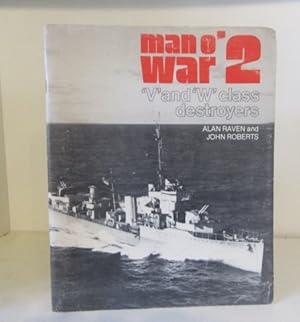
Man O' War 2 - 'V' and 'W' Class Destroyers.
Editore: RSV Publishing Inc., 1979,, 1979
ISBN 10: 085368233X ISBN 13: 9780853682332
Lingua: Inglese
EUR 17,68
EUR 22,88 shipping
Ships from Regno Unito to U.S.A.Quantità: 1 disponibili
Aggiungi al carrellopaperback, 4to, 56pp, numerous illustrations, contents clean and tight, no inscriptions, corners scuffed, cover edges rubbed, Good condition. ISBN: 085368233X.
-
EUR 14,14
EUR 28,60 shipping
Ships from Regno Unito to U.S.A.Quantità: 1 disponibili
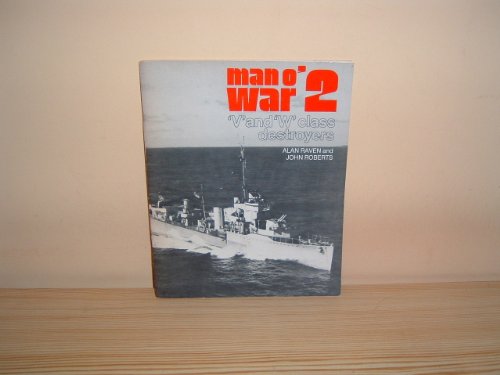
Aggiungi al carrelloCard CoverS. Condizione: Fair. Condizione sovraccoperta: No D/W. 1979. SOFT COVERS WORN, RUBBED AND MARKED, TEXT, ILLUSTRATIONS AND FOLD OUT PLANS VERY GOOD. POSTED FROM THE UK IN 1-2 WORKING DAYS.
-
Man O' War 2. V and W Class Destroyers.
Da: Military Books, Washington, DC, U.S.A.
Valutazione del venditore 5 su 5 stelle

Paperback. Condizione: Fine. 56p. Photos. Line drawings: Two Folding pages of camouflage schemes in color. Wraps. Fine Copy. Book.
-

EUR 19,45
EUR 28,60 shipping
Ships from Regno Unito to U.S.A.Quantità: 1 disponibili
Aggiungi al carrelloSOFT COVERS. Condizione: GOOD. Condizione sovraccoperta: No D/W. STAPLED BOOKLET. RUBBED DOWN SPINE. OLD A&A PRESS PRICE STICKER ON REAR COVER. COVERS LIGHTLY TANNED ROUND EDGES. LOWER STAPLE JUST STARTING TO RUST. PAGES VERY TIDY. BLACK AND WHITE ILLUSTRATIONS PLUS A COLOUR CENTREFOLD.
-
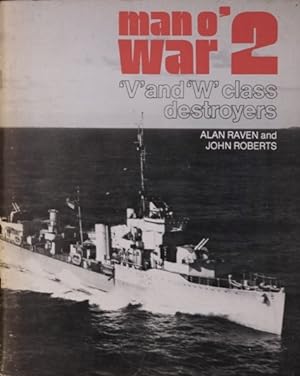
MAN O' WAR 2 :' V' AND 'W' CLASS DESTROYERS
Da: Martin Bott Bookdealers Ltd, Felixstowe, Regno Unito
Valutazione del venditore 5 su 5 stelle
Prima edizione
EUR 21,21
EUR 28,60 shipping
Ships from Regno Unito to U.S.A.Quantità: 1 disponibili
Aggiungi al carrelloCard. Condizione: VG. 1st. Follow-on from the famous 'Ensign' series - Monograph on these WW1 built Royal Navy Destroyer Classes which saw much action as escorts during the Battle of the Atlantic. c.50pp, photos, drawings, large fold out colour drawing. VG in very slightly worn card covers.
-
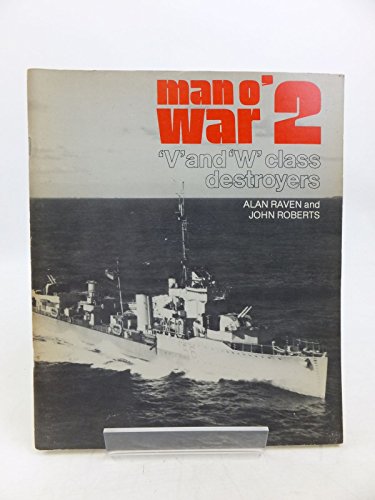
Man O' War 2: 'V' and 'W' Class Destroyers
Da: The Way We Were Bookshop, Hampton, VA, U.S.A.
Valutazione del venditore 4 su 5 stelle

Soft cover. Condizione: Near Fine. No Jacket. 56 pps, stapled wraps, F-/none, minor tipwear, else super clean and binding strong -- NOT EXLIB (1).
-
Man O' War 4. Hunt Class Escort Destroyers.
Editore: Arms & Armour, 1980., 1980
Da: Military Books, Washington, DC, U.S.A.
Valutazione del venditore 5 su 5 stelle
Paperback. Condizione: Fine. 56p. Photos. Line drawings: Two Folding pages of camouflage schemes in color. Wraps. Fine Copy. Book.
-
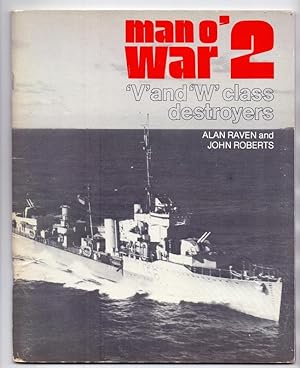
man o war 2 - "V" and "W" class destroyers.
Editore: Brooklyn : R.S.V. Publications,, 1979
ISBN 10: 085368233X ISBN 13: 9780853682332
Lingua: Inglese
Da: Die Wortfreunde - Antiquariat Wirthwein Matthias Wirthwein, Mannheim, Germania
Valutazione del venditore 4 su 5 stelle
EUR 25,00
EUR 39,00 shipping
Ships from Germania to U.S.A.Quantità: 1 disponibili
Aggiungi al carrelloTaschenbuch. Einband etwas berieben, insgesamt gebräunt, sonst sauber und gut erhalten. Sprache: Englisch Gewicht in Gramm: 500.
-
Paperback. Condizione: new. Excellent Condition.Excels in customer satisfaction, prompt replies, and quality checks.
-

Man O' War No. 2: 'V' and 'W' Class Destroyers
Editore: Arms and Armour, UK, 1980
Da: Anytime Books, London, Regno Unito
Valutazione del venditore 5 su 5 stelle
EUR 25,93
EUR 32,04 shipping
Ships from Regno Unito to U.S.A.Quantità: 1 disponibili
Aggiungi al carrelloSoft cover. Condizione: Very Good. An excellent series. pp.[2].56.[2]. Illus. Fold out col. profiles to show camouflage. The USA distributed version. Stapled binding.
-
Man o' War 4 - Hunt class escort destroyers
Editore: RSV Publications, Brooklyn, 1980
Da: Antiquariaat Coriovallum, Heerlen, Paesi Bassi
Valutazione del venditore 4 su 5 stelle
EUR 16,53
EUR 30,00 shipping
Ships from Paesi Bassi to U.S.A.Quantità: 1 disponibili
Aggiungi al carrelloCondizione: as new. as new - NIEUWSTAAT.
-

Man o' War 4 - Hunt Class Escort Destroyers
Editore: Arms & Armour Press, 1980
Da: McLaren Books Ltd., ABA(associate), PBFA, Largs, Regno Unito
Membro dell'associazione: ABA ILAB PBFA
Valutazione del venditore 5 su 5 stelle
EUR 33,00
EUR 18,25 shipping
Ships from Regno Unito to U.S.A.Quantità: 1 disponibili
Aggiungi al carrellocard covers. 56 pages. well illustrated with photos and plans. very good condition. small adhesive label to front cover. small hand-written note to inside front cover [postage will be reduced when this order is processed. Please see our storefront page for shipping information].
-
HUNT Class Escort Destroyers; Man o'War Series No. 4
Editore: Arms and Armor Press, London, England, 1980
Da: Ground Zero Books, Ltd., Silver Spring, MD, U.S.A.
Valutazione del venditore 4 su 5 stelle
Prima edizione
Wraps. Condizione: Very good. Presumed First Printing. [2], 56, [2] pages, including covers. Illustrations. Tables/Technical Data. Fold-outs. Some cover wear. Because they were such small modern ships and almost entirely gun oriented, modifications to the Hunts were few and straightforward. The very first addition was radar. It had been planned in 1939 to fit out one in very five of the class with an early form of warning radar (type unknown), but the first ships completed without, mainly due to a general shortage of a type suitable for fitting in small ships. When the first primitive equipment did arrive in the late summer of 1940, it was in the form of weak sets capable of only poor performance and lacking any form of sophistication such as aerial rotation or beam switching. Apart from these initial fittings, the only radar modifications made during the war was the installation at the foremast head of a small set, Type 268. This was a navigation set capable of operating in the surface search mode. Alan Raven is a naval historian, illustrator, and professional ship-model builder whose work frequently appears in magazines. He is the well-known co-author of British Battleships of World War Two and British Cruisers of World War Two, both classic works in the field. He was also the leading light in the publication of warship monographs in the Ensign and Man'o'War series. John Roberts has over ten years' service, including Secretary Defence Operations Staff during the Falklands War and Board Secretary during the first Gulf War. Ten years at sea in three frigates, the cruiser TIGER, flagship during the Tiger Talks and two carriers, CENTAUR and INVINCIBLE. The Hunt class was a class of escort destroyer of the Royal Navy. The first vessels were ordered early in 1939, and the class saw extensive service in the Second World War, particularly on the British east coast and Mediterranean convoys. They were named after British fox hunts. The modern Hunt-class GRP hulled mine countermeasure vessels maintain the Hunt names lineage in the Royal Navy. The Royal Navy had identified the need for two types of destroyer: larger vessels with heavy gun and torpedo armaments for fleet work and another type for escort duties. Although old fleet destroyers could be allocated to escort work, they were unsuitable for the task and new construction replaced them. Fleet destroyers were designed for speed and their machinery was inefficient at convoy speeds, reducing their range. Their shape made them poor sea boats at low speed, also exacerbated by additional equipment on the superstructure. Modifications were needed to ease these problems. The escort vessels forsook the heavy armament and some of the speed of the fleet type to reduce unit cost and better suit mass production and the conditions. This new "fast escort vessel" was later classified as an "escort destroyer". Eighty-six Hunts were completed, of which 72 were commissioned into the Royal Navy and the remaining 14 were transferred to allied navies; Bolebrooke, Border, Catterick, Hatherleigh, Modbury, Bramham and Hursley to the Greek Royal Hellenic Navy, Bedale, Oakley and Silverton to the Free Polish Navy, Glaisdale, Eskdale and Badsworth to the Royal Norwegian Navy and Haldon to the Free French Navy.


