Importo totale (1 articolo articoli):
Destinazione ordine:

aselli gaspare (13 risultati)
Vai alla pagina principale dei risultati di ricerca
Filtri di ricerca
Tipo di articolo
- Tutti i tipi di prodotto
- Libri (12)
- Riviste e Giornali (Nessun altro risultato corrispondente a questo perfezionamento)
- Fumetti (Nessun altro risultato corrispondente a questo perfezionamento)
- Spartiti (Nessun altro risultato corrispondente a questo perfezionamento)
- Arte, Stampe e Poster (1)
- Fotografie (Nessun altro risultato corrispondente a questo perfezionamento)
- Mappe (Nessun altro risultato corrispondente a questo perfezionamento)
- Manoscritti e Collezionismo cartaceo (Nessun altro risultato corrispondente a questo perfezionamento)
Condizioni Maggiori informazioni
- Nuovo (6)
- Come nuovo, Ottimo o Quasi ottimo (2)
- Molto buono o Buono (1)
- Discreto o Mediocre (Nessun altro risultato corrispondente a questo perfezionamento)
- Come descritto (4)
Legatura
Ulteriori caratteristiche
- Prima ed. (2)
- Copia autograf. (Nessun altro risultato corrispondente a questo perfezionamento)
- Sovracoperta (Nessun altro risultato corrispondente a questo perfezionamento)
- Con foto (10)
- Non Print on Demand (11)
Lingua (4)
Spedizione gratuita
Paese del venditore
Valutazione venditore
-

De Lactibus, Sive Lacteis Venis, Quarto Vasorum Mesaraicorum Genere (1640) (Latin Edition)
Da: California Books, Miami, FL, U.S.A.
Valutazione del venditore 4 su 5 stelle

EUR 37,94
Spedizione gratuita
Spedito in U.S.A.Quantità: Più di 20 disponibili
Aggiungi al carrelloCondizione: New.
-

De lactibus sive lacteis venis. Mit einer Einleitung von Prof. Dr. Leo Mendel.
Editore: Leipzig, Edition Leipzig,, 1968
Da: Antiquariat Kunsthaus-Adlerstrasse, Stuttgart, Germania
Valutazione del venditore 5 su 5 stelle

EUR 34,00
Spedizione EUR 11,95
Spedito da Germania a U.S.A.Quantità: 1 disponibili
Aggiungi al carrelloFaksimile der Originalausgabe von 1627. 11 S., 7 Bl., 79 S., 3 Bl. Index und 4 farb. Falttafeln in Deckeltasche. Gutes Exemplar. Sprache: Deutsch Orig.-Leinen mit Rückenschild im Schuber.
-
De lactibus sive lacteis venis. Faksimile der Originalausgabe von 1627.
Lingua: Latino
Editore: Leipzig, Edition Leipzig, 1968
EUR 22,00
Spedizione EUR 20,00
Spedito da Germania a U.S.A.Quantità: 1 disponibili
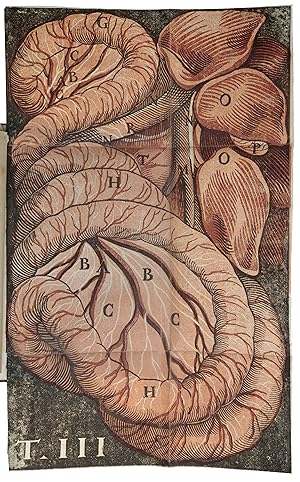
Aggiungi al carrelloLeinenband. Condizione: Neu. Reprint (Mediolani/Bidellium 1627), 11/79/4 Seiten, Frakturschrift, Beilage von 4 farbigen gefalteten Tafeln, in Schuber, sauberer Leinenband mit farbig abgesetzten Rückenschild im Schuber, verlagsfrisch, Schöner Reprint der klassischen Arbeit über die Entdeckung der Chylusgefäße (Lymphgefäße) durch Sektionen an lebenden (!) Hunden. Der italienische Anatom Gaspare Aselli (1581-1626) hatte eine Professur in Pavia, sein Werk ist auch unter buchhistorischen Aspekten interessant. Diese sehr seltene Schrift enthält daher die frühesten anatomischen Abbildungen in Buntdruck. De lactibus sive lacteis venis ist ein bedeutendes anatomisches Werk des italienischen Anatomen Gaspare Aselli, postum 1627 in Mailand veröffentlicht. Es gilt als Meilenstein der Medizingeschichte, weil darin erstmals die sogenannten Milchgefäße (Lactealgefäße) des Lymphsystems beschrieben wurden. Außerdem enthält das Buch die ersten farbig gedruckten anatomischen Illustrationen der Wissenschaftsgeschichte. Besonders berühmt sind die kolorierten Faltkupfer bzw. Holzschnitt-Tafeln. Sie wurden eingesetzt, um unterschiedliche Gefäßtypen farblich zu unterscheiden ein früher Versuch wissenschaftlicher Visualisierung. la Gewicht in Gramm: 510.
-

EUR 29,78
Spedizione EUR 48,99
Spedito da Germania a U.S.A.Quantità: Più di 20 disponibili
Aggiungi al carrelloCondizione: New. KlappentextrnrnThis scarce antiquarian book is a facsimile reprint of the original. Due to its age, it may contain imperfections such as marks, notations, marginalia and flawed pages. Because we believe this work is culturally important, we have.
-

De Lactibus, Sive Lacteis Venis, Quarto Vasorum Mesaraicorum Genere (1640)
Lingua: Inglese
Editore: Kessinger Publishing, LLC Jun 2009, 2009
ISBN 10: 1104643308 ISBN 13: 9781104643300
EUR 36,43
Spedizione EUR 61,02
Spedito da Germania a U.S.A.Quantità: 1 disponibili
Aggiungi al carrelloTaschenbuch. Condizione: Neu. Neuware - This scarce antiquarian book is a facsimile reprint of the original. Due to its age, it may contain imperfections such as marks, notations, marginalia and flawed pages. Because we believe this work is culturally important, we have made it available as part of our commitment for protecting, preserving, and promoting the world's literature in affordable, high quality, modern editions that are true to the original work.
-

De lactibus sive Lacteis venis.
Lingua: Tedesco
Editore: Leipzig : Edition Leipzig, 1968
Da: Antiquariat Biebusch, Lilienthal, Germania
Membro dell'associazione: GIAQ
Valutazione del venditore 5 su 5 stelle
EUR 14,20
Spedizione EUR 60,00
Spedito da Germania a U.S.A.Quantità: 1 disponibili
Aggiungi al carrelloLeinen. Condizione: Sehr gut. 11 S. : 7 Bl., 79 S., 4 Beil. in Rückentasche ; 24cm Zustand: Leineneinband mit montiertem Rückentitel, im schlichten Schuber, sehr gut. Reprint --- Inhalt: Gaspare Aselli (um 1581-1626) war ein italienischer Chirurg und Anatom. Aselli praktizierte nach dem Studium an der Universität Pavia in Mailand als Chirurg und wurde dort Professor für Anatomie und Chirurgie sowie Ehrenbürger. Von 1612 bis 1620 übte er das Amt des leitenden Feldchirurgen der Spanischen Armee in Italien aus. Er entdeckte 1622 durch Vivisektionen an Hunden eher zufällig die von ihm als Milchgefäße" (Milchvenen) bezeichneten Lymphgefäße im Darmgekröse. Durch systematische Untersuchungen konnte er seine Beobachtung bestätigen. Asellis Forschungen wurden im Jahr 1672 posthum in Mailand veröffentlicht. Die Rezeption verlief vergleichsweise rasch. Die Publikation enthielt zur Differenzierung der verschiedenen Gefäßarten farbige Holzschnitte. Dies war ein Novum in der Geschichte der Anatomie. Reprinttext lateinisch, Einleitung deutsch ROS12-7 Sprache: Deutsch Gewicht in Gramm: 500 Faks. d. Orig.-Ausg. Mailand, Bidelli, 1627. Mit e. Einl. von Leo Mendel, besorgt von Stanislaw Schwann.
-
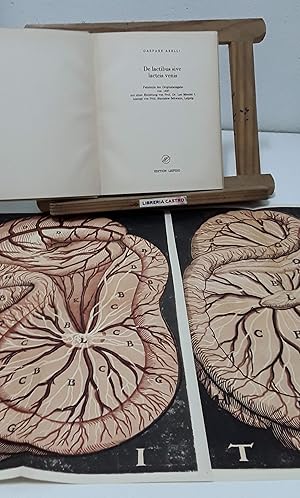
De lactibus sive lacteis venis (Faksimile)
Editore: Leipzig., Leipzig.
Da: Librería Castro, Barcelona, B, Spagna
Membro dell'associazione: LIBRIS
Valutazione del venditore 5 su 5 stelle
EUR 40,00
Spedizione EUR 55,00
Spedito da Spagna a U.S.A.Quantità: 1 disponibili
Aggiungi al carrelloFaksimile der Originalausabe von 1627 mit einer Einleitung von Leo Mendel, besorgt von Stanislaw Schwann. 4 Tablas en color. Encuadernación levemente rozada, interior en muy buen estado. Editorial: Leipzig. Tela editorial. Páginas: 11 y 79. Tamaño: 18x23. cm Edición: 1968.
-

Ital. Mediziner (Anatom u. Chirurge)
Editore: O.J. (um 1840), 1840
Da: EOS Buchantiquariat Benz, Zürich, Svizzera
Membro dell'associazione: ILAB VEBUKU
Valutazione del venditore 4 su 5 stelle
Arte / Stampa / Poster
EUR 66,99
Spedizione EUR 25,00
Spedito da Svizzera a U.S.A.Quantità: 1 disponibili
Aggiungi al carrelloStahlstich (Brustbild) von A. Locatelli. Bildgrösse: 16 x 13 cm. Blattgrösse: 35 x 26 cm. Im Rand leicht fleckig. + Wichtig: Für unsere Kunden in der EU erfolgt der Versand alle 14 Tage verzollt ab Deutschland / Postbank-Konto in Deutschland vorhanden +.
-
De lactibus sive lacteis venis quarto vasorum mesaraicorum genere novo invento. . . dissertatio.
Lingua: Latino
Editore: Giovanni Battista Bidelli, Milan, 1627
Da: Milestones of Science Books, Ritterhude, Germania
Membro dell'associazione: ILAB VDA
Valutazione del venditore 5 su 5 stelle
Prima edizione
EUR 6.000,00
Spedizione EUR 45,00
Spedito da Germania a U.S.A.Quantità: 1 disponibili
Aggiungi al carrelloSoft cover. Condizione: Very Good. 1st Edition. 4to (245x188 mm). [8], 79, [9] pp., lacking the engraved title and two blanks, with the engraved author's portrait by Cesare Bassano, 4-leaf Index bound at end, 3 (of 4) LARGE FOLDING CHIAROSCURO WOODCUT PLATES (lacking pl. 1), printed in black, dark red and light red bound at the beginning, woodcut initials and head-piece. Pages untrimmed, dampstain and browning throughout, tear to pl. 4 w/o loss. Contemporary wrappers (damaged, front cover wanting). ----- Choulant-Frank, pp. 240-241; Garrison-Morton 1094; Grolier Medicine 26; Heirs of Hippocrates 453; NLM/Krivatsy 446; Norman 76; Osler 1846; Waller 502; Wellcome I:6837. - FIRST EDITION OF THE FIRST BOOK WITH ANATOMICAL ILLUSTRATIONS PRINTED IN COLOR. In 1662, during a vivisection performed upon a dog that had just fed, Aselli rediscovered the chylous or lacteal vessels, which Galen and Eristratus reported to have been documented by Hippocrates and Aristotle, but which had been overlooked by the anatomists of the sixteenth century. Aselli undertook a systematic study of the vessels in different species of animals, and established the cause and effect relationship of their turgidity with the intake of nourishment. Although he thus recognized their nature and function, he failed to trace them to the thoracic duct, instead mistakenly construing a connection with the liver, still considered the center of the venous system in the decade before publication of Harvey's De motu cordis. Aselli's error was rectified in the 1650s, when three scientists working independently, Jean Pecquet, Thomas Bartholin and Olof Rudbeck, nearly simultaneously discovered the thoracic duct. Harvey himself apparently did not know of Aselli's work. Aselli's report of his findings -- the only one of his studies to appear in print -- was published after his death by his friends Senator Settala and Alessandro Tadino. In its use of color printing to more accurately distinguish the different types of vessels depicted, De lactibus was the "first publication to use colored illustrations in the interest of scientific accuracy" (Grolier Medicine). The striking woodcuts, which appear in this edition only, have been attributed to either Cesare Bassano or to his associate Domenico Falcini. Subsequent editions were illustrated with black and white reduced engraved copies of the original woodcuts.
-
![Immagine del venditore per De lactibus, sive, Lacteis venis quarto vasorum mesaraicorum genere . 1628 [LeatherBound] venduto da True World of Books](https://pictures.abebooks.com/inventory/md/md31616567575.jpg)
De lactibus, sive, Lacteis venis quarto vasorum mesaraicorum genere . 1628 [LeatherBound]
Data di pubblicazione: 2025
EUR 27,09
Spedizione gratuita
Spedito da India a U.S.A.Quantità: 18 disponibili
Aggiungi al carrelloLeatherBound. Condizione: New. BOOKS ARE EXEMPT FROM IMPORT DUTIES AND TARIFFS; NO EXTRA CHARGES APPLY. LeatherBound edition. Condition: New. Reprinted from 1628 edition. Leather Binding on Spine and Corners with Golden leaf printing on spine. Bound in genuine leather with Satin ribbon page markers and Spine with raised gilt bands. A perfect gift for your loved ones. Pages: 95 NO changes have been made to the original text. This is NOT a retyped or an ocr'd reprint. Illustrations, Index, if any, are included in black and white. Each page is checked manually before printing. As this print on demand book is reprinted from a very old book, there could be some missing or flawed pages, but we always try to make the book as complete as possible. Fold-outs, if any, are not part of the book. If the original book was published in multiple volumes then this reprint is of only one volume, not the whole set. Sewing binding for longer life, where the book block is actually sewn (smythe sewn/section sewn) with thread before binding which results in a more durable type of binding. Pages: 95.
-
De lactibus, sive lacteis venis, quarto vasorum mesaraicorum genere
Data di pubblicazione: 1640
Da: Librairie Alain Brieux, Paris, Francia
Membro dell'associazione: ILAB
Valutazione del venditore 5 su 5 stelle
EUR 2.500,00
Spedizione EUR 45,00
Spedito da Francia a U.S.A.Quantità: 1 disponibili
Aggiungi al carrelloCouverture rigide. Condizione: Bon. [16]-104-[8] pp., 4 fig. Lugduni Batavorum [Leyde], Ex Officina Ioannis Maire, 1640, in-4, [16]-104-[8] pp, 4 fig. gravées à pleine page, Demi-vélin à coins du XVIIIe s, tranches rouges, Troisième édition, la première ayant paru posthumément à Milan en 1627. Ici, les quatre planches sont gravées sur cuivre, en taille réduite, et imprimées en noir. Aselli (ou Asselius de son nom latinisé, 1581-1626) professeur d'anatomie à Pavie et chirurgien à Milan, présente ici sa découverte vaisseaux lymphatiques, ou "veines lactées", et de leurs valvules, faite à l'occasion de la vivisection d'un chien : en faisant des incisions dans le mésentère et le long de la surface péritonéale de l'intestin, ces vaisseaux se mettent à libérer un liquide blanc laiteux. Aselli réalise ainsi une étude systématique de ces veines chez différentes espèces animales. Il suppose, à tort, qu'elles mènent au foie, ce qui sera démenti par Jean Pecquet lors de la découverte du canal thoracique (Garrison & Morton). L'édition originale de l'ouvrage a été publiée avec des gravures sur bois, qui sont réputées pour être les premières gravures imprimées en couleurs dans l'histoire de l'illustration anatomique. Exemplaire provenant de la bibliothèque de Jean-Baptiste Huzard, avec son cachet autographié au revers de la page de titre. L'ouvrage figure au n° 419 de sa vente (Catalogue des livres, dessins et estampes de la bibliothèque de feu M. J.-B. Huzard. Troisième Partie. Paris, 1842. Commissaire-priseur Hocart, expert P. Leblanc. 1843, 26-30 juin, 1er-31 juillet, 1er-9 août). Jean-Baptiste Huzard (1755-1838) directeur de l'École vétérinaire d'Alfort et membre de l'Académie des sciences, était un bibliophile compulsif, qui a ressemblé une bibliothèque de près de 40000 volumes consacrés à l'histoire naturelle, l'agriculture, l'économie rurale et la médecine humaine et vétérinaire. Étiquette ex-libris de E. Bernstein, avec la devise "Tout par amour". Dos passé. Une découpe angulaire sur la page de titre, petites déchirures sans manque sur deux feuillets. Marge de tête un peu courte. Choulant-Frank, p. 241. Garrison & Morton n° 1094 pour l'édition originale. Heirs of Hippocrates n° 454. Krivatsy n° 447. Osler 1846.
-
De lactibus sive lacteis venis quarto vasorum mesaraicorum genere novo invento. dissertatio
Editore: Giovanni Battista Bidelli, Milan, 1627
Da: SOPHIA RARE BOOKS, Koebenhavn V, Danimarca
Membro dell'associazione: ABF ILAB
Valutazione del venditore 5 su 5 stelle
Prima edizione
EUR 103.892,23
Spedizione gratuita
Spedito da Danimarca a U.S.A.Quantità: 1 disponibili
Aggiungi al carrelloFirst edition. THE FIRST ANATOMICAL ILLUSTRATIONS PRINTED IN COLOUR. First edition, a fine copy, of the first book with anatomical illustrations printed in colour. "In 1622, during a vivisection performed upon a dog that had just fed, Aselli (1581-1625) rediscovered the chylous or lacteal vessels, which Galen and Eristratus reported to have been documented by Hippocrates and Aristotle, but which had been overlooked by the anatomists of the sixteenth century. Aselli undertook a systematic study of the vessels in different species of animals, and established the cause and effect relationship of their turgidity with the intake of nourishment: Although he thus recognized their nature and function, he failed to trace them to the thoracic duct, instead mistakenly construing a connection with the liver, still considered the center of the venous system in the decade before publication of Harvey's De motu cordis. Aselli's error was rectified in the 1650s, when three scientists working independently, Jean Pecquet, Thomas Bartholin and Olof Rudbeck, nearly simultaneously discovered the thoracic duct. Harvey himself apparently did not know of Aselli's work" (Norman catalogue). After his death, Aselli's report of his findings - the only one of his studies to appear in print - was published in Milan at the press of Giambattista Bidelli through the efforts of Nicolas Fabry de Peiresc by his friends Senator Settala and Alessandro Tadino. The work contains a beautiful engraved title page and a portrait of Aselli by the Milanese painter and engraver Cesare Bassano (1584-1648), and four folding chiaroscuro woodcurs printed in black, red, and two shades of brown. In its use of colour printing to more accurately distinguish the different types of vessels depicted, De lactibus was the "first publication to use colored illustrations in the interest of scientific accuracy" (Grolier Medicine). The striking woodcuts, which appear in this edition only, have been attributed either to Cesare Bassano or to his associate Domenico Falcini (c.1575-1632). Subsequent editions were illustrated with black and white reduced and engraved copies of the original woodcuts" (Norman catalogue). ABPC/RBH list six copies. "A descendant of an ancient patrician family, Aselli revealed a marked propensity for the natural sciences early in his schooling. He studied medicine at the University of Pavia, where he soon distinguished himself among his fellow students. His teacher of anatomy was Giambattista Carcano-Leone, a pupil of Fallopio and author of De cordis vasorum in foetu unione (1574). "Later Aselli moved to Milan, where he gained recognition in his profession. Since his scientific preparation was essentially in anatomy, he distinguished himself in his practice of surgery. He was appointed first surgeon of the Spanish army in Italy from 1612 to 1620. In Milan he had the opportunity to continue his anatomical researches, which won him honorary citizenship of that city and an outstanding position in the history of anatomy. He died at the age of forty-four from an acute and malignant fever. "Aselli's scientific activity occurred during the first decades of the seventeenth century, in an atmosphere that was particularly sympathetic to anatomical studies, especially in northern Italy. At the end of the sixteenth century the study of descriptive human anatomy had made considerable progress. The early decades of the seventeenth century felt the effects of the baroque attitude toward science and the influences of the new mechanical concepts of Galileo. Anatomy, which had been essentially static in the sixteenth century, now assumed a dynamic character. It was enlivened by a new consideration of physiology. "Aselli discovered the chylous vessels, although it would perhaps be more correct to refer to his work as a rediscovery rather than a discovery. According to information that has come down to us from Galen, Herophilus, and Erasistratus, both Hippocrates and Aristotle had with considerable clarity already pointed to the existence of the so-called absorbent vessels. Nevertheless, not even Eustachi and Fallopio, who in the sixteenth century had noted and described the thoracic duct in the horse and the deep lymphatics in the liver, respectively, had succeeded in clarifying the functional significance of these vessels. "On 23 July 1622, during a vivisection performed on a dog that had recently been fed, Aselli, in the course of removing the intestinal tangle to reveal the abdominal fasciae of the diaphragm, noticed numerous white filaments ramified throughout the entire mesentery and along the peritoneal surface of the intestine. The most obvious interpretation was that these filaments were nerves. The incision of one of the larger of these "nerves" released a whitish humor similar to milk. Therefore, Aselli interpreted these formations as a multitude of small vessels, proposing to call them "aut lacteal, sive albas venas." The vivisection had been performed at the request of four of his friends, among whom were Senator Settala and Quirino Cnogler, to demonstrate the recurrent nerves and the movements of the diaphragm. "Immediately following his discovery, Aselli began a systematic study of the significance of these vascular structures. He recognized the chronological relationship that existed between their turgidity and the animal's last meal. His experimental findings enabled Aselli to observe the chylous vessels in different species of animals. The results of these investigations were collected in De lactibus sive Lacteis venis quarto vasorum rnesaraicorurn genere novo invento Gasparis Asellii Cremonensis anatomici Ticinensis dissertatio (1627), which is divided into thirty-five chapters that are followed by an index and preceded by four charts with accompanying commentaries and a portrait of the author. Besides their intrinsic scientific value, the importance of the charts lies in the new technique used in composing them: they were the first anatomica.
-
![Immagine del venditore per De Lactibus Sive Lacteis Venis Quarto Vasorum Mesaraicorvm Genere : Dissertatio, Qva Sententiae Anatomicae Multae Vel perperam receptae convelluntur, vel parum perceptae illustrantur 1628 [Leather Bound] venduto da True World of Books](https://pictures.abebooks.com/inventory/md/md31619204243.jpg)
De Lactibus Sive Lacteis Venis Quarto Vasorum Mesaraicorvm Genere : Dissertatio, Qva Sententiae Anatomicae Multae Vel perperam receptae convelluntur, vel parum perceptae illustrantur 1628 [Leather Bound]
Data di pubblicazione: 2025
EUR 32,51
Spedizione gratuita
Spedito da India a U.S.A.Quantità: 18 disponibili
Aggiungi al carrelloLeatherBound. Condizione: NEW. LeatherBound edition. Condition: New. Reprinted from 1628 edition. Leather Binding on Spine and Corners with Golden leaf printing on spine. Bound in genuine leather with Satin ribbon page markers and Spine with raised gilt bands. A perfect gift for your loved ones. NO changes have been made to the original text. This is NOT a retyped or an ocr'd reprint. Illustrations, Index, if any, are included in black and white. Each page is checked manually before printing. As this print on demand book is reprinted from a very old book, there could be some missing or flawed pages, but we always try to make the book as complete as possible. Fold-outs, if any, are not part of the book. If the original book was published in multiple volumes then this reprint is of only one volume, not the whole set. Sewing binding for longer life, where the book block is actually sewn (smythe sewn/section sewn) with thread before binding which results in a more durable type of binding. Pages: 100.