
Grace hopper (17 risultati)

- Brossura
Da: ThriftBooks-Atlanta, AUSTELL, GA, U.S.A.ThriftBooks-Atlanta
Contatta il venditoreVenditore con 5 stelleCondizione: Usato - Discreto
EUR 6,29
Spedizione gratuitaSpedito in U.S.A.Quantità: 1 disponibili
Paperback. Condizione: Fair. No Jacket. Readable copy. Pages may have considerable notes/highlighting. ~ ThriftBooks: Read More, Spend Less.

Playing It Straight: Personal Conversations on Recovery, Transformation and Success
David Dodd; Tai Babilonia; Mike Binder; Leo Booth; Steven Chatoff; Wayne W. Dyer; Doug Fieger; Larry Gatlin; Gossett, Louis, Jr.; Gregory Harrison; John Hiatt; Dennis Hopper; China Kantner; Anthony Kiedis; Earnie Larsen; Nils Lofgren; Eddit Money; Chris Mullin; Ozzy Osbourne; Joey Ramone; John Ratzenberger; Mitch Ryder; Tony Sales; Jack Scalia; Ritch Shydner; Grace Slick; Dallas Taylor; Steven Tyler; Stevie Ray & Double Trouble Vaughan
- Brossura
Da: ThriftBooks-Reno, Reno, NV, U.S.A.ThriftBooks-Reno
Contatta il venditoreVenditore con 5 stelleCondizione: Usato - Discreto
EUR 6,47
Spedizione gratuitaSpedito in U.S.A.Quantità: 1 disponibili
Paperback. Condizione: Fair. No Jacket. Readable copy. Pages may have considerable notes/highlighting. ~ ThriftBooks: Read More, Spend Less.
Playing It Straight: Personal Conversations on Recovery, Transformation and Success
David Dodd; Tai Babilonia; Mike Binder; Leo Booth; Steven Chatoff; Wayne W. Dyer; Doug Fieger; Larry Gatlin; Gossett, Louis, Jr.; Gregory Harrison; John Hiatt; Dennis Hopper; China Kantner; Anthony Kiedis; Earnie Larsen; Nils Lofgren; Eddit Money; Chris Mullin; Ozzy Osbourne; Joey Ramone; John Ratzenberger; Mitch Ryder; Tony Sales; Jack Scalia; Ritch Shydner; Grace Slick; Dallas Taylor; Steven Tyler; Stevie Ray & Double Trouble Vaughan
- Brossura
Da: ThriftBooks-Dallas, Dallas, TX, U.S.A.ThriftBooks-Dallas
Contatta il venditoreVenditore con 5 stelleCondizione: Usato - Discreto
EUR 6,47
Spedizione gratuitaSpedito in U.S.A.Quantità: 1 disponibili
Paperback. Condizione: Fair. No Jacket. Readable copy. Pages may have considerable notes/highlighting. ~ ThriftBooks: Read More, Spend Less.

Playing It Straight: Personal Conversations on Recovery, Transformation and Success
Dodd, David; Babilonia, Tai; Binder, Mike; Booth, Leo; Chatoff, Steven; Dyer, Wayne W.; Fieger, Doug; Gatlin, Larry; Gossett, Louis, Jr.; Harrison, Gregory; Hiatt, John; Hopper, Dennis; Kantner, China; Kiedis, Anthony; Larsen, Earnie; Lofgren, Nils; Money, Eddit; Mullin, Chris; Osbourne, Ozzy; Ramone, Joey; Ratzenberger, John; Ryder, Mitch; Sales, Tony; Scalia, Jack; Shydner, Ritch; Slick, Grace; Taylor, Dallas; Tyler, Steven; Vaughan, Stevie Ray & Double Trouble
- Brossura
Da: Blue Vase Books, Interlochen, MI, U.S.A.Blue Vase Books
Contatta il venditoreVenditore con 5 stelleCondizione: Usato - Discreto
EUR 6,47
Spedizione gratuitaSpedito in U.S.A.Quantità: 1 disponibili
Condizione: acceptable. The item is very worn but is perfectly usable. Signs of wear can include aesthetic issues such as scratches, dents, worn and creased covers, folded page corners and minor liquid stains. All pages and the cover are intact, but the dust cover may be missing. Pages may include moderate to heavy amount of not…es and highlighting, but the text is not obscured or unreadable. Page edges may have foxing age related spots and browning . May NOT include discs, access code or other supplemental materials.
Playing It Straight: Personal Conversations on Recovery, Transformation and Success
David Dodd; Tai Babilonia; Mike Binder; Leo Booth; Steven Chatoff; Wayne W. Dyer; Doug Fieger; Larry Gatlin; Gossett, Louis, Jr.; Gregory Harrison; John Hiatt; Dennis Hopper; China Kantner; Anthony Kiedis; Earnie Larsen; Nils Lofgren; Eddit Money; Chris Mullin; Ozzy Osbourne; Joey Ramone; John Ratzenberger; Mitch Ryder; Tony Sales; Jack Scalia; Ritch Shydner; Grace Slick; Dallas Taylor; Steven Tyler; Stevie Ray & Double Trouble Vaughan
- Brossura
Da: ThriftBooks-Dallas, Dallas, TX, U.S.A.ThriftBooks-Dallas
Contatta il venditoreVenditore con 5 stelleCondizione: Usato - Buono
EUR 6,47
Spedizione gratuitaSpedito in U.S.A.Quantità: 1 disponibili
Paperback. Condizione: Good. No Jacket. Pages can have notes/highlighting. Spine may show signs of wear. ~ ThriftBooks: Read More, Spend Less.
Playing It Straight: Personal Conversations on Recovery, Transformation and Success
David Dodd; Tai Babilonia; Mike Binder; Leo Booth; Steven Chatoff; Wayne W. Dyer; Doug Fieger; Larry Gatlin; Gossett, Louis, Jr.; Gregory Harrison; John Hiatt; Dennis Hopper; China Kantner; Anthony Kiedis; Earnie Larsen; Nils Lofgren; Eddit Money; Chris Mullin; Ozzy Osbourne; Joey Ramone; John Ratzenberger; Mitch Ryder; Tony Sales; Jack Scalia; Ritch Shydner; Grace Slick; Dallas Taylor; Steven Tyler; Stevie Ray & Double Trouble Vaughan
- Brossura
Da: ThriftBooks-Atlanta, AUSTELL, GA, U.S.A.ThriftBooks-Atlanta
Contatta il venditoreVenditore con 5 stelleCondizione: Usato - Buono
EUR 6,47
Spedizione gratuitaSpedito in U.S.A.Quantità: 1 disponibili
Paperback. Condizione: Good. No Jacket. Pages can have notes/highlighting. Spine may show signs of wear. ~ ThriftBooks: Read More, Spend Less.
Playing It Straight: Personal Conversations on Recovery, Transformation and Success
David Dodd; Tai Babilonia; Mike Binder; Leo Booth; Steven Chatoff; Wayne W. Dyer; Doug Fieger; Larry Gatlin; Gossett, Louis, Jr.; Gregory Harrison; John Hiatt; Dennis Hopper; China Kantner; Anthony Kiedis; Earnie Larsen; Nils Lofgren; Eddit Money; Chris Mullin; Ozzy Osbourne; Joey Ramone; John Ratzenberger; Mitch Ryder; Tony Sales; Jack Scalia; Ritch Shydner; Grace Slick; Dallas Taylor; Steven Tyler; Stevie Ray & Double Trouble Vaughan
- Brossura
Da: ThriftBooks-Atlanta, AUSTELL, GA, U.S.A.ThriftBooks-Atlanta
Contatta il venditoreVenditore con 5 stelleCondizione: Usato - Discreto
EUR 6,47
Spedizione gratuitaSpedito in U.S.A.Quantità: 1 disponibili
Paperback. Condizione: Fair. No Jacket. Readable copy. Pages may have considerable notes/highlighting. ~ ThriftBooks: Read More, Spend Less.

- Brossura
Da: Cycle Books LA, south el monte, CA, U.S.A.Cycle Books LA
Contatta il venditoreVenditore con 5 stelleCondizione: Usato - Molto buono
EUR 16,25
EUR 2,62 spedizioneSpedito in U.S.A.Quantità: 1 disponibili
Condizione: very_good.

Larceny on the Air 8 X 10 Still 1937 Robert Livingston & Pierre Watkin!
Directed by Irving Pichel / Starring Robert Livingston, Grace Bradley, Granville Bates, Smiley Burnette, Frank DuFrance, Matty Fain, Byron Foulger, Florence Gill, William Griffith, William Hopper, and Wilbur Mack
Editore: Republic Pictures, 1937
- Foto
Da: AcornBooksNH, New Harbor, ME, U.S.A.AcornBooksNH
Contatta il venditoreVenditore con 5 stelleCondizione: Usato - Molto buono
EUR 3,72
EUR 7,84 spedizioneSpedito in U.S.A.Quantità: 1 disponibili
No Binding. Condizione: VG+. 671-4. A good or better original 8 x 10 still. Size: 8" x 10". Photographic Image.
Playing It Straight: Personal Conversations on Recovery, Transformation and Success
Dodd, David; Babilonia, Tai; Binder, Mike; Booth, Leo; Chatoff, Steven; Dyer, Wayne W.; Fieger, Doug; Gatlin, Larry; Gossett, Louis, Jr.; Harrison, Gregory; Hiatt, John; Hopper, Dennis; Kantner, China; Kiedis, Anthony; Larsen, Earnie; Lofgren, Nils; Money, Eddit; Mullin, Chris; Osbourne, Ozzy; Ramone, Joey; Ratzenberger, John; Ryder, Mitch; Sales, Tony; Scalia, Jack; Shydner, Ritch; Slick, Grace; Taylor, Dallas; Tyler, Steven; Vaughan, Stevie Ray & Double Trouble
- Brossura
Da: SHIMEDIA, Brooklyn, NY, U.S.A.SHIMEDIA
Contatta il venditoreVenditore con 5 stelleCondizione: Nuovo
EUR 59,55
Spedizione gratuitaSpedito in U.S.A.Quantità: 1 disponibili
Condizione: New. Satisfaction Guaranteed or your money back.

- Brossura
Da: GoldBooks, Denver, CO, U.S.A.GoldBooks
Contatta il venditoreVenditore con 5 stelleCondizione: Nuovo
EUR 88,44
EUR 4,82 spedizioneSpedito in U.S.A.Quantità: 1 disponibili
Paperback. Condizione: new. New Copy. Customer Service Guaranteed.
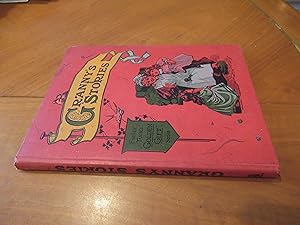
Lingua: Inglese
Editore: Raphael Tuck & Sons, Ltd, London Uk, 1907
- Rilegato
- Prima edizione
Da: Arroyo Seco Books, Pasadena, Member IOBA, Pasadena, CA, U.S.A.Arroyo Seco Books, Pasadena, Member IOBA
Contatta il venditoreVenditore con 4 stelleMembro dell’associazione: IOBA
Condizione: Usato - Molto buono
EUR 140,11
EUR 7,01 spedizioneSpedito in U.S.A.Quantità: 1 disponibili
Hardcover. Condizione: Very Good. 1st Edition. 71 Pp. Full Red Cloth Stamped In Green, Orange, Pink, Blue, And Black; Spine Lettered In Green And Stamped In Black. The Original Printing, Full Cloth, Title Page Showing Raphael Tuck & Sons, Ltd., No. 801, Designed And Printed In England, Publisher's To Their Majesties The King And… Queen & T. R. H. The Prince And Princess Of Wales. Undated, Circa 1907. Light Usage, No Marks, Bright, Small Discolorations To Front Cover. This Uk Issue In Red Cloth Is Rare, But The Reprints In Boards, And The New York Editions, Are Not Uncommon. Full Color Frontispiece, Two-Color Illustrations And B/W Ilustrations In Text. (illustratore).
 Altre immagini
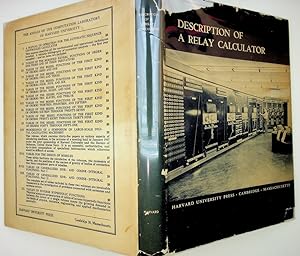
Description of a Relay Calculator
Aiken, Howard H. ; Grace Hopper, et al [The Staff of the Computation Laboratory]
Editore: Harvard University Press, Cambridge, Massachusetts, 1949
- Rilegato
- Prima edizione
Da: Kuenzig Books ( ABAA / ILAB ), Topsfield, MA, U.S.A.Kuenzig Books ( ABAA / ILAB )
Contatta il venditoreVenditore con 5 stelleCondizione: Usato - Quasi ottimo
EUR 2481,78
EUR 5,25 spedizioneSpedito in U.S.A.Quantità: 1 disponibili
Cloth. Condizione: Near Fine. Condizione sovraccoperta: Fair. First Edition. First Edition. xvi, [2], 336 pages. 4to [10 3/4 x 8 3/8 inches]. Publisher's blue cloth. The rare dust jacket is present, albeit chipped, stained, and worn (especially at foredges). Bright and clean internally. Cloth. "The electromechanical Harvard Mark… I was the first programmable calculating machine to actually produce mathematical tables, fulfilling the dream of Charles Babbage originally set out in print in 1822." (OOC, #411) "The manual for the Harvard Mark II, a relay-based calculator built for the navy during the last year of World War II. It was installed at the Naval Proving Ground in Dahlgren, Virginia, in 1948, where it was used mainly for the development of ballistics tables. The Mark II's design did not depart radically from that of its predecessor in that it employed electromechanical equipment and was programmed via paper tapes, 'but otherwise it was very different. Where the Mark I used rotary mechanical systems (with magnetic clutches) for storing numbers, the Mark II used relays. The way of programming it was very different (i.e. the instruction set was different). The fact that it was essentially two machines which could be combined for large jobs or have each half running independent jobs was quite different.' (MRW Other innovations included a floating decimal point and a new type of relay. It was considerably faster than the Mark I . The Manual for the Harvard Mark II calculator was written primarily by Grace Hopper, assisted by Constance K. Rawson, Peter O. Cioffi and Richard D. Woltman. It was completed by Charles H. Richards and K. B. Mitchell" (OOC) Volume XXIV of the Annals of the Computation Laboratory of Harvard University. All volumes in the series were heavily used, and finding copies in dust jacket is getting difficult. Literature: Hook and Norman, Origins of Cyberspace, #416, 411 (referring to Mark I).
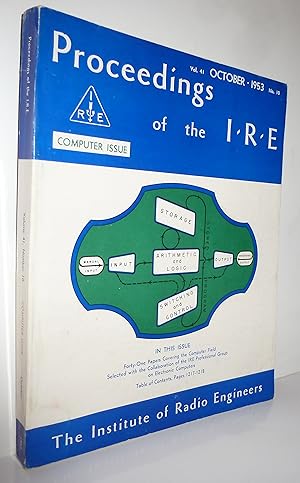
Proceedings of the I.R.E.
Shannon, Claude [Elwood]; Hopper, Grace; Wilkes, M. V.; Eckert, J. P. Jr.; Mauchly, John; and Others
Editore: Institute of Radio Engineers, 1953
- Brossura
- Prima edizione
Da: Sekkes Consultants, North Dighton, MA, U.S.A.Sekkes Consultants
Contatta il venditoreVenditore con 5 stelleCondizione: Usato - Quasi ottimo
EUR 1082,96
Spedizione gratuitaSpedito in U.S.A.Quantità: 1 disponibili
Soft cover. Condizione: Near Fine. 1st Edition. Proceedings of the IRE, Vol 41, October 1953, No. 10, the entire issue offered. Pictorial wrappers. The famous 1953 "IRE Computer Issue" in the original wrappers containing ten (!!!) Origins of Cyberspace articles and a total of forty-one articles on the state of the art computing.… Many authors were influential, on the cutting edge of computing, and are found throughout the historical literature tracking technical and business innovations throughout their careers. A few of the essential papers include: Claude Shannon, "Computers and Automata" (Origins of Cyberspace #885) --- contains a brief review of developments in the field of automata and non-numerical computation Claude Shannon and Moore, "Machine aid for switching circuit design" (Origins of Cyberspace #886) --- describes the first "verification" machine, built at Bell Labs and called the" relay circuit analyzer." Grace Hopper and John Mauchly, "Influence of programming technique on the design of computers" (Origins of Cyberspace #664) --- contains a discussion of how advances in programming techniques could influence the design of future computers. This article references the UNIVAC I. Huskey, Ambrose, and Yowell, "The SWAC design features and operating experience" (Origins of Cyberspace #672) --- contains a general description of the functional characteristics of the SWAC computer, including references to electrostatic and magnetic drum memories. Buchholz, "The system design of the IBM Type 701 computer" (Origins of Cyberspace #508) --- describes the overall system design of IBM's first electronic digital computer And many more period articles. 8¼" - 11". Book.
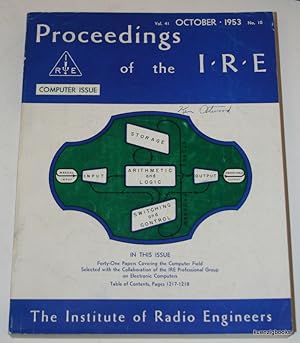
[Famous IRE COMPUTER ISSUE] "Computers and Automata" WITH "Machine Aid for Switching Circuit Design" WITH "Influence of Programming Techniques on the Design of Computers" and over thirty-five other articles
Shannon, Claude [Elwood]; Hopper, Grace; Wilkes, M. V.; Eckert, J. P. Jr.; Mauchly, John; and Others
Editore: Institute of Radio Engineers, Inc, Menasha, Wisconsin, 1953
- Brossura
- Prima edizione
Da: Kuenzig Books ( ABAA / ILAB ), Topsfield, MA, U.S.A.Kuenzig Books ( ABAA / ILAB )
Contatta il venditoreVenditore con 5 stelleCondizione: Usato - Quasi ottimo
EUR 1240,89
EUR 5,25 spedizioneSpedito in U.S.A.Quantità: 1 disponibili
Wraps. Condizione: Near Fine. First Edition. First Edition. [1A]-80A (advertisements), [2-table contents], 1219-1568, 81A-192A (advertisements) pages. 11 x 8 1/2 inches. Proceedings of the IRE, Vol 41, October 1953, No. 10, the entire issue offered. Pictorial wrappers. The previous owner's name, "Ken Atwood," is inked on the fro…nt cover. Upper spine bumped with associated creasing. A very nice example. Scarce thus. Wraps. The famous 1953 "IRE Computer Issue" in the original wrappers containing ten (!!!) Origins of Cyberspace articles and a total of forty-one articles on the state of the art computing. Many authors were influential, on the cutting edge of computing, and are found throughout the historical literature tracking technical and business innovations throughout their careers. A few of the essential papers include: Claude Shannon, "Computers and Automata" (Origins of Cyberspace #885) --- contains a brief review of developments in the field of automata and non-numerical computation Claude Shannon and Moore, "Machine aid for switching circuit design" (Origins of Cyberspace #886) --- describes the first "verification" machine, built at Bell Labs and called the" relay circuit analyzer." Grace Hopper and John Mauchly, "Influence of programming technique on the design of computers" (Origins of Cyberspace #664) --- contains a discussion of how advances in programming techniques could influence the design of future computers. This article references the UNIVAC I. Huskey, Ambrose, and Yowell, "The SWAC design features and operating experience" (Origins of Cyberspace #672) --- contains a general description of the functional characteristics of the SWAC computer, including references to electrostatic and magnetic drum memories. Buchholz, "The system design of the IBM Type 701 computer" (Origins of Cyberspace #508) --- describes the overall system design of IBM's first electronic digital computer And many more period articles. PROVENANCE: There were no copies of this item in Shannon's files. This item comes from Kuenzig Books' stock. REFERENCES: Sloane and Wyner, "Claude Elwood Shannon Collected Papers," #80 and #82. Hook and Norman, "Origins of Cyberspace," #s 508, 513, 626, 641, 664, 672, 675, 871, 885, and 886.

Computer Issue Vol. 41, No.10, October 1953 (in) Proceedings of the IRE I.R.E. [Institute of Radio Engineers], Volume 41, July - December 1953 (HARDCOVER, 6 issues, #7 - 12)
Hopper, Grace Murray; & Werner Buchholz, Arthur W. Burks & Jesse B. Wright; Clarence E. Frizzell, Sidney Greenwald, Thorenson Huskey, Harold D. Ross, Claude E. Shannon & Edward F. Moore
Editore: The Institute of Radio Engineers, New York, 1953
- Rilegato
- Prima edizione
Da: About Books, Henderson, NV, U.S.A.About Books
Contatta il venditoreVenditore con 5 stelleCondizione: Usato
EUR 1164,14
EUR 6,09 spedizioneSpedito in U.S.A.Quantità: 1 disponibili
Hardcover. Condizione: Near Fine condition. First Edition. New York: The Institute of Radio Engineers, 1953. This volume of Proceedings of the IRE includes the "Computer Issue" [Vol. 41, No.10, October 1953, pp. 1,217 - 1,568]. The "Computer Issue" contains 41 papers on the subject of electronic computers, the most significant o…f which are described in Hook and Norman's ORIGINS OF CYBERSPACE. [See Hook and Norman entries Nos. 508, 513, 626, 641, 664, 672, 871, 885-886]. Among the authors in this "Computer Issue" are Werner Buchholz, Arthur W. Burks & Jesse B. Wright; Clarence E. Frizzell, Sidney Greenwald, Grace Murray Hopper, Thorenson Huskey, Harold D. Ross, Claude E. Shannon & Edward F. Moore. The "Computer Issue" is one of 6 consecutive monthly issues bound together. They consist of Volume 41, July - December (#7 - 12) 1953, pages 833 - 1,818. HARDCOVER. NOT a library discard. Near Fine condition. NO owner's name or bookplate. Pages are clean and unmarked - probably never read. Institute of Radio Engineers. Original front wraps are bound in. The binding is sturdy blue buckram, stamped in bright gold on the spine. Oversize Hardcover. 8.75" wide by 11" tall by 1.75" thick. This large heavy book will require extra postage for Priority and International shipments, but only the standard charge for media mail. SEE Hook and Norman's ORIGINS OF CYBERSPACE 675, 508, 513, 626, 641, 664, 672, 871, 885-886. First Edition. Oversize Hardcover. Near Fine condition. Illus. by NOT a library discard. pp. 833 - 1,818 [985 total pages]. Great Packaging, Fast Shipping. NOT a library discard (illustratore).
 Altre immagini
Editore: Cambridge, Massachusetts: Harvard University Press, 1946, 1946
- Prima edizione
Da: Peter Harrington. ABA/ ILAB., London, Regno UnitoPeter Harrington. ABA/ ILAB.
Contatta il venditoreVenditore con 5 stelleCondizione: Usato
EUR 10.463,04
EUR 25,54 spedizioneSpedito da Regno Unito a U.S.A.Quantità: 1 disponibili
First edition of the landmark operating manual for the Harvard Mark I, largely written by Grace Hopper, "one of the most famous of the postwar computer pioneers" (OOC). Also known as the IBM Automatic Sequence Controlled Calculator, the electromechanical Mark I was designed by the American physicist Howard Aiken. Hopper joined A…iken's team in 1944 and became its chief programmer. The Mark I became fully operational in May 1944 and was almost immediately commandeered for war work by the US Navy, after which Hopper was tasked with writing an instruction manual for it. This task was "so monumental that she referred to her project as a computer 'bible'. It was a detailed treatment of Mark I's physical components, operation, and maintenance. Most importantly, the manual described with elaborate care how to program Mark I, thus becoming the first ever computer programming textbook" (Harvard). Hopper acted as general editor and was chief author of the first three chapters and the eight appendices. The manual was published as the first volume of the Annals of the Computation Laboratory; its niche technical purpose meant it circulated in relatively low numbers. Hopper became involved with a number of other influential technological developments: she was central to the development of UNIVAC, the first commercial computer; she created the first compiler, the system that allows programming in plain English rather than numerical code; and she co-developed the commercial language COBOL. She retired from the Navy in 1986 as a Rear Admiral. Aiken, after seeing his machine through a further three versions, established Harvard's advanced-degree programme in computing. Origins of Cyberspace 411. "The Mark I Computer at Harvard University", Harvard University online. Quarto. With 17 full-page black-and-white photographic plates, diagrams and tables within the text. Original dark blue cloth, spine lettered in gilt. Later vignette bookplate to front pastedown with name effaced. Spine toned, minor wear to spine ends and corners, light browning to contents. A very good copy.


