

Importo totale (1 articolo articoli):
Destinazione ordine:

hoffman abbie jack (5 risultati)
Vai alla pagina principale dei risultati di ricerca
Filtri di ricerca
Tipo di articolo
- Tutti i tipi di prodotto
- Libri (5)
- Riviste e Giornali (Nessun altro risultato corrispondente a questo perfezionamento)
- Fumetti (Nessun altro risultato corrispondente a questo perfezionamento)
- Spartiti (Nessun altro risultato corrispondente a questo perfezionamento)
- Arte, Stampe e Poster (Nessun altro risultato corrispondente a questo perfezionamento)
- Fotografie (Nessun altro risultato corrispondente a questo perfezionamento)
- Mappe (Nessun altro risultato corrispondente a questo perfezionamento)
- Manoscritti e Collezionismo cartaceo (Nessun altro risultato corrispondente a questo perfezionamento)
Condizioni Maggiori informazioni
- Nuovo (Nessun altro risultato corrispondente a questo perfezionamento)
- Come nuovo, Ottimo o Quasi ottimo (3)
- Molto buono o Buono (Nessun altro risultato corrispondente a questo perfezionamento)
- Discreto o Mediocre (1)
- Come descritto (1)
Legatura
Ulteriori caratteristiche
Lingua (2)
Spedizione gratuita
- Spedizione gratuita in U.S.A. (Nessun altro risultato corrispondente a questo perfezionamento)
Paese del venditore
Valutazione venditore
-
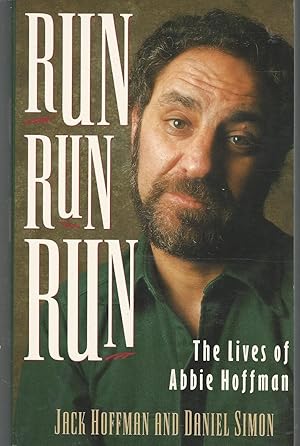
Run Run Run: The Lives of Abbie Hoffman
Lingua: Inglese
Editore: Tarcher Putnam Publishing Group, NY, 1996
ISBN 10: 0874778115 ISBN 13: 9780874778113
Da: Dorley House Books, Inc., Hagerstown, MD, U.S.A.
Valutazione del venditore 4 su 5 stelle

Prima edizione
Paperback. Condizione: Near Fine. B/W Illus (illustratore). 1st. First Edition, Thus; 380 pages with notes and index.
-

Evergreen Review No. 73, December 1969
Editore: Grove Press, New York, 1969
Da: Anthology Booksellers, Portland, OR, U.S.A.
Membro dell'associazione: CBA
Valutazione del venditore 1 su 5 stelle

Wraps. Condizione: Fair. 4to, illus. Head and heel of spine and corners bumped, wrappers handled and creased.
-
Run Run Run: The Lives of Abbie Hoffman
Lingua: Inglese
Editore: A Jeremy T. Tarcher/ Putnam Book, 1994
ISBN 10: 0874777607 ISBN 13: 9780874777604
Prima edizione Copia autografata
Hardcover. Condizione: Fine. Condizione sovraccoperta: Near Fine. 1st Edition. SIGNED by the author with a personalized inscription on the front free endpaper. First edition, first printing. Fine contents and binding. The unclipped dust jacket has slight rubbing to gloss, almost fine. A very nice copy. Signed by Author(s).
-
The Beat Generation: An American Dream
Editore: Renaissance Motion Pictures, Inc., 1987
Da: Black Dog Books, Emerson, NJ, U.S.A.
Valutazione del venditore 4 su 5 stelle
Copia autografata
No Binding. Condizione: Near Fine. "Using original film clips and interviews, this film illustrates the 1950s social movement termed the Beat Generation. Disillusioned with post-World War II America, Beat Generation writers and painters came together because they felt mainstream America was becoming out of touch with humanity and the individual. In their interviews, characters such as 'Allen Ginsberg', Neal Cassady, Jack Kerouac, and Gregory Corso express their disdain for a society that defines success and happiness in terms of superior technology, cars, and clothing. Those individuals discuss the false conventionality of society and the dangerous world of shock treatments and conformity in which they found themselves. Their goal is to redefine this world to reflect the endless possibilities that characterize America. -Anonymous" This is a 2 pocket folder press kit, title logo glued to the front cover, for the movie with 3 pages of production information and numerous xeroxes of reviews. There are also 2 black & white glossy photos, one of the director Janet Forman and one of Steve Allen the narrator. The folder is inscribed on the inner pocket by Janet Forman, the director/producer of the movie. The movie featured both new and archival footage of many of the most important figures of the Beat Movemant. Quite uncommon. Inscribed by Author(s). Book.
-
Revolution for the Hell of It.
Editore: New York: The Dial Press, Inc., 1969, 1969
Da: Peter Harrington. ABA/ ILAB., London, Regno Unito
Membro dell'associazione: ABA ILAB PBFA
Valutazione del venditore 5 su 5 stelle

Prima edizione
EUR 2.675,65
Spedizione EUR 25,40
Spedito da Regno Unito a U.S.A.Quantità: 1 disponibili
Aggiungi al carrelloFirst edition, third printing, Kerouac's own copy of Hoffman's first published book. Hoffman and many of the leading antiestablishment figures of the 60s saw Kerouac as an icon of their cause, a status that Kerouac himself became increasingly uncomfortable with. Kerouac's possession of this book, in some ways a progeny of On the Road, is curious: it may have played a role in his denunciations of the counterculture he had unintentionally become father to. Kerouac's final article, "After Me, the Deluge", was published a week after his death, on 26 Oct 1969 in the Los Angeles Times. In it, he name checks Abbie Hoffman and other Yippies, questioning: "how could I possibly spawn Jerry Rubin, Mitchell Goodman, Abbie Hoffman, Allen Ginsburg and other warm human beings from the ghettos who say they suffered no less than the Puerto Ricans in their barrios and the blacks in their Big and Little Harlems, and all because I wrote a matter-of-fact account of a true adventure on the road" (Kerouac). This bitter repudiation of the "tax-free. hippie-yippie" was published after this printing of Revolution for the Hell of It; it's plausible that some of Kerouac's venom found it's source in Hoffman's quintessentially hippie-yippie book of antiestablishment escapades. Nevertheless, the counterculture icons that Kerouac derides continued to give him credit: nearly 13 years after his death, "On the Road: the Jack Kerouac Conference" brought together Ginsberg, Burroughs, Ferlinghetti, Corso and a host of other "Beat Generation Elders" (Schmidt) to celebrate Kerouac as a symbol of rebellion and non-conformist values. Hoffman himself participated, saying "We couldn't have had the 60's, the decade of social revolution, without the 50's. The Beats gave us a choice, showed us we could let our emotions hang out, we could fight City Hall" (ibid.) Jack Kerouac, "After Me, the Deluge", Los Angeles Times, 26 Oct 1969. William E. Schmidt, "Beat Generation Elders Meet to Praise Kerouac", New York Times, 30 July 1982, accessible online. Octavo. Original photographically illustrated white boards, titles to front and spine in pink and purple. With dust jacket, photograph by Richard Avedon. With 8 pp. black and white photographic illustrations, 8 pp. manifesto to rear, black and white illustrations to the text. With ink stamp and blind stamp of the Kerouac estate to half-title. Spine cocked and creased, lifting slightly, scratch to front, a little creased, some foxing to fore edge. Front hinge starting (but holding fine). A very good copy, well-read.


